




Book a 40-minute cut and a four-hour balayage into the same generic calendar app and the cracks show inside a week. Different durations, different staff, and only two people on the floor qualified for the second one. Salon scheduling software is the slice of appointment booking software built for exactly that: it schedules staff, chairs, and variable service duration together instead of dropping everything into one flat time slot.
Salons, barbershops, and spas run it against staff calendars, resource limits, and a published service menu. It shows up either as a hosted SaaS platform or as a WordPress plugin installed inside a site the salon already owns. Whether it's earning its keep usually gets judged on booking conversion and no-show rate.
Zenoti's 2025 Benchmark Report puts the average salon on this kind of software at a 3 percent no-show rate and an 8 percent cancellation rate. Lower than most owners expect, though averages hide a lot.

Thank you for subscribing. Check your mail for details
Salon Scheduling Software To Use
Order here is overall-best-first, because that's how people actually read a list like this. Broadest fit for a salon at the top, narrower fits further down.
Trafft and Amelia sit in front for the same reason. Both were built around salon workflows rather than generic meetings, and both charge a flat, predictable price instead of taking a cut of every booking.
Picking the best online booking system for a salon ends up shaping staff calendars, no-show rates, and client retention all at once.
For beauty teams specifically, the beauty salon scheduling software decision usually turns into one argument. Marketplace exposure, or keeping bookings on your own site.
| Platform | Category | Starting point | Standout capability |
|---|---|---|---|
| Trafft | Hosted SaaS + WordPress plugin | Free plan, paid tiers under $15/mo | Zero commission regardless of volume |
| Amelia | WordPress plugin only | Free Lite version | 90,000+ active installs |
| Vagaro | All-in-one SaaS (scheduling, POS, payroll) | From about $30/month | POS, payroll, and marketing bundled with the calendar |
| Fresha | Marketplace SaaS | From about $20/month solo, ~$15/month per team member | Large consumer marketplace for new-client discovery |
| Booksy | Marketplace SaaS | From about $30/month first user, ~$20/month per additional | Boost placement for extra visibility in the consumer app |
| Mindbody | Enterprise wellness platform | Quote-only, ~$99/month per location reported by third parties | Deepest third-party integration library on this list |
| GlossGenius | Hosted SaaS (booking + payments) | About $28/month (~$24/month billed annually) | Design-forward booking page and site builder, no commission |
| Square Appointments | Hosted SaaS tied to Square payments | Free for a single provider | Card processing and scheduling on one login and payout |
| Mangomint | Hosted SaaS | $120/month per location plus $10/month per user | Two-way client texting built directly into the calendar |
| Phorest | Hosted SaaS (quote-based) | Quote-only, ~$150/month reported by third parties | Marketing and loyalty automation built around rebooking |
Pricing pages tend to bury the parts that move your bill the most.
- Amelia: 90,000+ active WordPress installations, with over 400 salon professionals and 30,000+ monthly appointments on its own salon page (WordPress.org, 2026; wpamelia.com)
- Trafft: free plan capped at 100 appointments a month on one location (Trafft, 2026)
- Fresha: 20% commission (minimum $6) on any client who books through its marketplace for the first time, on top of its monthly subscription (Fresha, 2026)
- Booksy: Boost commissions run up to 30% on a client's first visit from a boosted listing (Booksy, 2026)
- Mindbody: 20% commission on marketplace-sourced clients, capped at $30 per booking (Mindbody, 2026)
Trafft: best for flat-fee, no-commission scheduling across service businesses
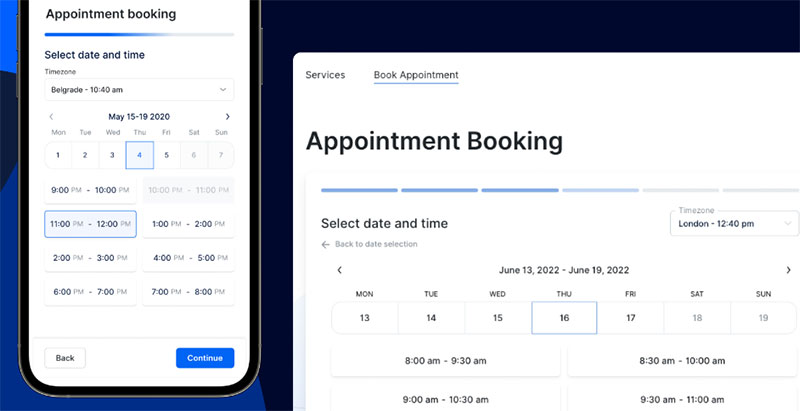
Trafft bundles a bookable website, staff calendars, and payments into one flat-rate subscription. Nothing gets skimmed off individual appointments.
It suits salons and barbershops that would rather see an identical number on the invoice every month than watch a percentage vanish from each booking. The flat price holds no matter how full the calendar gets, and past the free tier appointments are unlimited.
- Branded booking website with QR-code and embeddable widget options
- Two-way sync with Google Calendar, Outlook, and Apple Calendar
- Automated email and SMS reminders that cut no-shows
- Recurring appointments and multi-location scheduling on the Professional and Business plans
- Runs as a standalone hosted page or a native WordPress plugin
The free plan stops at 100 appointments a month on a single location. Paid tiers open well under $15 a month on annual billing and climb to a Business plan with 30 users and unlimited locations.
No commission on any booking, ever. There's a 14-day trial plus a 30-day money-back guarantee on paid plans, and it runs as a hosted page or a WordPress plugin depending on what the salon's site already looks like.
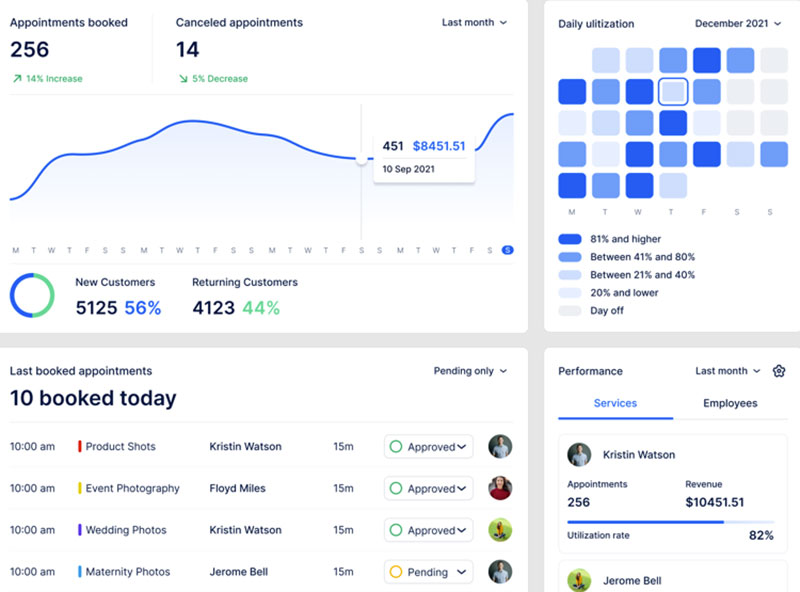
Two things to budget for. SMS notifications run on purchased credits on the lower tiers, and custom domains plus removing Trafft branding sit on the top Business plan. If white-labeling is non-negotiable for you, start on that tier.
A private-practice owner reviewing Trafft on Trustpilot said it checked every box she needed after trying several other booking platforms, and called out how fast the team ships new features.
Its dedicated hair-salon page runs a best hair salon booking system pitch aimed at stylists rather than service businesses in general.
Because the price never moves, a fully booked barbershop chair pays the same subscription as one running half-empty. That's the exact inverse of the commission model most of the marketplace-driven tools further down this list use.
Amelia: best for salons already running a WordPress website
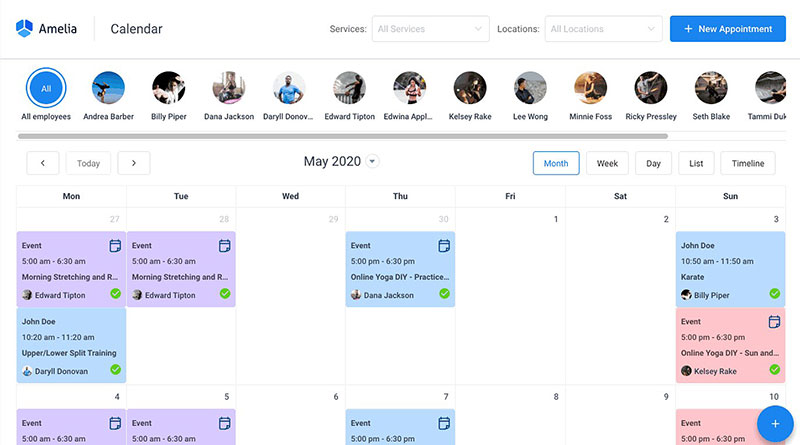
Amelia adds booking directly onto a site you already own. No separate hosted page, no booking subdomain, no sending clients somewhere that looks nothing like the rest of your brand.
Which makes it the obvious pick for salons already on WordPress and reluctant to split their traffic across two domains.
| Attribute | Amelia detail |
|---|---|
| Best for | WordPress-based salons and spas |
| Standout capability | most installed WordPress salon booking plugin, 90,000+ active installs (WordPress.org, 2026) |
| Free trial | none, but a 15-day money-back guarantee |
- Step-by-step or catalog-style booking form via shortcode or Gutenberg block
- Multi-employee scheduling with individual working hours and days off
- Deposit payments and refunds through PayPal, Stripe, WooCommerce, Mollie, or Razorpay on paid tiers
- Free Square payment processing even on the limited Lite version
The Lite version is free on WordPress.org and, like every plugin in the directory, ships under the GPL, so the code is there to inspect. If licence terms are what's driving your shortlist, the wider open source scheduling software comparison covers where each option actually sits.
The Pro annual license, its most popular tier for growing salons, runs $149 the first year when discounted from a $199 list price.
Living on your own domain means it inherits the SEO and branding you've already paid for. Reviews back that up: 4.6 stars across 785 reviews on WordPress.org, and a separate 4.9-star average on Capterra. Square payments work even on the free version, which is unusual.
The catch is obvious enough. It's WordPress-only, so Squarespace, Wix, and hosted platforms are out entirely, and the fuller payment and sync features sit on the paid tiers rather than Lite.
One WordPress.org reviewer running a beauty center described using it every day, calling it an essential part of daily operations that integrates cleanly with their site and Google Calendar.
Amelia's own salon page states it is used by more than 400 salon professionals booking over 30,000 appointments a month, and a dedicated hair salon scheduling software walkthrough shows the exact chair-by-chair flow a stylist team would use.
Every other tool here hosts a booking page on its own domain or pushes clients toward a marketplace app. Amelia is the one option built to disappear into a site you already control, and that matters a lot if your traffic and reviews are tied to your own domain instead of a directory listing.
Vagaro - Best for multi-chair salons that want POS, payroll, and marketing bundled in
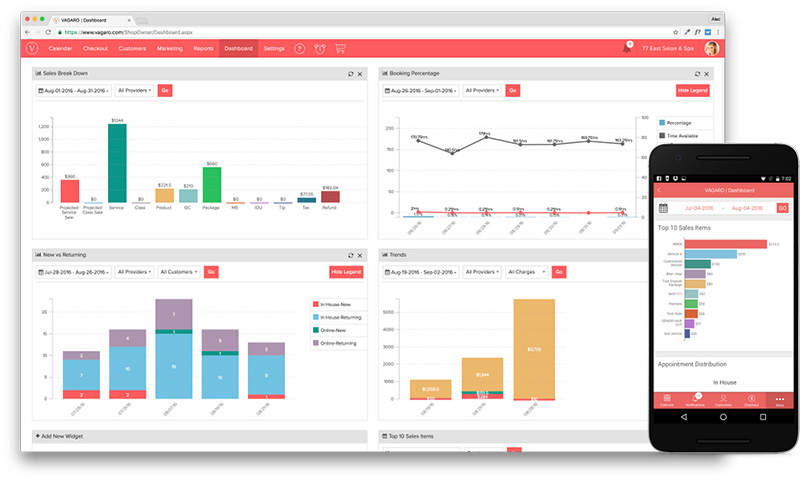
Vagaro isn't really a booking widget. It behaves more like the operating system for a shop running several employees and service lines at once, with scheduling, point-of-sale, payroll, and marketing on one subscription.
Multi-chair salons and spas that want retail, payroll, and the calendar behind a single login are the target. Nothing else on this list covers as much ground from one dashboard.
- Drag-and-drop calendar across multiple staff and service types
- Built-in checkout that behaves like standalone salon POS systems bundled straight into the calendar
- Marketplace listing for new-client discovery, separate from direct booking
- Payroll and commission tracking for employees and booth renters
Vagaro starts around $30 a month (The Salon Business, 2026) and scales by adding bookable calendars as a team grows. A branded mobile app costs roughly $100 a month once published, on top of the base plan, plus a per-location add-on fee (Vagaro, 2026).
One login instead of three separate tools is a real time saver, and the marketplace listing brings in bookings without extra marketing spend.
Then the bill arrives. Per-calendar pricing adds up quickly for larger teams, and a lot of what feels core elsewhere, text marketing and forms and a booking website among them, sits behind separate paid add-ons here.
Owner-run comparison guides that work directly with salon owners describe Vagaro as the workhorse of the category, strong for multi-chair teams that need staff management and reporting beyond simple booking.
Reviewers weighing it against lighter tools usually check Vagaro reviews before committing to per-seat pricing.
The marketplace listing quietly works as a second booking channel, separate from the software itself, and most owners never touch it. Two salons on the identical plan can get wildly different value out of Vagaro depending on whether anyone bothers to promote that profile.
Fresha - Best for shops chasing new-client volume through marketplace discovery
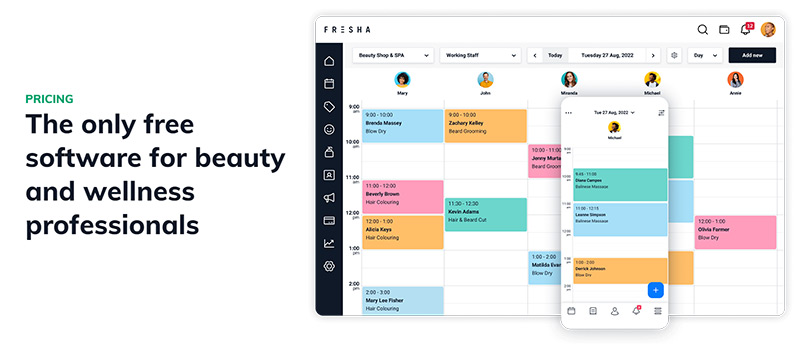
The free-for-salons model ended in 2025. Every business now pays a monthly subscription, plus payment processing, plus a commission on marketplace-sourced clients.
It fits a shop hunting new-client volume more than one built on repeat bookings.
- Aimed at solo professionals and shops actively chasing new clients through a marketplace
- Low starting subscription paired with a large consumer marketplace
- Booking calendar and client management, marketplace placement in the consumer app, integrated card processing billed separately, per-team-member pricing once staff are added
Fresha starts at about $20 a month for an individual or roughly $15 a month per team member (The Salon Business, 2026). Card processing fees and marketplace commissions get billed on top of that subscription rather than bundled into it.
The base subscription is low and predictable next to full-priced competitors, and marketplace exposure arrives without a separate marketing budget.
What that base price hides: a 20% commission (minimum $6) applies to any client who books through the marketplace for the first time, and payment processing runs roughly 2.2% to 3.3% plus a small per-transaction fee (Fresha, 2026).
Marketplace bookings also need a clear salon cancellation policy spelled out up front, or deposit disputes turn into a support headache fast.
Comparisons built around pricing transparency point to Fresha and GlossGenius as a strong fit for a solo stylist who books mostly from repeat clients and social media, needing almost no setup time.
The real cost sits in two layers. There's a modest subscription that scales per team member, then a marketplace commission that only bites when the platform genuinely brings in someone new. A shop built on repeat clients pays close to the subscription alone. A shop leaning on discovery hands over a fifth of that first booking's value on top.
Booksy - Best for independent stylists and barbers building a following through the consumer app
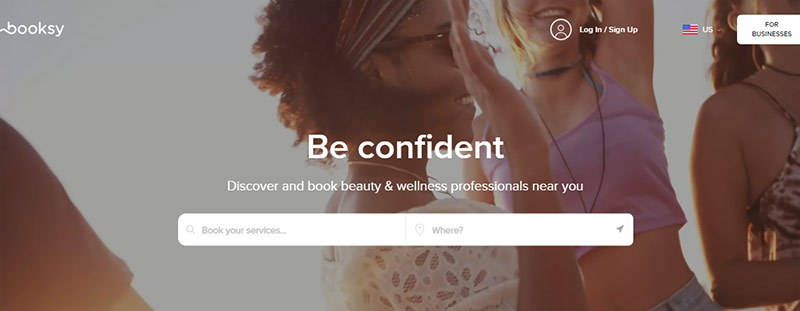
Booksy centers on its consumer-facing app. Independent stylists and barbers get a public profile clients can find and book from directly.
Close to what Fresha does, though Booksy leans much harder into the social and discovery side of things. The feature everyone talks about is Boost, an opt-in placement that pushes a listing higher in the app in exchange for a commission on whatever bookings result.
- Public provider profile inside the Booksy consumer app
- Client messaging and review collection built in
- Boost placement for extra visibility during slow periods
- Card payments and deposit collection at booking
Entry pricing sits around $30 a month for the first user, plus roughly $20 a month for each additional team member (Booksy, 2026), before any Boost spend.
For a solo stylist building a following from nothing, it's strong. Boost spend stays optional and can run only during the weeks that look thin.
Boost commissions run up to 30% on a client's first visit sourced from a boosted listing (Booksy, 2026), which is the steepest number on this page. It's also much less useful for a multi-chair salon that already has a full book of repeat clients.
Directory-style reviewers who work directly with independent stylists rate Booksy stronger than Vagaro for solo app-based discovery, and Vagaro stronger for salons that need real staff management.
Stylists weighing the two usually end up reading a direct Booksy vs Vagaro comparison before switching either way.
Boost gets charged per campaign rather than as a blanket marketplace fee. You can turn the spend on for one slow month and shut it off once the calendar fills, which is a different cost shape than Fresha's per-client commission.
Mindbody - Best for large spas and multi-location groups already inside its ecosystem
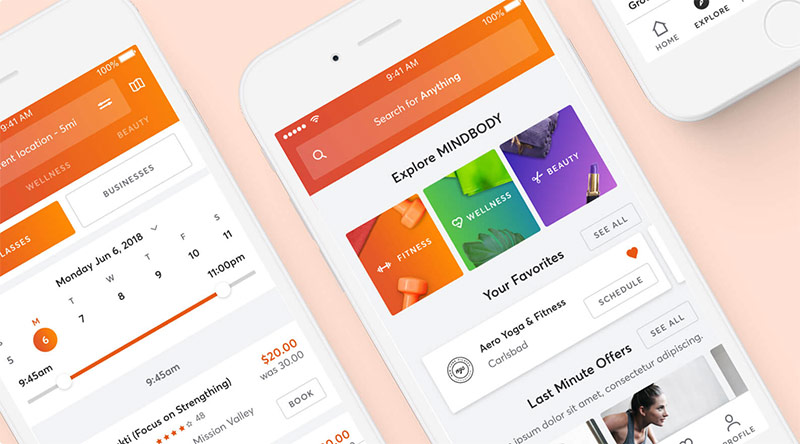
Enterprise-grade wellness platform, and most large spas and multi-location groups already run it for classes, memberships, and retail rather than appointments alone. It's for an operation that outgrew single-purpose scheduling a while ago.
| Attribute | Mindbody detail |
|---|---|
| Best for | large spas and multi-location wellness groups |
| Standout capability | deepest third-party integration library on this list |
| Marketplace commission | 20% on marketplace-sourced clients, capped at $30 (Mindbody, 2026) |
Class, membership, and appointment scheduling all sit in one system, with a marketplace app for discovery, retail and payroll tools for multi-location groups, and a branded client app sold as an add-on.
Pricing is not published and requires a sales quote. Third-party reviewers report an entry point around $99 a month per location, climbing well past that once locations and add-ons stack up, which typically makes it the priciest option here for a multi-site group (thesalonbusiness.com, 2026).
The integration ecosystem other companies built around it is genuinely deep, and handling classes and memberships next to appointments matters for spas running both.
Against that, marketplace-sourced bookings carry the 20% commission capped at $30 per booking, and quote-only pricing with contract complexity pushes plenty of smaller shops toward lighter alternatives before they ever see a demo.
A steady stream of searches for Mindbody alternatives comes from shops that outgrow its contract structure well before they outgrow its actual feature set.
Its size cuts both ways. That integration ecosystem exists because other wellness software companies built specifically for compatibility with Mindbody, not because Mindbody itself moved fastest on features.
GlossGenius - Best for solo stylists who want a design-forward booking page
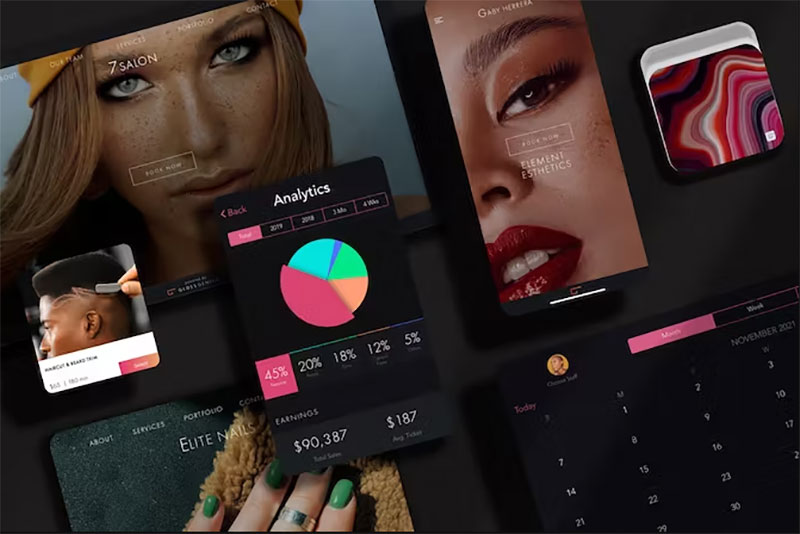
GlossGenius pairs a good-looking booking page with integrated payments, aimed squarely at solo stylists who want the booking link to look as polished as the portfolio it sits next to.
It skips the payroll and inventory depth the multi-chair platforms carry, and doesn't pretend otherwise.
- Built for solo stylists who want a visually polished booking page without a design budget
- Template-driven booking pages and a custom website builder bundled into the base plan
- Custom-branded booking page and site builder, integrated card payments, client messaging and reminders, no marketplace commission structure
Starting price runs about $28 a month on monthly billing (around $24 a month if paid annually), with a flat per-transaction payment fee of 2.6% on top (GlossGenius, 2026).
Visually it's the strongest thing on this list, and there's no monthly commission on new clients the way Fresha and Booksy handle it.
The per-transaction fee still cuts into margin on every single booking, though. The feature set narrows sharply outside beauty, and there's no QR-code booking option at all, which surprised me.
Comparison guides built for salon owners keep flagging its templates and integrated payments as a strong combination for a one-chair operation, which is why it shows up on best hair salon software shortlists for independent stylists.
Since the cost is a flat percentage per transaction rather than a subscription plus a marketplace cut, comparing it to Vagaro or Fresha only makes sense once you know your average ticket. A high-ticket colorist pays more in fees here. A quick-cut barber usually pays less.
Square Appointments - Best for solo providers already processing cards through Square
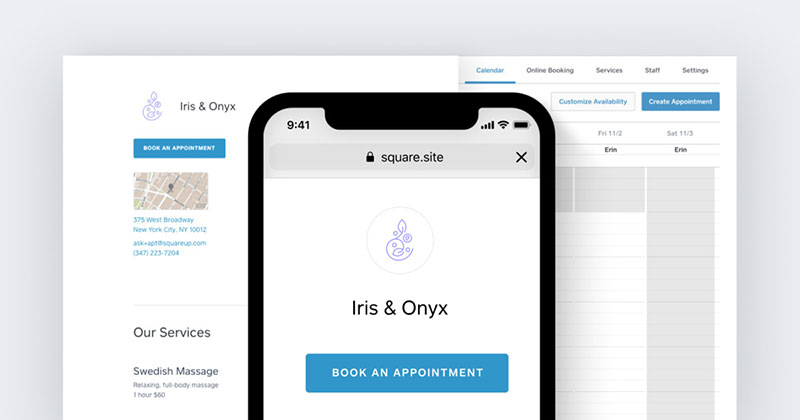
Free scheduling attached to Square's payment processing, aimed at a solo operator already taking cards through Square. Teams start paying per location the moment a second provider joins the calendar.
The single-provider tier is properly free, not a trial with a countdown.
- Free plan for a single provider with unlimited bookings
- Card processing and card readers on the same account
- Basic calendar and reminder automation
- Team plan adds staff calendars per location
Free for a solo provider; team plans run about $49 a month per location on the Plus tier (Square, 2026).
Card processing and scheduling share one login and one payout, which removes a reconciliation step most owners hate.
Feature depth stays basic next to Vagaro or Mindbody, and multi-location reporting is noticeably thinner than what dedicated salon platforms offer.
Square Appointments reviews across major software directories consistently praise the zero-cost solo tier as the easiest entry point here for someone new to booking software.
That free tier exists because Square earns on the card-processing side, not the booking side. Think of it less as free scheduling software and more as a payments company subsidizing a scheduler to keep transactions on its own rails.
Mangomint - Best for established multi-chair salons ready to pay for automation
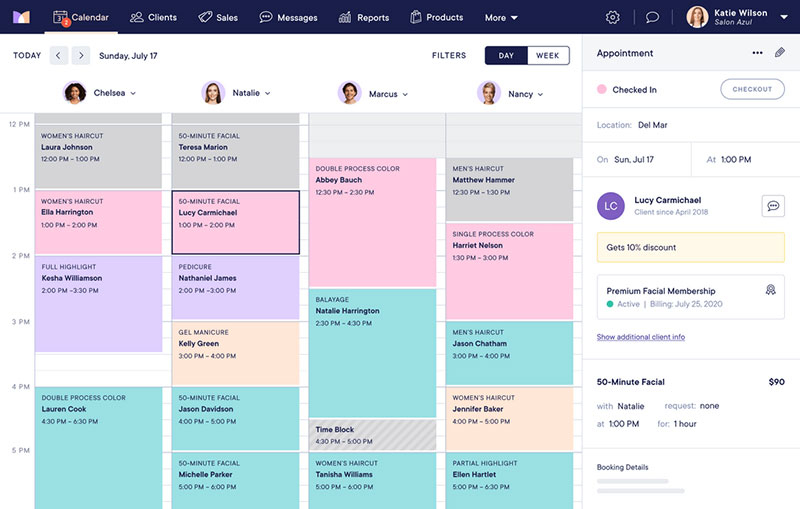
Mangomint targets established multi-chair salons and spas that want automation, two-way texting, and integrated payments sitting on top of scheduling. It costs more than the solo-focused tools and expects a team big enough to actually use the automation.
| Attribute | Mangomint detail |
|---|---|
| Best for | established multi-chair salons and spas |
| Standout capability | two-way client texting built into the calendar |
| Marketplace commission | none |
Two-way SMS conversations happen inside the calendar itself, alongside automated marketing and rebooking campaigns, integrated payments and reporting, and no marketplace commission on any booking.
As of its simplified August 2026 pricing update, Mangomint publishes a flat $120 a month per location plus $10 a month per user, with phone, marketing, and payroll available as separate add-ons. No sales quote required (Mangomint, 2026).
No commission structure at all, unlike Fresha, Booksy, or Mindbody. And the automation genuinely removes manual front-desk work once a team is large enough to feel it.
For a one-chair operation it's overkill and priced like it. You'd pay more than Vagaro or Square Appointments for the same basic scheduling function.
Owner-focused comparison guides describe it as the grown-up option built for established teams wanting slick automation and reporting, calling it overkill for a single-chair salon.
The pricing only pays for itself once a shop has enough staff and volume that automation replaces real front-desk hours. The same subscription that looks expensive for a two-chair shop looks cheap for a twelve-chair one.
Phorest - Best for multi-location groups focused on rebooking and loyalty marketing
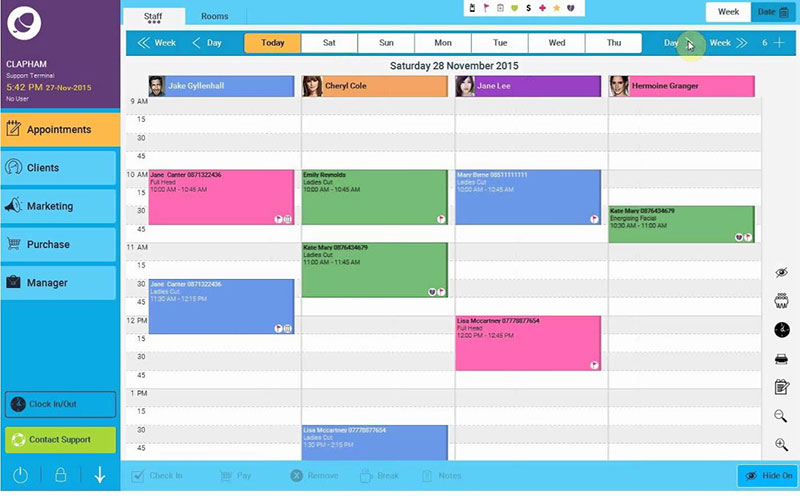
Phorest leans on marketing automation, loyalty campaigns, and rebooking tools as heavily as it leans on the calendar. It's aimed at multi-location groups chasing repeat visits rather than just filled slots, with a branded client app arriving on higher tiers.
- Built for multi-location salon groups focused on rebooking and loyalty marketing
- Marketing and loyalty automation designed around repeat-visit behavior
- Automated rebooking prompts and loyalty point tracking, branded client app on higher tiers, multi-location staff and service management, no marketplace commission
Phorest does not publish subscription prices; every plan is quote-based, with third-party reviewers reporting entry pricing around $150 a month and one-year contracts for most new customers (Phorest, 2026).
The marketing and loyalty tooling goes well past what booking-only platforms include, and no commission gets carved out of new-client revenue.
It's overbuilt for a single-chair or solo operation. Quote-only pricing and the typical one-year contract also mean more upfront negotiation than anyone expects from a booking widget.
It sits alongside Mindbody and Zenoti as one of the few platforms in this category offering a branded client app on its higher tiers, a feature most single-purpose booking tools skip entirely.
Its marketing layer works like a lightweight beauty salon marketing tool bolted onto a calendar, built for groups running loyalty and rebooking campaigns across locations rather than one stylist trying to fill next Tuesday.
None of these ten will fix a schedule that was badly designed in the first place.
For a wider pass across the POS, payroll, and marketing layers this list only touches, a broader best salon software comparison digs further into that side of the decision.
What Is Salon Scheduling Software?
Think of it as a subset of business scheduling software that books staff, chairs, and services simultaneously instead of holding a single calendar slot.
It lives inside the broader appointment booking market, but it exists as its own thing because a haircut, a color, and a blowout each run different lengths and often need different people.
What it replaces is usually a paper book, a shared spreadsheet, or a generic calendar app that was never designed for variable service duration in the first place.
What it isn't: a full point-of-sale system, an accounting platform, or a standalone marketing tool, even though several vendors bundle pieces of all three.
- Staff calendars with individual working hours
- A service menu tied to duration and price
- A client-facing booking page or widget
- Automated reminders and payment collection
Calendly is the useful counterexample. Built for one-on-one meetings, it has no concept of a service menu or chair-based staff scheduling, which is why salons that try to run bookings through it outgrow it within months.
How Is Salon Scheduling Software Different From General Appointment Scheduling Software?
A generic scheduler books one person against one calendar for a fixed slot.
Salon software books a client against a service, a staff member, and sometimes a chair or room, all at once, and each of those can carry its own duration.
Service Duration, Buffer Time, And Add-On Configuration
The mechanism underneath is that a single service can carry multiple durations and prices depending on who performs it.
- Buffer time before or after a service for cleanup or prep
- Add-on services stacked onto a base appointment (a gloss added to a cut)
- Per-employee pricing for the same service
Amelia lets a salon set a different price and duration for the same service depending on which employee performs it, so a senior colorist and a junior one are never booked on the same clock.
Booking Pages And Embeddable Widgets
Most platforms spin up a hosted booking page automatically, then let a salon embed the same form as a widget on its own site.
This is where booking page design earns its keep. A cluttered form with too many steps loses bookings before anyone gets near a time slot.
| Element | Hosted page | Embedded widget |
|---|---|---|
| Lives on | Vendor's subdomain | Salon's own site |
| Branding control | Limited on free tiers | Matches existing site design |
| Setup effort | Minimal | Requires basic site access |
Trafft and Amelia both offer booking page design options through templates and shortcodes, one on a standalone domain and one inside an existing WordPress theme.
Staff And Resource Scheduling In Salon Scheduling Software
The job underneath everything else is matching a client to a staff member and a resource, a chair or a treatment room, without double-booking either.
Working hours, days off, and special hours get set per employee rather than per business, since a colorist and a receptionist almost never share a schedule.
- Individual staff calendars with days off and special hours
- Shared or single resources that limit bookings independently of staff
- Multi-location staff assignment for salons running more than one site
- Employee-specific service lists, so not every stylist offers every service
Vagaro's calendar treats a styling chair and a colorist's own schedule as two separate resources. Both have to be open at the same time before a slot appears as bookable.
How Calendar Synchronization Works In Salon Scheduling Software
Calendar sync pulls events from an external calendar into the booking system, so a dentist appointment on a stylist's personal calendar blocks their availability automatically.
Direction is the part people get wrong. Most platforms sync one-way, pushing into the external calendar, while a smaller set support true two-way sync that also pulls busy blocks back in.
- Google Calendar and Outlook cover the majority of external sync requests
- Apple Calendar sync exists on fewer platforms and often sits behind a paid tier
- Time zone handling matters for salons booking clients traveling from out of town
Trafft syncs up to six external calendar accounts per plan on its higher tiers, covering Google, Outlook, and Apple accounts at once.
A salon booking someone from another region still needs correct scheduling across time zones, or the confirmation email shows the wrong hour entirely and nobody notices until the chair sits empty.
How Automated Reminders Reduce No-Shows In Salon Scheduling Software
Reminders fire on a fixed schedule, usually 24 hours out and then again a few hours before, without anyone at the desk touching a phone.
The best evidence for this doesn't come from salons at all. A widely cited systematic review of hospital-appointment reminders found automated reminders cut non-attendance by a weighted mean of 28.9% across 29 controlled studies, compared with 39.1% for a live staff phone call (Hasvold and Wootton, 2011). A human voice still wins, but not by as much as most owners assume.
- Average salon no-show rate: 3%, with an 8% cancellation rate (Zenoti, 2025 Benchmark Report)
- Medspas run the highest no-show rate in the category, at 5% (Zenoti, 2025 Benchmark Report)
- Automated reminders cut non-attendance by a weighted mean of 28.9% across 29 studies, versus 39.1% for a live phone call (Hasvold and Wootton, 2011)
No-show tagging handles the other half. A customer flagged after two missed visits gets treated differently on the next booking attempt.
Amelia's no-show tag sits directly on the customer profile, so front-desk staff see the pattern before confirming anything new.
Reminders only fix forgetting. Deposit requirements exist as a separate layer aimed at people who cancel deliberately rather than accidentally, and consistent appointment reminder templates for SMS and email keep that first layer from drifting as different staff write their own versions.
How Payment And Deposit Processing Works In Salon Scheduling Software
Payments run through a connected gateway rather than the booking software itself. The software initiates the charge and records the result, nothing more.
A deposit at booking holds part of the service cost upfront. Payment at checkout charges the full amount only after the service is finished.
- Stripe, PayPal, and Square cover most deposit and checkout flows
- WooCommerce and Mollie appear on WordPress-native platforms specifically
- Refunds trigger back through the same gateway that took the original payment
Amelia processes Square payments even on its free Lite plugin, while reserving Stripe, PayPal, WooCommerce, and Mollie for paid tiers.
Is Client Payment Data Secure?
Card data rarely touches the booking software directly, which is the whole point of the gateway model.
PCI DSS applies to any business that stores, processes, or transmits cardholder data, regardless of size. A hosted gateway like Stripe or Square absorbs most of that responsibility on the salon's behalf.
What stays on you is smaller but real. Keep staff logins unique, limit who can view stored customer records, and confirm the gateway itself holds current PCI certification. Not the plugin. The gateway.
WordPress Plugin Or Hosted SaaS: Choosing A Salon Scheduling Software Platform
A WordPress plugin lives inside a site the salon already owns. A hosted SaaS platform lives on the vendor's domain, with the salon renting access rather than owning the installation.
| Factor | WordPress plugin | Hosted SaaS |
|---|---|---|
| Data ownership | Lives in the salon's own database | Lives on the vendor's servers |
| Design flexibility | Matches the existing site theme | Limited to vendor templates |
| Setup requirement | Needs an existing WordPress site | Works standalone, no site needed |
| Typical integrations | WooCommerce, Elementor, Divi | Zapier, native app marketplaces |
Going the plugin route gets you full data ownership, the SEO your site already earned, and no second domain to manage. It also assumes you have a working WordPress install, and your booking speed becomes hostage to your hosting quality.
Hosted SaaS works immediately with no website at all, and updates land on the vendor's schedule instead of yours. The trade is that booking data sits outside your own systems, and branding options stay thin on lower tiers.
WordPress itself runs about 41% of all websites (W3Techs, 2026), which explains why so many salon booking tools ship a WordPress plugin version even when their main product is hosted SaaS.
Third-Party Integrations By Platform Type
Integration depth splits cleanly along platform lines.
- WordPress plugins connect to page builders (Elementor, Divi) and WooCommerce directly
- Hosted SaaS platforms lean on Zapier and native app marketplaces instead
- Both types typically support Google Calendar, Mailchimp, and Google Analytics
Amelia and Trafft's WordPress plugin both install straight from the WordPress.org repository, since WordPress at its core qualifies as open source business software a salon owns outright rather than leases.
Vagaro and Fresha exist only as hosted platforms with no self-hosted option whatsoever, which is exactly why building a booking website from scratch looks completely different depending on which category a salon starts from.
How Much Does Salon Scheduling Software Cost?
The pricing models in this category charge for fundamentally different things, and comparing them at face value will mislead you.
A flat subscription charges monthly regardless of bookings. A per-transaction model takes a percentage of each sale. A marketplace commission only charges on clients the platform itself brought in.
Flat Subscription Versus Commission-Based Pricing
| Model | How it charges | Best fit | Main risk |
|---|---|---|---|
| Flat subscription | Fixed monthly fee | High-volume, fully booked shops | Overpaying at low volume |
| Per-transaction | Percentage of each sale | Variable or seasonal volume | Cost scales with ticket size |
| Marketplace commission | Percentage on new clients only | Shops chasing discovery | Margin loss on repeat visits later billed as new |
A fully booked chair on a flat subscription pays exactly what a half-empty one pays. Commission pricing does the opposite, and which of those you prefer depends entirely on how busy you expect to be.
When Staff Or Location Count Justifies A Higher Plan
Staff count is usually the first thing that forces an upgrade, since per-user pricing kicks in past a certain team size on most platforms.
Location count is the second trigger. Single-location plans rarely include the multi-site staff and inventory rules a second address needs.
- Under 5 staff, one location: entry tier or free plan usually covers it
- 5 to 15 staff: mid-tier plans, often with per-user add-on pricing
- Multiple locations: dedicated multi-location tiers become necessary
Several platforms still publish genuinely free online booking systems for a single provider, Square Appointments and a scaled-down Trafft plan among them, before any per-seat cost enters the picture.
How To Set Up And Switch To Salon Scheduling Software
Setup order matters more than most salons expect.
Services and categories first, staff and working hours second, payments and notifications last. Each step depends on the one before it, and doing them out of order means redoing half of them.
- Create service categories and add services with duration and price
- Add staff members, assign services, and set working hours
- Connect a payment gateway and configure deposit rules
- Set up automated email and SMS notifications
- Test the booking page end to end before sharing the link publicly
Salons researching how to set up an online booking system for the first time almost always underestimate step five, then launch with a form nobody has walked through as an actual client would.
Migrating Existing Client And Appointment Data
Most salons switching platforms are coming off a spreadsheet, a paper book, or an old desktop system. Rarely a blank slate.
A CSV import handles the bulk of a client list in one pass, names and phone numbers and emails and notes included.
Amelia's CSV customer import exists for exactly this, letting a salon bring years of client history into the new system in a single upload instead of re-typing it.
Appointment history is the harder half. Most platforms only import client records, not the full booking log sitting in an old appointment Excel template or paper diary, so plan on losing some of it.
Common Mistakes When Switching Booking Systems
The same handful of mistakes account for most failed migrations.
- Skipping staff training, which means a stylist who doesn't know the interface goes back to texting clients directly inside a week
- Migrating data too late, since importing client lists the night before launch leaves zero time to catch errors
- Not running systems in parallel, because switching cold on a single day guarantees a booking falls between the two
A short overlap period, old and new running side by side for a week or two, catches most of this before a client ever notices anything happened.
When Salon Scheduling Software Does Not Solve The Problem
Software fixes a calendar problem.
It doesn't fix a marketing problem, a retention problem, or a staffing problem, though all of those get blamed on "the booking system" eventually.
Here's the number that puts it in perspective: 42% of repeat clients generate 80% of total salon revenue (Zenoti, 2025 Benchmark Report). No scheduling platform creates that concentration, and none of them fix it either.
- A stable client base booking entirely through direct texts has little to gain from marketplace discovery features
- Multi-location staff tools add setup overhead a single-site shop never uses
- Commission-based pricing can cost more than doing nothing, if the salon rarely gets new clients through the platform anyway
A one-chair barber running on repeat clients who book by text gains almost nothing from multi-location scheduling built for a five-site chain, and often ends up paying monthly for features nobody opens.
Is It Worth It For A Solo, One-Chair Operation?
Usually yes, but stay on the free or entry tier.
A single provider still gets real value from automated reminders and a client-facing booking page, since both address genuine costs (no-shows, and the endless back-and-forth of picking a time) that have nothing to do with chair count.
What a solo operator rarely needs is multi-location tooling, employee commission tracking, or a branded mobile app. Those exist for a team.
FAQ on Salon Scheduling Software
What Is Salon Scheduling Software Not?
It is not a full point-of-sale system, payroll platform, or marketing suite on its own. Vagaro bundles payroll and POS directly; Trafft and Amelia do not, leaving retail sales and accounting to a separate tool.
Does Salon Scheduling Software Work For Barbershops And Spas, Not Just Hair Salons?
Yes. The same staff-and-resource scheduling logic that books a colorist's chair also books a barber's station or a spa treatment room. Trafft and Amelia both run dedicated barbershop and beauty-salon setups, while Zenoti and Phorest lean further toward spa and wellness.
Can Clients Book An Appointment Without Creating An Account?
Yes, on nearly every platform in this category. A booking widget takes a name, phone number, and email at checkout, not a password. An account only becomes relevant later, for viewing appointment history or managing a saved payment method.
Do Staff Need Training To Use Salon Scheduling Software?
Minimal, for the calendar itself. Most staff learn drag-and-drop scheduling and status updates within a single shift. Deposit rules, custom notification templates, and multi-location settings take longer, and usually fall to the owner or a designated admin rather than every stylist.
What Happens To Bookings If The Internet Or Software Goes Down?
Hosted SaaS platforms go fully offline for staff and clients during an outage, and nothing new gets booked. A self-hosted WordPress plugin like Amelia stays reachable as long as the salon's own hosting stays up, since the calendar lives on that same server.
What Does Salon Scheduling Software Cost To Maintain?
Year two is where the pricing page stops being accurate. Salon scheduling software costs more once SMS credit renewals, WordPress license fees, and hosting upkeep get stacked onto the base subscription.
Those three compound in a specific order.
- SMS credit renewals
- Plugin or platform license renewal
- Hosting and update time
SMS grows fastest because it scales directly with appointment volume instead of staying flat. License renewal is the easiest one to forget, since Amelia bills annually rather than monthly and a year passes quickly.
Hosting upkeep never appears on an invoice at all, because no vendor absorbs it automatically on a self-hosted plugin the way a hosted SaaS subscription quietly does.
Choosing the flat-fee, self-hosted route trades a lower monthly bill for maintenance work you handle yourself. Worth it for plenty of salons, but it isn't free.
Once the calendar and payments run cleanly, the constraint left is rarely the software. It's getting more clients into a salon in the first place.