




The wrong booking platform won't make itself obvious. It costs you in small ways you don't notice month to month. A client who couldn't book and went elsewhere. The twenty minutes you spend every morning fixing what the software should've handled. A plan tier you're paying for with features you never touch. None of it stings on its own. A year of it does.
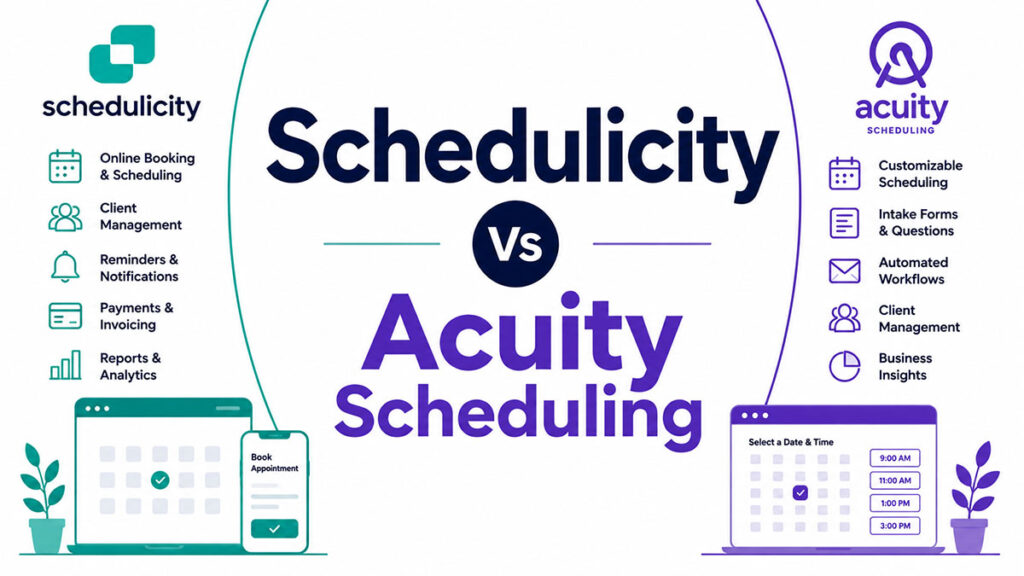
So, Schedulicity or Acuity. People get stuck here because the two read almost the same on a feature list. Online booking, automated reminders, calendar sync, payment collection, both have all of it.
The real difference is who each one was actually made for, and that's not something a feature list shows you.
Below I get into the scheduling tools, the pricing, the integrations, how each handles clients, and what shows up in real user reviews. Enough to pick one and not wonder later if you got it wrong.
What Are Schedulicity and Acuity?
Schedulicity is a cloud booking and business-management platform made for wellness, beauty, and fitness businesses. It launched in 2009, and Vagaro bought it in January 2025, which pushed it further into the salon and studio market.
Acuity comes at scheduling from a broader angle. It's a client self-scheduling tool, picked up by Squarespace back in 2019, and it serves all sorts of service industries, everything from wellness practices to consultants and photographers.
Both run on the usual subscription SaaS model, and yes, both cover the booking-reminders-calendar-payment basics you'd expect. The split shows up immediately in who they're chasing. Schedulicity goes vertical, building specifically for salons, massage therapists, yoga studios, that kind of business. Acuity stays industry-agnostic, happy to run booking for nearly any appointment-based service. That one choice ripples out into almost every other difference between them.
For market context, appointment scheduling software was worth around $470 million in 2024 and is growing at a 16.1% annual clip through 2033 (SkyQuest, 2025). Both tools get named among the big players in the space, sitting alongside Calendly, Mindbody, and Square Appointments (Verified Market Research, 2025).
Who Is Each Platform Built For?
Schedulicity has one user firmly in mind: the owner of a multi-provider wellness or beauty shop. Picture a hair salon, a massage practice, a yoga studio, a personal-training space, anywhere a handful of staff are all taking client bookings at once. The whole architecture is built around that, which is why multi-staff scheduling shows up on every plan rather than being dangled as an upsell.
Acuity casts a far wider net. 95% of its reviewers are small businesses, and Health, Wellness and Fitness tops its industry mix at 18% (Capterra, 2024). But it pulls strong adoption from coaches, consultants, photographers, tutors, therapists too. Basically any solo or small-team operator who just needs clean, dependable self-scheduling and doesn't want the overhead of managing a whole roster of providers.
So the rule of thumb writes itself. Running a salon with 4 stylists? Schedulicity is probably your tool. Flying solo as a photographer or a life coach with one calendar to manage? Acuity will get out of your way faster.
As of 2026, over 2,894 companies are actively on Schedulicity, most of them in the 0 to 9 employee range (6sense, 2026). Acuity's base skews small in a similar way, it's just spread across a lot more types of business.
Schedulicity's Core Users
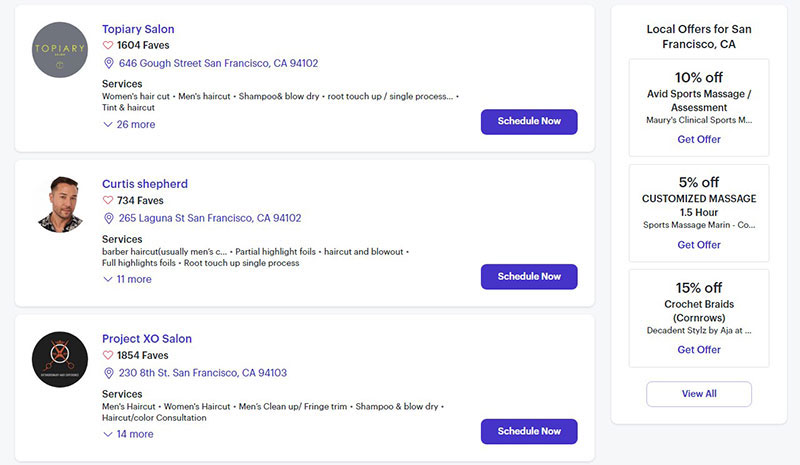
Schedulicity's top 3 service categories are acupuncture, massage therapy, and nutrition businesses (6sense, 2026).
- Hair and beauty salons needing multi-stylist booking
- Yoga and fitness studios running group classes
- Massage therapists and wellness coaches
The platform also shows up frequently in beauty salon scheduling software comparisons because of its class pack and series booking features, which most solo-operator tools don't include.
Acuity's Core Users
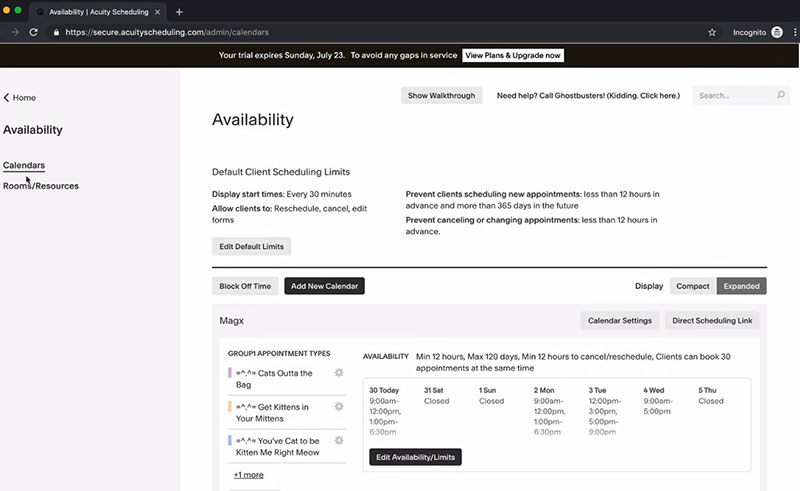
Versatility is Acuity's main advantage here. It works well for appointment-based businesses where deep calendar customization matters more than team management.
- Coaches and consultants managing 1-on-1 bookings
- Photographers and creative professionals
- Therapists and mental health practitioners
- Online tutors and educators
For a consultant scheduling software use case specifically, Acuity's intake form customization and Zoom integration make it a practical choice without much setup overhead.
How Do the Scheduling Features Compare?
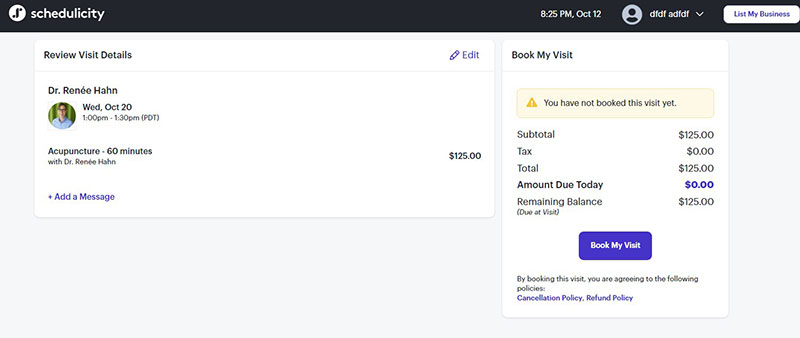
Both platforms cover the basics: online booking, automated appointment reminders, cancellation management, and calendar sync. Where they split is in depth and direction.
A 2025 study found that online-booked appointments had a no-show rate of just 1.8%, compared to 5.9% for offline bookings (Reservio, 2025). Both platforms are built to capture that advantage through automated reminders and client self-scheduling flows.
| Feature | Schedulicity | Acuity Scheduling |
|---|---|---|
| Class and group booking | Native, with class packs | Supported but limited |
| Multi-staff scheduling | Core feature, all plans | Available on higher tiers |
| Intake forms | Basic | Advanced with conditional logic |
| Calendar sync | Google Calendar, iCal | Google, Outlook, iCloud, Office 365 |
| Buffer times and availability rules | Standard | Granular control |
Class and Group Booking Support
Class scheduling is native to Schedulicity, and it shows. You can spin up a recurring class series, sell class packs, run a waitlist when a session fills, and let clients enroll themselves straight from the booking page. No bolt-ons, no fiddling.
Acuity does handle group appointments and packages, but it wasn't built around the class model the way Schedulicity was, and you feel that difference. If you're a yoga instructor or a studio running the same weekly schedule, Schedulicity's whole structure just fits, and you're not inventing workarounds to make it behave.
Calendar Sync and Availability Rules
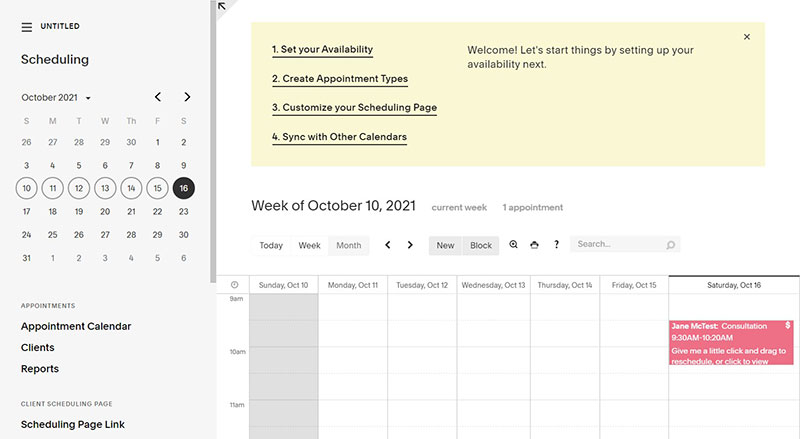
Acuity is the more connected one here. It syncs with Google Calendar, Outlook, iCloud, and Office 365, and on top of that you get buffer times, availability windows you can set differently for each appointment type, and automatic timezone detection for clients booking from another region.
Schedulicity keeps it leaner, syncing with Google Calendar and iCal. For a team-based setup the availability controls are perfectly solid. Where it falls short is the fine-grained stuff, the appointment-level control a solo operator often wants over their own calendar. Acuity simply gives you more knobs to turn there.
And if your business runs across time zones a lot, that's where Acuity earns its keep. The built-in conversion sorts it out automatically while the client books themselves, which quietly kills a whole chain of "wait, is that your 2pm or mine?" emails.
How Do the Payment and Billing Features Compare?
Neither platform charges per-booking fees. Both run on subscription billing with payment processing built in.
The structural difference: Schedulicity runs its own payment processor (Schedulicity Pay), while Acuity connects to Stripe, Square, and PayPal as third-party processors. That means Schedulicity keeps the payment experience inside a single system, and Acuity gives you more choice over which processor you use.
Payment Tools by Platform
Schedulicity Pay: Competitive transaction rates, gift certificates, service packages, and membership billing all available natively.
Acuity: Accepts Stripe, Square, and PayPal. Supports deposits, coupons, tipping, and invoicing.
For businesses running hair salon software with retail product sales alongside services, Schedulicity's integrated payment setup handles that more cleanly. For a photographer or consultant who already uses Stripe for other billing, Acuity's Stripe integration slots in without forcing a processor switch.
Both platforms support automated payment collection at booking, which research shows reduces no-show rates significantly. Koalendar data (2026) found that 92% of businesses report direct revenue loss from no-shows, making upfront payment collection one of the highest-value features in either tool.
How Do the Client Management Tools Compare?
Client management is where Acuity has a clear structural advantage for businesses that rely on detailed intake and pre-appointment data collection.
Acuity's intake forms support conditional logic. That means questions can change based on previous answers. A therapist can ask different follow-up questions depending on whether a client is booking an initial consultation or a return visit. Schedulicity's intake forms don't have this capability.
Client Profiles and History
Schedulicity stores client visit history, appointment notes, and service preferences per provider. For multi-staff businesses, that means each stylist or therapist has a client record tied to their profile.
Acuity tracks client appointment history and form responses but does not organize records by individual staff member the same way. Its client management is stronger for solo operators who own every record directly.
CRM Integrations and Third-Party Connectivity
Neither platform is a full CRM. But Acuity connects to Salesforce, Mailchimp, ConvertKit, and thousands of other tools via Zapier, which extends its client data reach considerably. Schedulicity's third-party integration list is shorter.
For businesses building clientele and needing to track lead sources, re-engagement timing, or email segmentation, Acuity's Zapier connectivity is a real advantage. Schedulicity works better for businesses that live entirely inside the platform rather than routing data across multiple tools.
If you're a salon owner trying to grow your client base, Schedulicity's built-in marketplace gives you a client discovery channel that Acuity simply does not have. That's a different kind of client management value.
What Integrations Does Each Platform Support?
Acuity's integration ecosystem is significantly wider. Schedulicity's is deeper within its niche.
The appointment scheduling software market is consolidating around platforms that connect easily to existing business stacks. Technavio (2024) noted the market's forecast to grow by $257.9 million between 2024 and 2029, driven partly by businesses demanding better software connectivity.
Acuity's Integration Stack
The native list here is deep. Zoom and Google Meet for calls, Mailchimp and ConvertKit on the email side, Salesforce, QuickBooks, the full payment lineup of Stripe, Square, and PayPal, plus Squarespace's website builder. Most of what a service business actually reaches for is already in the box.
Past that, Zapier on the paid plans wires Acuity into 5,000-plus other apps. Take a photographer running Acuity next to a CRM, an email tool, and some cloud storage. Zapier is what quietly holds all those pieces together so the data isn't getting copied around by hand.
There's also a Microsoft Teams integration, letting Teams users book and manage appointments without leaving the platform (Technavio, 2024). That's a distinctly enterprise touch, and it's the kind of thing Schedulicity just doesn't bring to the table.
Schedulicity's Integration Stack
Schedulicity integrates with Google Calendar, Instagram, Facebook, QuickBooks, and Xero (Software Finder, 2024).
That's a lean list compared to Acuity. The Instagram "Book Now" button integration is genuinely useful for salons driving bookings through social media, but outside that, Schedulicity isn't built for businesses that need to route data across multiple platforms. It's built for businesses that want everything in one place.
How Does the Marketing and Promotion Capability Compare?
This is where Schedulicity has a structural advantage that Acuity simply cannot match: a built-in client discovery marketplace.
82% of consumers prefer booking online, and 48% have switched providers due to poor booking experiences (SchedulingKit, 2026). Getting discovered in the first place matters just as much as the booking experience itself.
Schedulicity's Built-In Marketing Tools
Schedulicity includes 3 marketing capabilities that Acuity does not offer natively:
- The Marketplace: A searchable directory where clients can discover local wellness and beauty businesses directly inside Schedulicity's platform
- Email marketing: Built-in campaign tools with templates and client list segmentation
- PROMOTE feature: Promotional campaign creation for deals and offers, no third-party tool needed
For a salon that needs a hair salon marketing strategy without building a separate email marketing stack, Schedulicity reduces that overhead significantly. A massage therapist running a solo practice doesn't want to manage 4 different software subscriptions.
Acuity's Marketing Approach
Acuity has no native marketplace and no built-in email marketing. All marketing capability comes through integrations. Mailchimp, ConvertKit, and Zapier-connected tools handle what Schedulicity does internally.
For consultants or coaches who already have a Mailchimp list and a clear marketing strategy, that's fine. The integration works well enough. But for a business owner just starting out who wants one system to handle scheduling and promotion, Acuity requires piecing together multiple tools to match what Schedulicity offers by default.
How Do the Pricing Plans Compare?
Schedulicity uses a per-provider pricing model. Acuity uses a flat tier model based on features and staff count, not per-provider cost. That structural difference matters a lot once you start adding staff.
| Plan | Schedulicity | Acuity Scheduling |
|---|---|---|
| Entry-level | $34.99/month (solo) | $16/month (Starter, billed annually) |
| Mid-tier | $44.99–$84.99/month (up to 6 providers) | $27/month (Standard, billed annually) |
| Upper tier | $94.99/month (7+ providers, flat rate) | $49/month (Premium, billed annually) |
| Free trial | 14 days | 7 days |
Acuity's lower entry price suits solo operators with limited budgets. Schedulicity's flat-rate unlimited model suits high-volume booking businesses where adding one more provider doesn't trigger a price jump (ITQlick, 2026).
Acuity provides a 20% discount across all plans on annual billing (Capterra, 2025). Schedulicity offers an equivalent annual plan at $350/year for the solo tier, compared to $419.88 billed monthly (Sonary, 2025).
Where Schedulicity's Pricing Gets Tricky
The catch is the per-provider math. Every extra provider tacks on $10/month over the base solo plan. So a 5-provider salon is already at $74.99 a month before you've added a single extra. Here's the saving grace though: once you hit 7 or more providers, it flattens out to $94.99/month no matter how many people you pile on. For a bigger team, that cap is a genuinely nice deal.
Hold that up against Acuity's Premium plan, which runs $49/month on annual billing and covers up to 36 staff calendars. For a mid-size team, Acuity wins on cost-per-head by a wide margin. It's not even close.
Where Acuity's Pricing Gets Tricky
Acuity's trick is the stuff sitting behind the paywall. SMS reminders, appointment packages, memberships, HIPAA compliance, none of it is on the cheapest tier. You're looking at Standard or Premium for any of those (Capterra, 2025).
Say you're a solo therapist who needs SMS reminders to claw back no-shows. That means jumping from $16 to $27/month on annual billing. Worth it? Probably. One Workflow Automation reviewer reported that switching on SMS reminders at the Standard tier dropped their no-shows by 35% versus email alone (Workflow Automation, 2026), and when a no-show costs you a full appointment slot, that math justifies the bump pretty quickly.
Zoom out and the whole pricing call really hinges on one thing: how many people are on your team. Solo or a tiny crew? Acuity tends to come out ahead. Running a salon with 3 or more staff? Do the actual arithmetic on Schedulicity's per-provider model before you sign anything, because that's exactly where it can sneak up on you.
How Do the User Interface and Setup Experience Compare?
Acuity Scheduling holds a 4.78/5 rating across 5,621 reviews on Software Advice (2024). Schedulicity holds a 4.44/5 across 124 reviews on the same platform. The gap in review volume matters here: Acuity's rating carries far more statistical weight.
On G2, Schedulicity scores a 9.6 for ease of use versus Acuity's 9.1 (G2, 2026). Schedulicity is easier to use once set up. Acuity takes more configuration time upfront but handles complex scheduling logic better once configured.
Acuity's Setup Experience
Acuity's booking page setup is genuinely clean. Most users report configuring their calendar, availability, and intake forms without support documentation.
Key setup steps:
- Connect Google Calendar or Outlook for two-way sync
- Create appointment types with custom durations and prices
- Build intake forms (with conditional logic on Standard and above)
- Embed the booking widget or share a standalone link
Acuity's client-facing booking page is mobile-responsive by default. During testing across 4 time zones, one consulting firm reported zero timezone mix-ups after switching from manual scheduling (Workflow Automation, 2026).
Schedulicity's Setup Experience
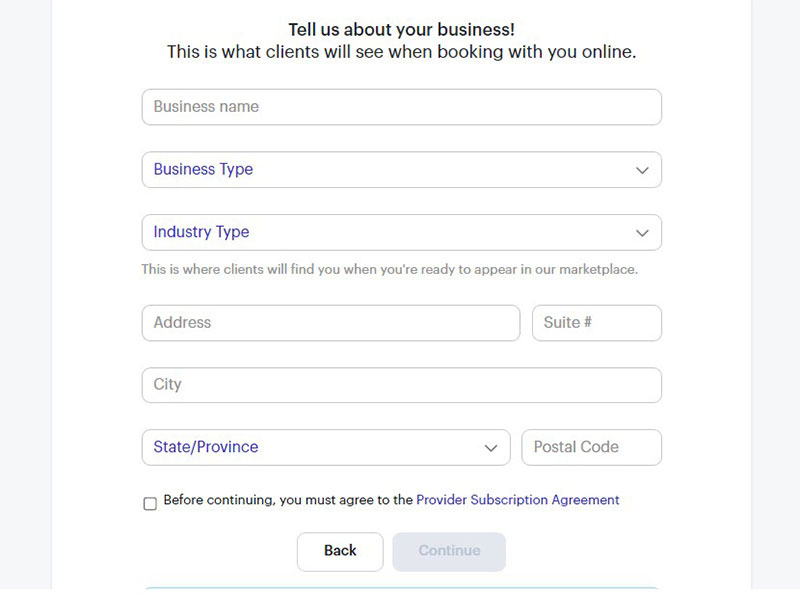
Schedulicity scores a 9.8 for ease of setup on G2 (2026), actually higher than Acuity's 8.8. That's surprising given its feature density, but it reflects how well the onboarding flow is structured for its target audience.
One limitation worth knowing: Schedulicity does not offer a monthly calendar view. Providers can only view schedules by day or week, which some users find limiting for planning ahead (Trafft, 2023).
Both platforms have mobile apps. Schedulicity's app suits providers who need to manage multi-staff schedules on the go. Acuity's mobile experience is cleaner for solo operators managing their own calendar from a phone.
If you're running a salon operation with multiple staff members and shifting daily schedules, Schedulicity's provider dashboard gives you a better overview, even if the interface is denser to start with.
What Do Customer Reviews Reveal About Each Platform?
Review data tells a consistent story across Capterra, G2, and Software Advice. Both platforms are well-liked. The complaints are specific and worth knowing before you pick one.
What Acuity Users Say
Acuity holds a 4.8/5 on Capterra across over 5,747 verified reviews (Capterra, 2026). That's one of the highest ratings in the appointment scheduling software category.
Consistent praise covers 4 areas:
- Calendar sync that works reliably across Google, Outlook, and iCloud
- Intake form customization that saves real back-and-forth with clients
- Automated reminders that reduce no-shows without manual effort
- Clean, embeddable booking page that matches brand colors
Recurring complaints: pricing gets expensive for small businesses that need HIPAA compliance or multi-staff features. Some users report re-authentication issues since the Squarespace integration tightened post-acquisition (Capterra, 2025).
What Schedulicity Users Say
Schedulicity holds a 4.4/5 across 132 verified reviews on Capterra and 15 reviews on G2, both rated at 4.4/5 (Toolradar, 2026). Fewer reviews than Acuity, but positive overall.
Users consistently highlight ease of use and the built-in marketing tools as standout features. The platform's automated reminders get praised specifically for reducing no-shows without requiring setup work.
The most common complaint: limited third-party integrations. Users who want to connect Schedulicity to their CRM or email automation outside the platform's built-in tools hit a wall quickly. A second complaint involves the payment processor lock-in. Schedulicity Pay is the primary option, and some users would prefer to keep their existing Stripe setup.
For businesses that have been comparing Vagaro vs Schedulicity or running a broader Acuity Scheduling review process alongside this comparison, the review patterns across platforms are consistent with what shows up on Capterra and G2.
Which Platform Fits Which Business Type?
40% of appointment bookings now happen after hours (Fresha, 2026). Whichever platform you pick, the ability for clients to self-book 24/7 without calling is table stakes in 2026. Both platforms deliver that. The decision is about what sits around that core feature.
When Schedulicity Is the Right Choice
Schedulicity wins for businesses where client discovery, team scheduling, and built-in marketing matter more than third-party connectivity.
Choose Schedulicity if your business matches any of these:
- You run a salon, spa, or fitness studio with 2 or more providers
- You offer group classes, series bookings, or class packs
- You want a built-in marketplace to attract new clients organically
- You prefer one platform for scheduling, payments, and email marketing without Zapier
A yoga studio running 12 weekly classes with 3 instructors would struggle to manage that in Acuity without workarounds. Schedulicity handles it natively.
For owners researching how to run a successful salon, or those building out a salon business plan, Schedulicity's all-in-one structure reduces the number of separate tools needed at launch.
When Acuity Is the Right Choice
Acuity wins for businesses where calendar control, intake data, and third-party integrations matter more than built-in marketing or team management.
Choose Acuity if:
- You're a solo operator or small team (1–3 people)
- You need granular availability rules, buffer times, or conditional intake forms
- You're already using Squarespace for your website
- You rely on Zapier, Zoom, Mailchimp, or Salesforce in your workflow
A photographer using Acuity alongside a Squarespace portfolio site gets native booking integration without an embed hack. A consultant who runs sessions over Zoom and follows up via Mailchimp gets that entire workflow automated through Acuity's integrations.
For those comparing Acuity or Calendly as part of a broader search, Acuity generally wins on intake form depth and payment collection, while Calendly wins on simplicity for pure meeting scheduling without payment needs.
Both platforms offer free trials. Testing with real bookings is the most reliable way to confirm fit, as the feature lists look similar on paper but the day-to-day experience differs considerably based on business type.
If neither platform fully fits your needs, there are other appointment scheduling software options worth evaluating before committing to a subscription.
FAQ on Schedulicity vs Acuity
Is Schedulicity better than Acuity?
Depends on your business type. Schedulicity is better for wellness and beauty businesses needing class scheduling and built-in marketing. Acuity is better for solo operators and service professionals who need deep calendar customization and third-party integrations.
Which platform is cheaper, Schedulicity or Acuity?
Acuity starts at $16/month (billed annually), lower than Schedulicity's $34.99/month entry plan. However, for teams with multiple staff members, Schedulicity's per-provider pricing caps at $94.99/month for 7 or more providers, which can work out cheaper than Acuity's tiered plans depending on team size.
Does Schedulicity have a marketplace?
Yes. Schedulicity includes a built-in client discovery marketplace where local wellness and beauty businesses can list services and attract new bookings. Acuity has no equivalent marketplace. This is one of Schedulicity's clearest competitive advantages.
Does Acuity Scheduling integrate with Zoom?
Yes. Acuity integrates natively with Zoom and Google Meet, automatically generating video conference links when clients book appointments. Schedulicity does not offer native video conferencing integration, making Acuity the stronger choice for coaches and consultants running virtual sessions.
Can Acuity Scheduling handle multiple staff members?
Yes, but multi-staff features are only available on the Standard plan ($27/month billed annually) and above. The Premium plan supports up to 36 staff calendars. Schedulicity includes multi-provider scheduling on all paid plans from the start.
Does Schedulicity work for fitness studios?
Yes. Schedulicity is well-suited for fitness studios, yoga instructors, and personal trainers. It supports class scheduling, series bookings, and class packs natively. Acuity handles group appointments but is not built around the class-based studio model the way Schedulicity is.
Who acquired Schedulicity?
Vagaro acquired Schedulicity in January 2025. Before that, Schedulicity operated independently since 2009. Acuity Scheduling was acquired by Squarespace in 2019.
Does Acuity Scheduling work with Squarespace websites?
Yes. Acuity embeds natively into Squarespace websites through a dedicated scheduling block. Businesses already using Squarespace for their website get the tightest native integration available, with unified billing and a consistent user experience across both platforms.
What payment processors does Acuity support?
Acuity integrates with Stripe, Square, and PayPal. It does not have a proprietary payment processor. Schedulicity uses Schedulicity Pay, its own integrated processor, which keeps everything in one system but removes the option to use an existing Stripe account.
Which platform has better customer reviews?
Acuity holds a 4.78/5 rating across 5,621 reviews on Software Advice. Schedulicity holds a 4.44/5 across 124 reviews. Acuity's rating carries more statistical weight, though Schedulicity scores slightly higher on ease of use in direct G2 comparisons.
Conclusion
This conclusion is for an article presenting the Schedulicity vs Acuity comparison, and the answer is straightforward once you know your business model.
Schedulicity fits wellness studios, salons, and fitness businesses that need class scheduling, multi-provider booking, and built-in client marketing under one subscription.
Acuity fits solo operators, coaches, photographers, and consultants who need granular availability control, conditional intake forms, and a wide integration ecosystem through Zapier, Stripe, and Zoom.
Pricing favors Acuity for small teams. The Schedulicity marketplace is a genuine advantage for businesses that want organic client discovery without a separate marketing tool.
Both platforms offer free trials. Test with real bookings before committing.