




Most owners don't realize they picked the wrong scheduling software until they're already a few months deep, knee-deep in workarounds for things the tool should just do. By then switching is a pain, so the choice you make now matters more than it feels like it does.
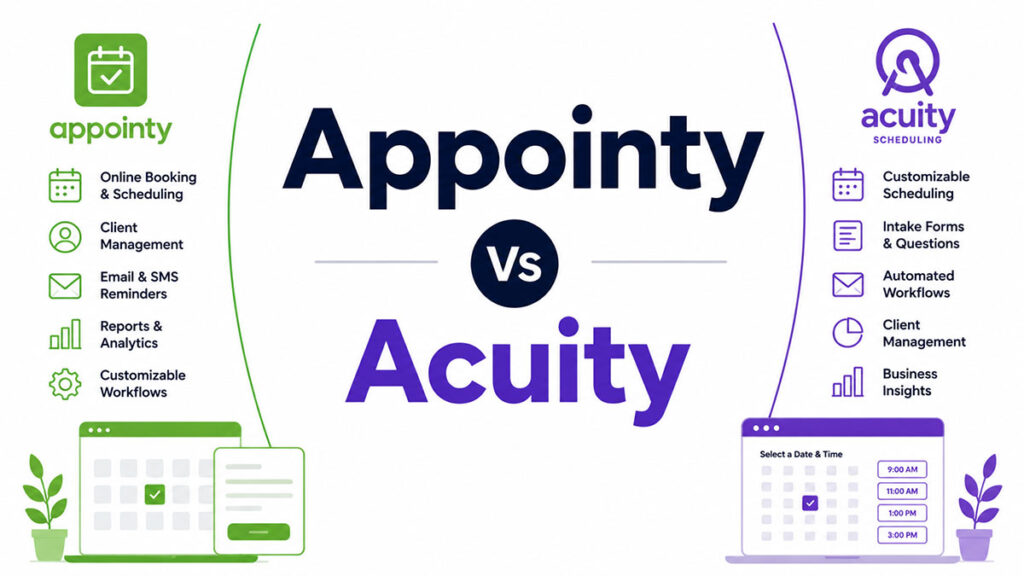
Which is why the Appointy versus Acuity question keeps coming up for service businesses hunting an online booking system that fits the way they actually run. Both check the obvious boxes. Clients book themselves, reminders go out automatically, calendars stay in sync, payments get collected. The catch is that they're aimed at pretty different businesses, with different headcounts and different budgets in mind.
What follows walks through pricing, the features that count, integrations, how each one feels to use, and what support is like when something breaks. Enough to decide and move on.
What Are Appointy and Acuity Scheduling?
Appointy is a cloud scheduling platform aimed at the more complicated end of service businesses, the ones juggling multiple staff, several locations, or bookable resources. Acuity comes at it from the opposite side. It's a client-facing booking tool, owned by Squarespace these days, and its heart is really with solo practitioners and small teams.
They live in the same category, sure, and the surface-level stuff lines up. Either one will let a client self-schedule, fire off reminders, and take payment. Past that thin layer of overlap, they start pulling apart fast.
A bit of background on each. Appointy launched in 2014, based in Singapore with a US office. Acuity is the older of the two, founded in 2006, then bought by Squarespace in April 2019. That deal really steered where Acuity went next, pulling it inside the Squarespace world and wiring it to integrate natively with Squarespace sites.
One thing to flag if you've read older comparisons: in early 2026 Acuity renamed its plans, so the old Emerging, Growing, and Powerhouse tiers are now Starter, Standard, and Premium.
For the wider context, the appointment scheduling market was worth $470.79 million in 2024 and is forecast to hit $1.8 billion by 2033, growing a hefty 16.1% a year (SkyQuest, 2025). Both of these tools are fighting inside a space expanding that quickly, which is exactly why getting the pick right today saves you a real headache down the line.
How Do Appointy and Acuity Scheduling Differ in Core Features?
The feature difference between the two platforms is not subtle. Appointy is built around staff and resource management. Acuity is built around the client booking experience.
Both handle online booking pages, automated appointment reminders, calendar sync, and payment collection. The divergence is in depth and direction.
Appointy Core Features
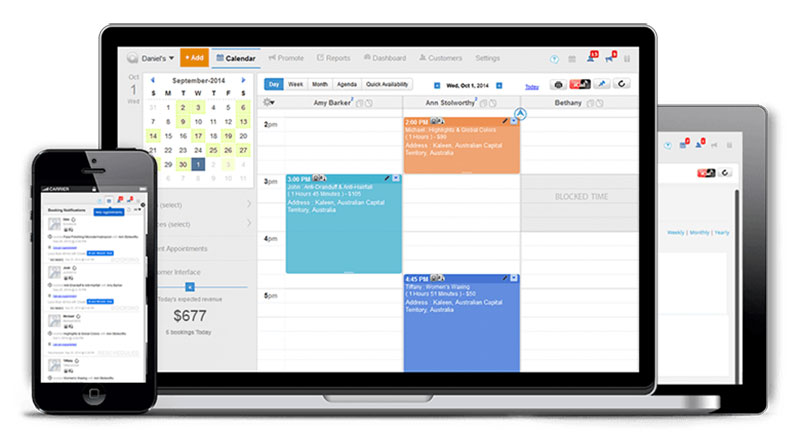
Multi-staff and multi-location support is where Appointy earns its place. You can assign specific services to specific staff, set individual availability windows, and manage separate location calendars from one dashboard.
Additional capabilities include:
- Class and group booking for up to multiple participants per time slot
- Resource scheduling so you can assign rooms, equipment, or chairs alongside staff
- Social media booking directly from Facebook and Instagram business pages
- Google Reserve integration for booking directly from Google Search and Maps (paid plans)
- Loyalty program and promotions management for repeat clients
Booking conversion tracking is also available, so you can see which campaigns actually drive confirmed appointments.
Acuity Scheduling Core Features
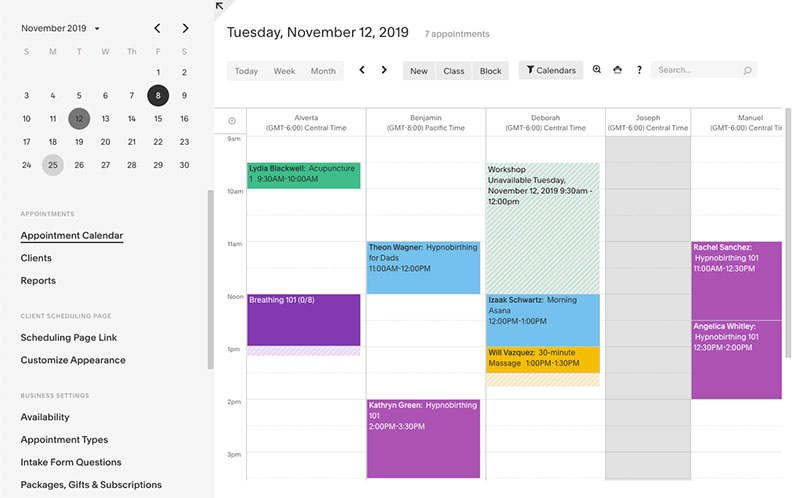
Client intake forms are Acuity's standout capability. You can build custom intake forms that clients complete when booking, collecting health history, preferences, or consent information before the appointment starts.
Key features include:
- Unlimited appointment types and services across all paid plans
- Subscription and membership billing for recurring clients
- Package and gift certificate sales built into the booking flow
- HIPAA compliance available on the Premium (formerly Powerhouse) plan with a signed BAA
- Automatic timezone conversion so remote clients always see correct local times
One real limitation: Zapier is not compatible with Acuity's HIPAA-enabled setting (Acuity Help Center). Businesses that need both HIPAA compliance and Zapier automation have to pick one.
How Do Appointy and Acuity Scheduling Compare on Pricing?
Pricing structure is one of the clearest differences between the two tools. Appointy charges a flat monthly rate per plan tier (not per staff member on the Professional and Enterprise tiers). Acuity charges a flat rate regardless of how many staff are on the account.
| Plan | Appointy (monthly billing) | Acuity Scheduling (monthly billing) |
|---|---|---|
| Free | Yes (1 staff, 5 services, 100 appts/month) | No (7-day trial only) |
| Entry paid | $29.99/month (Growth, 1 staff) | $20/month (Starter) |
| Mid tier | $59.99/month (Professional, 5 staff) | $34/month (Standard, up to 6 calendars) |
| Top tier | $99.99/month (Enterprise, 2 locations) | $61/month (Premium, 36 calendars) |
For a solo practitioner, Acuity's Starter plan at $20/month is cheaper than Appointy's Growth plan at $29.99/month. For a team of 6, Acuity's Standard plan at $34/month covers everyone at one flat rate. Both platforms offer approximately 20% off with annual billing — Acuity's Starter drops to $16/month and Appointy's Growth drops to $19.99/month on annual plans.
Appointy's free plan does cover real use cases. A solo massage therapist or personal trainer can run their entire booking operation on the free tier. Calendar sync is locked behind paid plans, but email reminders and the booking widget work without paying anything.
Which Businesses Are Appointy and Acuity Scheduling Built For?
This is the part worth slowing down on, because matching the tool to your setup is most of the battle. Put a solo therapist on Appointy's Enterprise plan and they're burning money on capacity they'll never touch. Flip it, drop a 10-person salon onto Acuity's Starter plan, and they smack into the ceiling within a week.
Appointy makes the most sense if you're:
- A salon, spa, or studio where every staff member needs their own schedule running in parallel
- Juggling two or more physical locations under one roof, operationally speaking
- A gym, yoga studio, or tutoring center built around group classes rather than one-on-ones
- After a booking system built for salon-style operations with real resource management underneath it
The user base backs that up. Capterra data shows 85% of Appointy's users are small businesses, and the heaviest concentrations sit in health and wellness (19% of reviews), education management (11%), and marketing services (7%). Service-heavy, multi-staff outfits, basically.
Acuity is the better call if you're:
- A coach, consultant, or therapist mostly booking one-on-one sessions
- A photographer wrangling shoot bookings that need intake questionnaires attached
- A healthcare provider who has to have HIPAA-compliant scheduling, no exceptions
- Already running your website on Squarespace, in which case this is almost a no-brainer
And the reputation is there to match. Acuity carries a 4.8 out of 5 across more than 5,700 verified Capterra reviews, with people consistently calling out how clean the booking page is and how little fuss the setup takes (Capterra, 2026). You don't rack up that many reviews being a niche tool. That's a product with a deep, settled base.
How Do Appointy and Acuity Handle Calendar and Scheduling Logic?
If you want to feel the real operational gap between these two, watch how each one handles the calendar day to day. That's where it lives.
Appointy Scheduling Logic
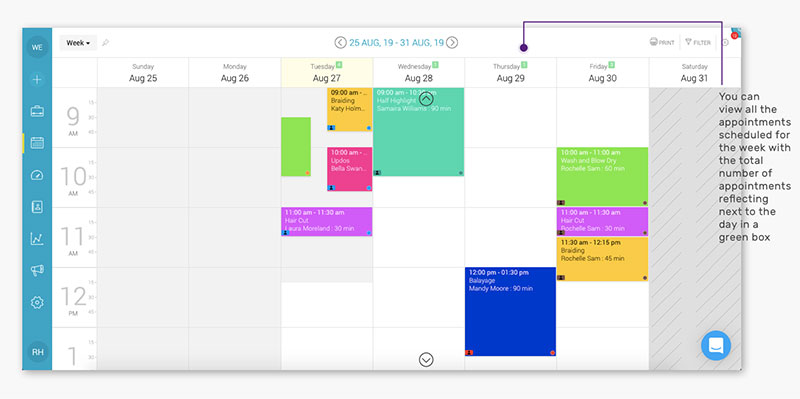
Appointy's strength is per-staff availability. Every team member gets their own working hours, their own breaks, their own buffer between bookings. So one stylist can take a 30-minute breather between clients while the one in the next chair runs straight through with no gaps. Set it once and it just respects everyone's rhythm.
A few more controls under the hood:
- You can assign resources, not just people, so a treatment room or a specific machine gets blocked off while it's in use
- Two-way sync with Google Calendar, Outlook, and Office 365, though only once you're on a paid plan
- Group and class booking with a seat cap per session
That paid-plan caveat on sync is worth underlining. The free tier doesn't get two-way calendar sync at all, so clients are leaning on email confirmations to keep track of things. It works. But for a genuinely busy book, "it works" isn't really where you want to be.
Acuity Scheduling Logic
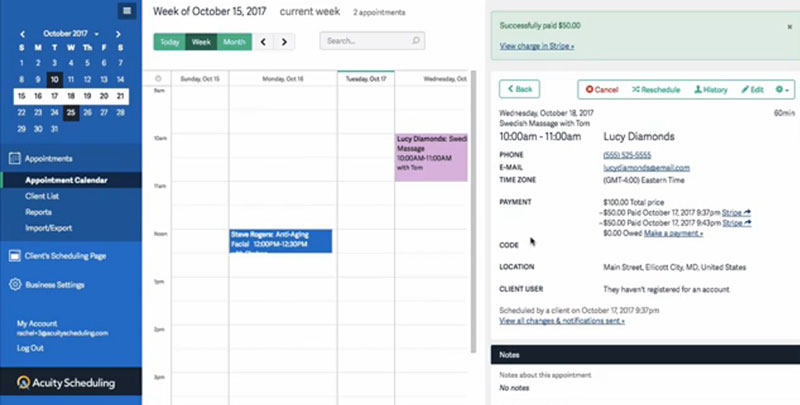
Acuity's automatic timezone conversion is the one I'd call out first, because it's a quiet lifesaver for anyone with remote clients. It reads the client's timezone and shows them slots in their own local time. Nobody's doing mental math, nobody's mis-booking a 9am that was actually meant to be 9am somewhere else.
The rest of the mechanics:
- Booking caps you can set by day or by week, per appointment type
- Lead-time rules, both a minimum and a maximum, controlling how far ahead someone can book
- Buffers between appointments that you can tune per service rather than globally
- Recurring appointment setup for the clients you see on a regular cycle
On capacity, the Premium plan handles 36 staff calendars, plenty for most mid-sized operations. Standard tops out at 6, though. Fine for a small team, but a bigger salon or clinic will hit that wall and need to jump up.
How Do Appointy and Acuity Handle Payments and Invoicing?
Both platforms collect payment at the time of booking. The difference is in which payment gateways are available and what plan unlocks them.
Appointy Payments
Payment gateways supported: Stripe, PayPal, Square, and Authorize.net. Square is available on the free plan. Stripe and PayPal require the Growth plan at $29.99/month or higher.
Appointy also supports:
- Deposit collection to reduce no-shows without requiring full prepayment
- Gift certificate creation and management on the Professional plan
- Promotions and discount codes tied to specific services or date ranges
One honest limitation: Appointy does not support subscription billing or recurring membership payments. If selling ongoing packages is central to your business, this gap matters.
Acuity Payments
Payment gateways supported: Stripe, Square, and PayPal. The range is similar to Appointy, minus Authorize.net.
Where Acuity stands out is in how payment products are structured:
- Session packages (e.g., buy 10 coaching sessions, book individually as needed)
- Subscription and membership plans for recurring clients
- Gift certificates built into the booking page
- Checkout add-ons so clients can add products or extras at booking time
SMS reminders on Acuity reduced no-shows by 35% compared to email-only reminders in testing by Workflow Automation (2026). At $34/month for the Standard plan, one prevented no-show likely covers the monthly cost difference from the Starter tier.
How Do Appointy and Acuity Handle Client Communication?
Automated client communication is a core function of both platforms. The tools overlap on basics but split on depth.
Appointy Client Communication
Automated email and SMS reminders are included on all paid plans. SMS reminders are available on the Growth plan and above. The free plan sends email confirmations only.
Appointy also covers:
- Follow-up emails after completed appointments to collect reviews or feedback
- Loyalty program notifications to reward returning clients
- Custom text message content on the Enterprise plan
No HIPAA-compliant communication option exists in Appointy. Businesses handling any protected health information need to look elsewhere for that requirement.
Acuity Client Communication
Acuity's email templates are properly customizable. You can rework the tone, the wording, the branding, and you can do it across the whole chain, confirmations, reminders, the follow-ups after a session. The nice part is this isn't locked to some premium tier. It's on every paid plan.
A few things the communication side handles:
- Intake forms that go out and get filled in before the client even shows up
- Reminders that adjust to the client's own timezone, so nobody gets pinged at 3am their time
- HIPAA-compliant communication settings, though those land on the Premium plan specifically
One sore spot worth naming, and it traces straight back to the Squarespace takeover: the platform makes you re-authenticate a lot. Several Capterra reviewers were grumbling about it through late 2025, the kind of small recurring friction that doesn't break anything but slowly gets under your skin.
How Do Appointy and Acuity Integrate With Other Tools?
Both hook into the everyday tools a service business is already running. What's different is which way each one's integration ecosystem tilts.
Appointy plugs straight into Google Analytics, Zoom, Google Calendar, Outlook, and the social side with Facebook and Instagram (Appointy Help Center). That social booking is native, by the way, not a Zapier patch job. A client can book right off your Facebook or Instagram business page without ever leaving the app.
Acuity's native list runs a bit wider on the payment and ecosystem front: Stripe, Square, PayPal, Zoom, Google Meet, Google Calendar, Outlook, iCloud, Mailchimp, and Squarespace. The Squarespace embed is the headline. One click if your site's already there, which genuinely matters when it is.
Zapier Availability
Zapier works with both, which in theory opens each up to thousands of other apps. On the Appointy side it's how you reach things like ActiveCampaign, papering over the CRM gap it doesn't fill natively.
But here's a trap you have to know about. Zapier won't run alongside Acuity's HIPAA-enabled mode (Acuity Help Center, 2025). Switch on HIPAA compliance on the Premium plan and Zapier just stops. If you're a practice dealing with protected health information, that's not a footnote, it's something to plan your whole automation setup around before you commit.
Appointy Integrations for Salons and Service Businesses
Appointy's Google Reserve hookup lets clients book straight from Google Search and Maps. For a salon or spa pulling local search traffic, that quietly turns your Google listing into an actual booking button, no redirect, no extra hop.
All told, Appointy ships with 15 confirmed native third-party integrations, WordPress and Squarespace among them for dropping a booking widget onto your site (Capterra, 2025). Anyone shopping for a booking system for salons is going to find Appointy's social and local-search game more built-out than what Acuity hands you out of the box.
Acuity Integrations for Remote and Service Professionals
Flip to the virtual side and Acuity pulls ahead. Its GoTo Meeting and Zoom connections make it the natural pick for anyone running sessions online. A coach or therapist can build an appointment type that spits out a Zoom link automatically the moment a booking's confirmed.
It also goes somewhere Appointy doesn't: enterprise login. Acuity ties into Okta and MedPlum through OAuth 2.0 and SAML for proper login management (Agentaya, 2026). Appointy has nothing comparable on the SSO front, so if enterprise authentication is on your checklist, that's a clean point for Acuity.
How Do Appointy and Acuity Scheduling Perform on Usability?
Neither platform is particularly hard to use. But their usability differs in direction: Acuity is faster to launch for solo users, and Appointy takes longer to configure because there is simply more to configure.
Appointy Setup and Daily Use
Onboarding starts with a question: Individual, Multi-Staff Business, or Multi-Location Business. The answer determines which plan Appointy recommends and which features appear in the dashboard.
That branching setup is smart for businesses with complexity. For a solo user, it can feel like being handed a restaurant-size kitchen when you only need to make toast.
Capterra reviewers rate Appointy at 4.6 out of 5 for ease of use across 284 verified reviews. Several reviewers note the free version setup is straightforward, but configuring staff-level permissions on paid plans requires more time.
The mobile admin app handles basic booking management. Some reviewers report limits in editing recurring appointments from mobile.
Acuity Scheduling Setup and Daily Use
A functional Acuity booking page can be live within hours for a solo practitioner. The setup wizard covers timezone, booking intervals, and availability in a linear flow.
Settings are spread across many pages, which makes initial configuration feel scattered once you move beyond basic setup (Workflow Automation, 2026). Experienced users do not notice this. New users sometimes do.
The mobile app for clients works well. The admin-side mobile experience has gaps: scheduling classes from the app is not possible, and some configuration changes require the desktop version (Capterra, 2025).
Acuity holds a 4.8 out of 5 rating on Capterra across more than 5,700 reviews, with "ease of use" frequently cited as a key strength (Capterra, 2026).
How Do Appointy and Acuity Compare on Customer Support?
Support quality is a practical factor when your booking system breaks on a busy Tuesday. Both platforms cover the basics, but their support depth differs by plan.
Appointy Support
Appointy's customer service rating is 4.8 out of 5 on Capterra, among the highest on the platform for scheduling software (284 reviews, 2026).
Support channels include:
- Live chat available during setup and on paid plans
- Email support with documented fast response times
- Help center with setup guides and integration documentation
Free plan users get access to live chat during the initial setup period, which reviewers consistently highlight as unusual and genuinely helpful. A barber shop owner on Capterra noted the live chat "saved me from throwing my computer out the window" during onboarding.
Acuity Scheduling Support
Email support is the primary channel. Phone support is not offered. Community forums and Squarespace's broader documentation base provide additional self-service options.
Support availability by plan:
- Starter: email support only
- Standard: email support, priority queue
- Premium: email support with faster response commitment
Acuity's help documentation is thorough. Most common setup questions have documented answers. Where users report friction is in edge cases, particularly around HIPAA-enabled settings, where support resolution can take longer.
Acuity's G2 rating sits at 4.7 out of 5 across 400+ reviews, with quality of support scoring 9.3 out of 10 (G2, 2025).
What Do User Reviews Say About Appointy vs Acuity Scheduling?
Review patterns across Capterra, G2, and SelectHub reveal consistent themes for both platforms. Neither has a clean record, and knowing the recurring complaints matters as much as knowing the praise.
| Dimension | Appointy | Acuity Scheduling |
|---|---|---|
| Capterra rating | 4.6 (284 reviews) | 4.8 (5,700+ reviews) |
| G2 sentiment score | 92 (564 reviews) | 96 (5,186 reviews) |
| Top praise | Free plan, customer support, social booking | Booking page UX, intake forms, timezone handling |
| Top complaints | Interface feels dated, advanced features require upgrades | Frequent re-logins, mobile app gaps, no free plan |
SelectHub's analyst comparison gives Acuity a user sentiment score of 96 vs Appointy's 92, based on aggregated review data from multiple platforms (SelectHub, 2025).
Appointy's lower review volume reflects its smaller user base, not necessarily lower quality. The pattern of reviews is consistent: users who need multi-staff scheduling are satisfied, solo users sometimes find the free plan limiting once they want calendar sync or SMS reminders.
Acuity's post-Squarespace acquisition friction is real. Multiple Capterra reviewers in late 2025 cited forced re-authentication as a recurring irritation. It does not break the product, but it adds friction to daily use.
Text message reminders reduce no-show rates significantly across both platforms. 67.3% of clients prefer SMS reminders over other contact methods (Tebra, 2023), which makes this feature relevant to revenue, not just convenience.
Which Is Better, Appointy or Acuity Scheduling?
There is no universal answer. The right tool depends on how your business is structured.
Appointy wins for:
- Multi-staff businesses where each team member needs a separate schedule and login
- Multi-location operations managing 2 or more physical sites
- Businesses that need a free plan to get started without committing to a subscription
- Salons, spas, and fitness studios that want social media and Google Search booking built in
- Operations that need resource scheduling alongside staff scheduling
Acuity wins for:
- Solo practitioners and small teams where flat-rate pricing is cheaper than per-staff billing
- Coaches, consultants, and therapists selling session packages, memberships, or gift certificates
- Healthcare providers who need HIPAA-compliant scheduling with a signed BAA
- Businesses already on Squarespace that want native site integration
- Anyone with remote clients across time zones who need automatic timezone conversion
One scenario where neither fits well: a growing salon with 8 or more staff that also sells recurring membership packages and needs HIPAA compliance. Appointy handles the staff side but lacks memberships and HIPAA. Acuity handles memberships and HIPAA but gets expensive at that staff count. At that point, tools like Vagaro vs Acuity or broader practice management platforms become worth evaluating.
Head-to-head score across 5 dimensions:
| Dimension | Appointy | Acuity Scheduling | Winner |
|---|---|---|---|
| Pricing value | Free plan + flat-rate tiers | No free plan, flat rate | Depends on team size |
| Multi-staff features | Strong | Limited below Premium | Appointy |
| Client billing tools | Basic | Packages, memberships, subscriptions | Acuity |
| Ease of setup | Moderate | Fast for solos | Acuity |
| HIPAA compliance | No | Yes (Premium plan) | Acuity |
For most small service businesses comparing these two tools, the deciding question is team size. Under 3 staff with recurring client billing: Acuity. Three or more staff at multiple locations: Appointy.
If you are still undecided after comparing these two, the Acuity or Calendly comparison and the Setmore vs Acuity breakdown cover other strong alternatives in the same price range. And if you want a wider view of the market, the guide on the best appointment scheduling software covers 12 platforms side by side.
FAQ on Appointy vs Acuity
Is Appointy better than Acuity Scheduling?
Depends on your business. Appointy is stronger for multi-staff and multi-location operations. Acuity wins for solo practitioners, package billing, and HIPAA compliance. Neither is universally better. Pick based on team size and billing needs.
Does Appointy have a free plan?
Yes. Appointy offers a permanent free plan supporting 1 staff member, 5 services, and 100 appointments per month. Acuity does not have a free plan. It offers a 7-day trial only before requiring a paid subscription.
Is Acuity Scheduling HIPAA compliant?
Yes, but only on the Premium plan (formerly Powerhouse) at $49/month billed annually or $61/month billed monthly. Acuity signs a Business Associate Agreement at that tier. Appointy offers no HIPAA compliance option. Therapists and healthcare providers handling protected health information need Acuity's Premium plan.
What is the starting price for Acuity Scheduling?
Acuity's Starter plan (formerly Emerging) starts at $16/month billed annually, or $20/month on a monthly subscription. Appointy's Growth plan starts at $19.99/month billed annually, or $29.99/month billed monthly. Acuity is cheaper for solo users. Appointy's flat-tier pricing gets cheaper for larger multi-staff teams on the Professional and Enterprise plans.
Can Appointy handle multiple locations?
Yes. Appointy's Enterprise plan at $99.99/month (monthly billing) or $79.99/month (annual billing) supports up to 2 locations with separate calendars and staff. Acuity handles multiple staff calendars but is not purpose-built for physical multi-location management the way Appointy is.
Does Acuity Scheduling work with Squarespace?
Yes. Acuity was acquired by Squarespace in April 2019 and integrates natively with Squarespace websites. Embedding the booking widget into a Squarespace site takes one click. Appointy also embeds on Squarespace but without the same native-level connection.
Which platform has better customer support?
Appointy scores 4.8 out of 5 for customer service on Capterra, with live chat available during setup even on the free plan. Acuity relies primarily on email support. Appointy's support responsiveness is more consistently praised across verified reviews.
Does Acuity Scheduling support package and membership billing?
Yes. Acuity's Standard plan and above support session packages, memberships, subscriptions, and gift certificates. Appointy does not offer subscription or membership billing. For businesses selling recurring packages, Acuity is the stronger option.
Can clients book appointments from Instagram or Facebook with these tools?
Appointy supports direct booking from Facebook and Instagram business pages natively. Acuity offers social media sharing links but does not provide the same in-app booking button integration. Appointy has a clear advantage for social media-driven service businesses.
Which scheduling software is easier to set up?
Acuity is faster for solo users. A functional booking page can go live within hours. Appointy requires more configuration for multi-staff setups but walks users through a structured onboarding flow. Setup complexity scales with the size of your operation on both platforms.
Conclusion
This conclusion is for an article presenting the Appointy vs Acuity comparison, and the verdict is straightforward: both platforms work, but for different businesses.
Choose Appointy if you run a multi-staff salon, gym, or tutoring center that needs resource scheduling, social media booking, and a free starting tier.
Choose Acuity Scheduling if you sell session packages, need HIPAA-compliant booking, or want flat-rate pricing that stays affordable as your team grows.
Review volume, G2 sentiment scores, and Capterra ratings all confirm that both tools satisfy their core user base. The gap shows up at the edges, in recurring billing, staff logins, and compliance requirements.
Know your setup. Then pick accordingly.