




Requesting upfront payment can feel uncomfortable, but it is often necessary to protect your time, reduce no-shows, and run a more reliable service business.
Asking for upfront payment works best when you’re clear, direct, and make it part of your process. The easiest way is to use a short message that states the amount, reason, and next step. Below are ready-to-use templates you can copy and send to clients.
Let’s see what upfront payment is, when to ask for it, how to phrase it professionally, how to handle pushback, and which templates you can use in real client communication.
What Is Upfront Payment?
Upfront payment means collecting full or partial payment before the service begins, rather than after it’s completed.
In practice, this can take a few different forms depending on the type of business:
- full payment during the booking process, especially for appointments or standardized services
- a deposit to secure a specific time slot or date
- partial payment before starting a project, with the remaining balance due later
For service-based businesses, upfront payment reduces uncertainty and protects time that would otherwise be held without commitment. It also helps avoid situations where work begins but payment becomes unclear or delayed.
For clients, it works as a confirmation step. Once payment is made, the booking feels more concrete, expectations are clearer, and both sides know exactly what happens next.
When to Ask for Upfront Payment? The Right Moment Matters
Timing matters just as much as wording. Even a well-written payment request can feel awkward if it comes too late or appears without context. The right moment depends on your service, booking process, and how much preparation is needed before the work begins.
When to ask for upfront payment |
Best for |
Why it works |
During booking or reservation |
Appointments, consultations, classes, workshops, and other time-based services |
Payment feels like a normal part of the booking process and confirms the reservation right away. |
After the initial contact or consultation |
Services that require a short discussion, questions, or a personalized recommendation before moving forward |
The client has already shown interest, so asking for payment at this stage feels more natural and better timed. |
With the proposal, invoice, or contract |
Freelance work, agency services, consulting, custom services, and larger multi-stage projects |
Including payment terms in formal documents makes the request feel official, expected, and professional. |
In a follow-up message |
Cases where the client has agreed to move forward, but payment was not handled in the first conversation |
The client already understands the service, so the message only needs to confirm payment and the next step. |
Before starting work |
Any service or project where time, preparation, materials, or planning are required in advance |
It protects your time and reduces the risk of delays, confusion, or unpaid work. |
When to ask for upfront payment |
Best for |
Why it works |
Upfront payment is especially useful when your business depends on booked time, advance preparation, or strong client commitment. The main rule is simple: ask for payment before you commit your time, resources, or availability.
How to Ask for Upfront Payment Professionally
Image by Freepik
Asking for upfront payment is less about using the “perfect” phrase and more about being clear, structured, and confident. If you want to know how to ask for a payment politely, the key is to make the request feel like a normal part of your process, not an uncomfortable exception.
Most friction happens when the request feels unclear, unexpected, or optional. Strong payment upfront wording helps clients understand what they need to pay, why they need to pay it, and what happens next.
1. Set clear payment terms
Before requesting payment from the client, make sure everything is clearly defined.
You should know:
- how much is due upfront
- when it’s due
- how the payment should be made
- what your refund or cancellation policy is
Your proposal and invoice should also clearly outline the scope of work, deliverables, the amount due upfront, and, if needed, the project timeline. If you need a customizable format for that, using an MS Excel invoice template can make the process easier. It is also a good idea to include how long the proposal is valid, the planned start date, and that work begins once the upfront payment reaches your account.
If any of this is vague, clients will hesitate or ask follow-up questions that slow everything down. Clear terms make the request feel professional and expected.
If that part of your process is not clearly defined yet, this guide to appointment cancellation policy is a good place to start.
2. Explain the reason briefly
You don’t need a long explanation, but you do need a reason.
Clients are more comfortable paying upfront when they understand why it’s required. This is especially important when you are requesting payment from a client for the first time.
Simple explanations work best:
- “We require a deposit to reserve your time slot.”
- “Upfront payment helps us confirm bookings and reduce cancellations.”
- “This helps us allocate time and resources properly so we can deliver the best result.”
Keep it short. The goal is clarity, not pressure.
3. Use confident, direct wording
Your tone matters more than the exact phrase you use.
Avoid sounding unsure, apologetic, or overly soft.
Weak:
“Would it maybe be possible to pay something upfront?”
Strong:
“To confirm your booking, we require a 30% upfront payment.”
This is the difference between weak and effective payment upfront wording. Be polite, but firm. If it sounds optional, clients will treat it that way.
4. Make the next step easy
Once you ask for payment, remove any friction.
Always include:
- the exact amount
- the deadline
- a direct payment link or method
When asking for upfront payment, don’t just focus on tone. Focus on convenience too. If the client has to ask how to pay, when to pay, or where to pay, you’re adding unnecessary delay.
5. Confirm what happens next
Clients want to know what they get after paying.
Make that clear:
- “Once payment is received, your booking is confirmed.”
- “We’ll start work immediately after the deposit is paid.”
This reduces uncertainty and reinforces that payment moves things forward.
Where to ask for upfront payment
Upfront payment should not feel like a random request. It should be built into your process.
You can present it:
- on your website
- during the booking flow
- in proposals or contracts
- in emails or follow-up messages
- during phone or sales conversations
The more consistently it appears across your process, the more normal it feels to clients.
The core principle
Professional upfront payment requests come down to three things:
- clarity
- confidence
- consistency
Good payment upfront wording explains the amount, the reason, and the next step without sounding defensive. The goal is not just requesting payment from the client, but making payment feel like a natural part of confirming the service.
If your terms are clear, your wording is direct, and your process is structured, most clients won’t question the request.
How Trafft Helps You Collect Upfront Payments
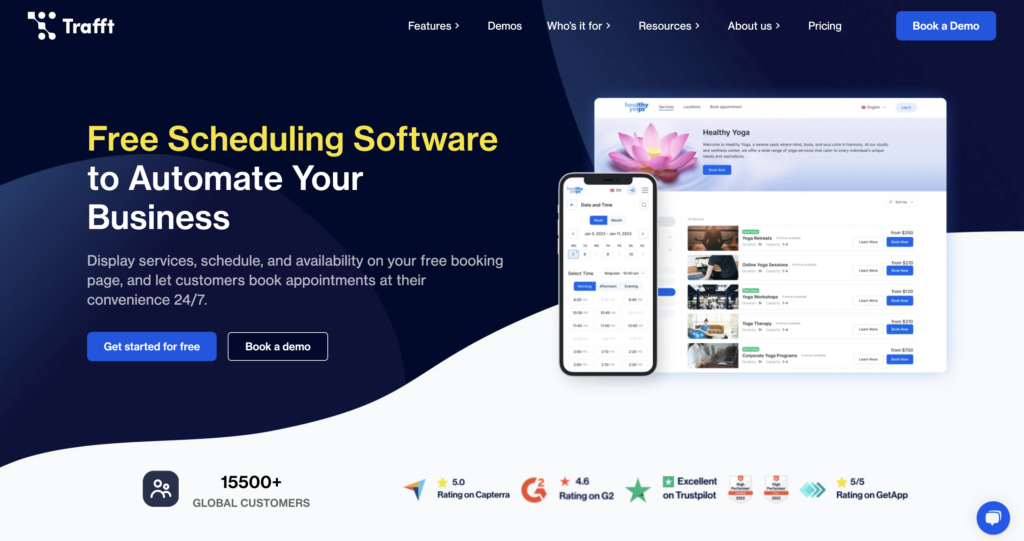
The easiest way to make upfront payment feel natural is to build it directly into your booking process instead of handling it manually every time.
With Trafft, clients can pay a deposit or the full amount while booking, which helps confirm appointments faster and reduces the risk of no-shows or last-minute cancellations. Trafft also connects with trusted payment processing tools, so collecting upfront payments becomes a smoother part of the customer journey.
Instead of chasing payments manually, you can automate confirmations, invoices, and email reminders, which helps reduce admin work and avoid misunderstandings with clients.
If you want to make upfront payment part of a more reliable process, try Trafft for free.
How to Ask for Upfront Payment: Message Templates
Simple version
Hi [Name], just to confirm, we require a [amount/percentage] upfront payment to secure your booking. You can complete it here: [link]. Once done, I’ll confirm everything right away.
Deposit version
Hi [Name], to reserve your slot, we ask for a [percentage] deposit in advance. The remaining balance can be paid later. Here’s the payment link: [link].
Friendly but firm
Hi [Name], to confirm your appointment, please complete the upfront payment here: [link]. Once it’s done, your slot will be secured.
How to Ask for Upfront Payment by Email: Examples and Templates
Email is one of the most common ways of requesting payment from client communication, especially after a call, consultation, or agreement.
To encourage trust, always use a branded email address like yourname@yourbrand.com provided by any email hosting provider like Outlook, Gmail, Neo, and Zoho.
The key to asking for an upfront payment politely is to keep it clear and direct without sounding cold or pushy. Good payment upfront wording should make it obvious what the client needs to do next, without unnecessary back-and-forth. If you also want to improve follow-up communication after the first payment request, this guide to appointment reminders can help.
A strong upfront payment email should:
- remind the client what they are paying for
- state the amount clearly
- explain the reason briefly
- provide a direct payment link or method
Keep it short. Overexplaining kills momentum and can make the request feel uncertain.
If the client does not respond after the first email, this guide on how to remind a client to pay you covers simple follow-up approaches you can use.
Upfront payment email templates
New client
Subject: Payment to Confirm Your Booking
Hi [Name],
Thank you for choosing [Business Name]. We’re looking forward to helping you with [service].
To confirm your booking, we require an upfront payment of [amount/percentage]. This helps us reserve your time slot and prepare everything needed for your appointment.
You can complete the payment here: [link].
Once payment is received, we’ll confirm your booking and send over the next steps.
Best,
[Your Name]
Project deposit
Subject: Deposit for [Project Name]
Hi [Name],
Thanks again for moving forward with [project name]. I’m looking forward to getting started.
As discussed, we require a [percentage] upfront payment before the project begins. The deposit amount is [amount], and the remaining balance will be due [when remaining balance is due].
You can complete the deposit here: [link].
Once received, I’ll confirm the project timeline and share the next steps.
Best,
[Your Name]
Appointment confirmation
Subject: Confirm Your Appointment
Hi [Name],
Thank you for booking [service] with [Business Name].
To secure your appointment on [date] at [time], please complete the upfront payment of [amount] here: [link].
Once payment is completed, your appointment will be confirmed and reserved in our calendar.
Thank you,
[Your Name]
Why Upfront Payment Matters?
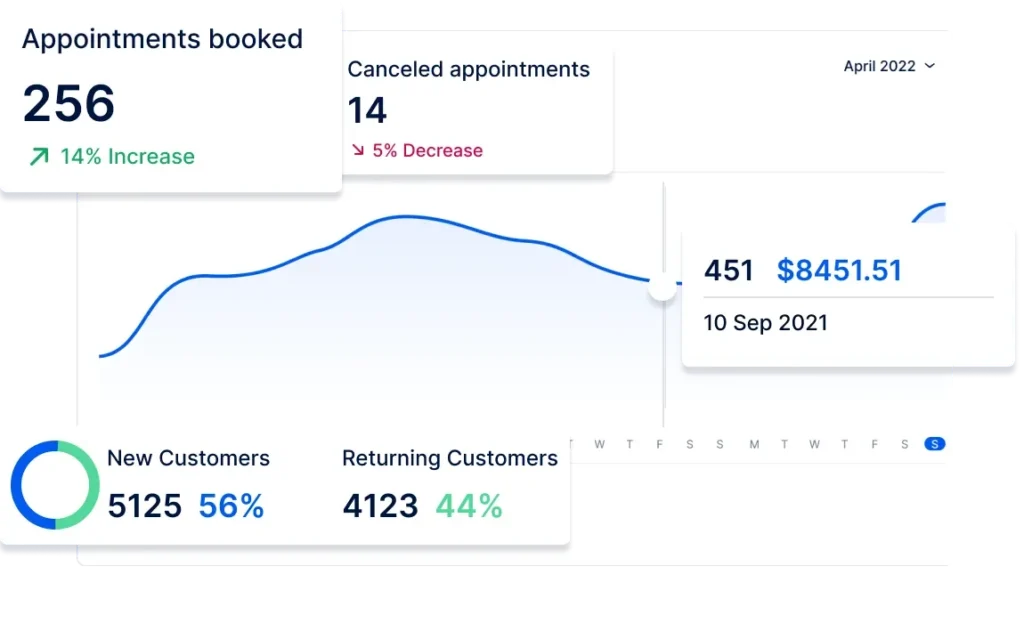
Many businesses avoid asking for upfront payment because they worry it might create friction or make clients hesitate. That is understandable, especially if you want the booking process to feel easy and welcoming.
But in reality, not asking for upfront payment can create bigger problems later. A client may book a time slot and not show up. They may cancel at the last minute. Or they may delay payment after you have already reserved time, prepared for the service, or started the work.
Upfront payment helps create commitment from the start. It shows that the client is serious, while also giving the business more control over its schedule, revenue, and availability.
It can help you:
- reduce no-shows and last-minute cancellations
- protect time slots that could have gone to another client
- improve cash flow before the service is delivered
- filter out clients who are not ready to commit
- start work with clearer expectations on both sides
If your business depends on booked time, limited availability, or preparation before the service starts, upfront payment is not aggressive. It is a practical way to protect your business and create a more reliable booking process.
Common Client Objections and How to Respond
This is where most businesses struggle.
Even if you know how to ask for an upfront payment, clients may still have questions or push back, especially if they’re not used to upfront payment. The goal is not to argue, but to respond clearly, confidently, and without sounding defensive.
Strong payment upfront wording helps here too. If your answers are simple and consistent, most objections are easy to handle.
Client objection |
How to respond |
Why do I need to pay now? |
We require upfront payment to reserve your slot and make sure the time is dedicated to your booking. |
Can I pay later? |
For this service, bookings are confirmed only after the initial payment is completed. |
What if I cancel? |
You can reschedule or cancel based on our policy, which we’ll share before payment. |
I’ve never done this before. |
Totally fair. This is just how we manage bookings to keep scheduling reliable for everyone. |
Can I pay just a deposit? |
Yes, we offer partial upfront payment, with the rest due later. |
Why do I need to pay now? |
We require upfront payment to reserve your slot and make sure the time is dedicated to your booking. |
Closing Thoughts
Upfront payment does not have to feel awkward or difficult. When your terms are clear, your wording is professional, and your process is consistent, asking for payment in advance becomes much easier for both you and your clients.
The key is to ask at the right moment, explain the reason briefly, and make the next step simple. With the right approach and templates, upfront payment can become a normal part of a smoother, more reliable service process.
FAQs About Asking for Upfront Payment
{
"@context": "https://schema.org",
"@type": "FAQPage",
"mainEntity": [
{
"@type": "Question",
"name": "How do I politely ask for an advance payment?",
"acceptedAnswer": {
"@type": "Answer",
"text": "Keep your message clear, direct, and respectful. State the amount clearly, briefly explain why it's required, and provide the next step. Make the request feel like a normal part of your process."
}
},
{
"@type": "Question",
"name": "How do I request a payment without sounding rude?",
"acceptedAnswer": {
"@type": "Answer",
"text": "Focus on clarity and tone. Avoid sounding unsure, but also avoid being too forceful. State the amount clearly, briefly explain why it's required, and provide the next step."
}
},
{
"@type": "Question",
"name": "How much should I ask for upfront?",
"acceptedAnswer": {
"@type": "Answer",
"text": "A common range is 25% to 50% for projects or custom work, and 100% for smaller or standardized services. If no-shows or delays would cost you time or money, a higher upfront amount usually makes more sense."
}
},
{
"@type": "Question",
"name": "Is an upfront payment the same as a deposit?",
"acceptedAnswer": {
"@type": "Answer",
"text": "Not exactly. A deposit is usually a smaller portion of the total price paid to secure a booking. Upfront payment can refer to either a deposit or the full amount paid before the service begins."
}
},
{
"@type": "Question",
"name": "What is the difference between upfront payment and advance payment?",
"acceptedAnswer": {
"@type": "Answer",
"text": "Both refer to payment made before the service starts. 'Advance payment' is sometimes used for partial payments that cover initial costs, while 'upfront payment' can refer to either partial or full payment."
}
},
{
"@type": "Question",
"name": "What if the client refuses to pay upfront?",
"acceptedAnswer": {
"@type": "Answer",
"text": "Start by understanding the concern. Explain why upfront payment is required, offer a partial payment instead of full, or clarify your cancellation or refund policy. If a client still refuses, it may be a sign they are not fully committed."
}
},
{
"@type": "Question",
"name": "Will asking for upfront payment drive clients away?",
"acceptedAnswer": {
"@type": "Answer",
"text": "In most cases, no. Serious clients expect clear payment terms. If upfront payment is part of a consistent, professional process, most clients will accept it without hesitation."
}
},
{
"@type": "Question",
"name": "Should I offer a discount for upfront payment?",
"acceptedAnswer": {
"@type": "Answer",
"text": "You can, but it's not always necessary. A small discount can help encourage faster decisions, especially for higher-ticket services. However, many businesses successfully require upfront payment without offering any discount."
}
}
]
}
How do I politely ask for an advance payment?
Keep your message clear, direct, and respectful. You don’t need to over-explain or apologize. A simple, professional approach works best.
The key is to make the request feel like a normal part of your process.
How do I request a payment without sounding rude?
Focus on clarity and tone. Avoid sounding unsure, but also avoid being too forceful.
Good approach:
- state the amount clearly
- briefly explain why it’s required
- provide the next step
Polite doesn’t mean vague. Clear and confident is what feels professional.
How much should I ask for upfront?
It depends on your service and pricing model.
A common range is 25% to 50% for projects or custom work, 100% for smaller or standardized services
If no-shows or delays would cost you time or money, a higher upfront amount usually makes more sense.
Is an upfront payment the same as a deposit?
Not exactly. A deposit is usually a smaller portion of the total price paid to secure a booking. Upfront payment can refer to either a deposit or the full amount paid before the service begins.
What is the difference between upfront payment and advance payment?
Both refer to payment made before the service starts. The only slight difference is that “advance payment” is sometimes used for partial payments that cover initial costs, while “upfront payment” can refer to either partial or full payment.
In practice, the difference is not critical for most clients.
What’s the best way to introduce upfront payment in a proposal?
Include it clearly as part of your payment terms, not as an afterthought.
Your proposal should state: the upfront amount or percentage, when it’s due, what it covers, when the remaining balance is due.
Position it as a standard step in your process so it feels expected, not negotiable.
What if the client refuses to pay upfront?
Start by understanding the concern. Most clients are not refusing, they just want reassurance.
You can:
- explain why upfront payment is required
- offer a partial payment instead of full
- clarify your cancellation or refund policy
If a client still refuses, it may be a sign they are not fully committed.
Will asking for upfront payment drive clients away?
In most cases, no. Serious clients expect clear payment terms. The way you present it matters more than the request itself. If upfront payment is part of a consistent, professional process, most clients will accept it without hesitation.
Should I offer a discount for upfront payment?
You can, but it’s not always necessary. A small discount can help encourage faster decisions, especially for higher-ticket services. However, many businesses successfully require upfront payment without offering any discount.
It depends on your pricing strategy and how much you want to incentivize early commitment.