




How to run a successful barbershop starts with defining the business correctly. A barbershop is a licensed grooming business that combines haircutting, shaving, and beard work under a barber license rather than a broader cosmetology license.
State barber boards regulate the trade market by market, and a shop's performance gets measured against nearby competitors rather than any single national standard.
The category keeps expanding: IBISWorld's November 2025 industry report counts 154,925 barbershop establishments now operating across the United States, a scale that makes location and service differentiation decide most of a new shop's outcome before it even opens.
What Licenses and Insurance Does a Barbershop Need?
A barbershop needs a state barber license for every barber on the floor, plus business registration and insurance before the first client sits down.
Licensing runs through each state's own barber board, not a single national body.
Two organizations sit above those state boards and shape the standards they use.
- NABBA (National Association of Barber Boards of America): coordinates licensing and sanitation standards across state boards
- FARB (Federal Association of Regulatory Boards): supports the regulatory boards that oversee licensing itself
Federal law adds a layer on top of state licensing.
Under 29 CFR 1910.1030, OSHA's Bloodborne Pathogens Standard requires any shop with employees to keep a written exposure control plan and treat every cut or nick as a potential infection risk.
That single regulation is why every station needs gloves, a sharps container, and an EPA-registered disinfectant within reach, not just a bottle of Barbicide on the counter.
What Insurance Coverage Protects a Barbershop From Liability?
General liability insurance covers client injury claims, like a burn from a hot towel or a slip near a wet sink.
Workers compensation insurance is separate, and it covers barber injuries on the job rather than client injuries.
| Coverage | Protects Against | Required For |
|---|---|---|
| General liability | Client injury, property damage | All shops |
| Workers compensation | Employee injury on the job | Shops with employees |
| Professional liability | Service-related claims, allergic reactions | Most states, optional in some |
The coverage details mirror what's laid out in broader guidance on the insurance needs of a salon, since both business types carry the same client-contact risk profile.
What Equipment and Sanitation Standards Does a Barbershop Need?
A barbershop needs professional-grade clippers, sanitation supplies, and a documented disinfection routine to pass a state board inspection.
Equipment choice comes down to a handful of established brands.
- Andis: widely used for fade work and everyday cutting
- Wahl: known for detail trimmers and outlining tools
- Oster: built for heavy daily use and clean fade lines
Sanitation runs on a separate track from the tools themselves.
Barbicide remains the industry-standard disinfectant solution for combs, shears, and clipper blades between clients.
The EPA registers the disinfectants that qualify for use against bloodborne pathogens, and a shop's exposure control plan names the specific product it uses.
A basic sanitation station needs more than a jar of blue liquid.
- Disinfectant jar for small tools
- EPA-registered surface spray
- Sealed sharps container
- First aid kit stocked with single-use styptic applicators
What Sanitation Steps Must a Barber Follow Between Clients?
The sequence matters more than any single product on the shelf.
- Wipe visible hair and debris from the chair and station
- Disinfect all tools that touched skin in Barbicide or an equivalent solution
- Spray and wipe the chair, armrests, and counter with an EPA-registered disinfectant
- Replace the neck strip and any single-use paper
- Wash hands before greeting the next client
Skipping the disinfection step is the most common inspection failure boards report, since dried hair and product residue block disinfectant from reaching the blade surface.
How Do You Choose the Right Location and Lease for a Barbershop?
Location decides most of a barbershop's ceiling before a single chair goes in.
Foot traffic and visibility matter more here than in most retail categories, since a large share of barbershop business still walks in without an appointment.
Zoning is the first filter, not the last.
Commercial zoning for personal care services needs confirming before signing anything, along with what buildout the landlord will and won't allow.
Lease terms then set the real cost of the location.
- Rent per chair, not just total square footage
- Term length and renewal options
- Buildout allowance from the landlord
- Plumbing access for shampoo stations
Layout decisions follow the lease, and they shape how the shop feels to a walk-in client. A shop like Baxter Finley Barber & Shop in Los Angeles built its identity around one well-designed flagship space rather than expanding fast.
For layout inspiration once the lease is signed, there's a solid roundup of barbershop layout and design inspiration covering chair spacing, waiting area setup, and station flow.
Before signing anything, most owners put the numbers on paper first. Working through a full barbershop business plan forces a real answer to whether the rent a location commands actually pencils out against expected chair revenue.
Should You Rent, Buy, or Share a Location?
Each path carries a different risk profile.
Renting:
- Lower upfront cost
- Faster to open
- No control over long-term rent increases
Buying:
- Fixed long-term cost
- Builds equity in real estate
- Large upfront capital requirement
Shared chair space:
- Lowest startup cost
- Limited control over branding and hours
- Good for testing a market before committing
Which Staffing Model Fits a Barbershop: Booth Rental, Commission, or Employee?
Booth rental, commission, and employee pay are the three staffing models a barbershop can run on, and most shops end up mixing two of them.
The right model depends on how much control the owner wants over pricing, hours, and brand consistency.
U.S. Bureau of Labor Statistics data shows how independent this trade already is: 76% of barbers were self-employed in 2024, far higher than most personal-care occupations.
That number explains why booth rental stays so common in this category specifically.
Under a booth rental agreement, a barber pays the shop owner a fixed weekly or monthly fee and keeps every dollar of service revenue.
The mechanics of how that kind of agreement gets structured are covered in more detail in guidance on salon booth rental arrangements, which applies just as directly to a barbershop chair.
| Model | Cost Structure | Owner Control | Best For |
|---|---|---|---|
| Booth rental | Fixed fee per barber, per period | Low | Experienced barbers with existing clientele |
| Commission | Percentage of each service split with shop | Medium | Newer barbers building a book |
| Employee | Hourly or salary plus payroll tax | High | Owners who want brand and schedule control |
An apprenticeship program feeds into whichever model a shop chooses. New barbers typically start on commission before moving to booth rental once their client list can support it.
How Should a Barbershop Price Its Services?
A barbershop prices each service to cover the barber's time, the product cost, and a profit margin, not just what the shop down the street charges.
Base cuts anchor the menu, but add-on services carry most of the margin.
- Base haircut
- Beard trim add-on
- Straight razor shave add-on
- Hot towel treatment add-on
- Bundled package (cut plus beard plus hot towel)
Pricing also has to clear a wage floor that's easy to overlook.
The median hourly wage for barbers was $18.73 in May 2024, according to the U.S. Bureau of Labor Statistics, and a shop's pricing needs to clear that floor after the barber's cut, rent, and product cost are all accounted for.
Deeper detail on what barbers actually take home, and how that varies by state and pay structure, is covered in a breakdown of what barbers typically earn.
Raising prices is its own decision, separate from setting them the first time.
Timing a notice, phrasing it for regular clients, holding the line once it's announced, the mechanics are close to identical to what's laid out in guidance on raising prices at a hair salon, since both service types run on the same client-relationship dynamics.
Which Booking and Scheduling System Works Best for a Barbershop?
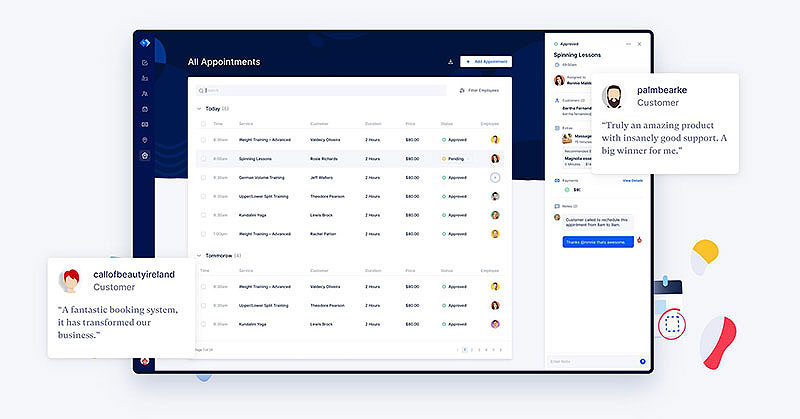
A booking system works best for a barbershop when it cuts no-shows, handles walk-ins alongside appointments, and takes payment in the same flow.
Square's own data on its Square Go booking app found a 55% decrease in no-shows among users, a big enough swing to change how a chair's day actually fills up.
That kind of drop usually comes down to one policy more than any app feature.
A clear no-show fee or required deposit, spelled out before a client ever books, does most of the work. The framework for writing a solid salon cancellation policy applies to any appointment-based personal-care business, barbershops included.
Choosing the platform itself comes down to a short list of real options.
| Platform | Built For | Notable Feature |
|---|---|---|
| Trafft | Appointment scheduling for service businesses of any size | Automated reminders and staff management built in |
| Amelia | WordPress-based booking plugin for salons and barbershops | Direct WordPress and WooCommerce integration |
| Square Appointments | Combined booking and point of sale | Built-in payment processing |
| Booksy | Barber and salon marketplace booking | Client-facing discovery app |
| Vagaro | Multi-location salon and barbershop management | Staff scheduling across locations |
| GlossGenius | Solo and small-shop booking | Built-in marketing tools |
A full side-by-side breakdown of these and other options sits in a roundup of the best barbershop software, worth a look before committing to a monthly subscription.
Whichever platform gets picked, a point of sale system that ties checkout to the appointment record removes the extra step of running payment through a separate device.
How Much Does It Cost to Open and Run a Barbershop?
Opening a barbershop costs less than most new owners assume, but running one profitably takes more planning than the sticker price suggests.
A survey of barbershop owners by booking platform Goldie put real numbers behind that gap.
- Average reported opening cost: $13,500
- Lowest reported opening cost: $4,000
- Highest reported opening cost: $50,000
- 75% of surveyed barbers called opening their shop financially difficult
That wide range comes down to what a new owner already has going in.
A barber with existing clippers, a chair, and a client list built over years of booth rental spends far less than someone building a four-chair shop out of an empty retail unit.
One-time costs and monthly costs behave differently, and mixing them up is how budgets run short.
- One-time: lease deposit, buildout, chairs, initial product inventory
- Monthly: rent, insurance premiums, booking software, restocking retail inventory
A point of sale system belongs on that monthly list too, since most platforms charge a per-transaction fee on top of any subscription. The setup and pricing side of that decision is covered in more depth in guidance on point of sale systems built for salons.
Sport Clips, a national men's hair care franchise, publishes a formal cost disclosure so buyers can see the full investment range before signing, a level of transparency independent shops never have to offer.
For financing beyond personal savings, SBA-backed loans remain the most common route for a first-time owner, though approval still depends on a signed lease and a credible revenue projection.
What Drives Profitability in a Barbershop?
Profitability in a barbershop comes down to how many productive hours each chair generates, not how many chairs sit in the room.
An empty chair costs the same in rent whether it's booked solid or sitting open all afternoon.
Chair utilization: the share of available appointment slots actually filled in a week.
Retail attach rate: the share of clients who buy a product on top of their service.
Add-on rate: how often a base cut turns into a cut plus beard trim or hot towel.
Some shops build margin outside the chair entirely.
Blind Barber, a barbershop concept with locations in New York and Los Angeles, pairs haircuts with an in-house cocktail bar, turning idle waiting time into its own revenue line.
The broader market still has room to grow into.
IBISWorld reported barbershop employment reached 176,672 workers in 2025, up from the year before, a sign demand hasn't plateaued even as more shops open to meet it.
Owner earnings still vary widely by state, pay structure, and whether the owner also works a chair. A closer look at what owners in this space typically take home is covered in a breakdown of what salon owners tend to earn.
How Does a Barbershop Attract and Retain Clients?
A barbershop attracts new clients mainly through local search and visual proof of the work, then keeps them through the relationship with one specific barber.
Local discovery still runs through a small number of platforms.
| Channel | Best For | Effort Level |
|---|---|---|
| Google Business Profile | Showing up in "barbershop near me" searches | Low, mostly setup and reviews |
| Yelp | Comparison shopping by new clients | Medium, needs review volume |
| Portfolio and before-and-after proof | High, needs regular posting |
BrightLocal's 2025 consumer survey found 97% of consumers read reviews for local businesses before choosing one, which makes review volume on Google and Yelp closer to a requirement than a nice-to-have.
Instagram carries more of the persuasion work once a client has already found the shop.
Consistent tagging and a steady posting rhythm help a shop's work surface to people who haven't searched for it yet. A practical starting point for that sits in guidance on hashtag strategy for salons.
How Does a Barbershop Retain Clients After the First Visit?
Retention runs on relationship, not marketing spend.
Nielsen's global Trust in Advertising study found 89% of consumers trust recommendations from people they know over any paid channel, which is why referral programs tend to outperform paid ads for a shop this local.
- Referral program: a discount or free add-on for the client and the friend they bring in
- Loyalty program: a free service after a set number of paid visits
- Membership plan: a flat monthly fee covering a set number of cuts
Rebooking before the client leaves the chair does more for retention than any of those programs on their own. The mechanics of turning a first-time walk-in into a regular are covered in more detail in a guide on building clientele in a personal-care business.
What Are the Steps to Open a Barbershop?
Opening a barbershop follows a fixed order, and skipping ahead is the single biggest cause of costly rework.
- Get licensed as a barber and confirm the shop's business license requirements with the state board
- Write a plan covering target location, service menu, and first-year costs
- Secure a lease in a zone approved for personal care services
- Complete buildout, install chairs and stations, and set up the sanitation station
- Register the business, file for an EIN, and bind general liability and workers compensation insurance
- Choose and configure a booking and point of sale system
- Stock initial inventory and hire or onboard barbers under a chosen staffing model
- Schedule the final health and safety inspection before opening day
- Soft launch with a small client list before a full public opening
Regional chains scale by repeating that same sequence at every new site rather than reinventing it each time.
V's Barbershop, a multi-location chain based in Utah, expanded by running this same playbook location by location rather than customizing the process each time.
The step that gets skipped most often is the final inspection, since owners assume passing the initial permit review is enough.
It isn't. Most states require a separate operational inspection once the chairs, sinks, and sanitation station are actually installed and in use.
When Does the Barbershop Model Not Work?
The barbershop model doesn't work in every market, and pretending otherwise is how new owners lose their savings.
Low foot traffic kills a lease-based shop faster than almost anything else.
A location with heavy rent and light walk-in traffic needs an appointment book that's already full before opening day, which rarely happens for a brand-new shop with no client history.
Oversaturated markets compress every staffing model at once.
When too many chairs compete for the same client base, booth rental fees stop covering the owner's costs and commission splits stop paying barbers enough to stay.
Broader small business data backs up how real that risk is.
The U.S. Bureau of Labor Statistics' Business Employment Dynamics data shows about 20% of new small businesses close within their first year, and a barbershop carries the same lease and payroll exposure as any other storefront business.
A mobile barber or a shared chair setup can outperform a fixed shop in a few specific conditions.
- The local market is too small to support a full lease
- Startup capital is limited to a few thousand dollars
- The barber already has a client list and just needs a way to serve it
Undercapitalized openings fail for a simpler reason than any of the above.
An owner who spends every dollar on buildout and has nothing left for the first three months of rent is betting the shop fills up immediately, and most shops don't.
FAQ on How To Run A Successful Barbershop
How Does Barber Apprenticeship Training Actually Work?
An apprenticeship program pairs a new barber with a licensed mentor for a set number of state-mandated hours, often a year or more. The apprentice practices fade haircuts, shaves, and sanitation protocol under supervision before sitting the state board licensing exam.
How Are Tips Handled or Split in a Barbershop?
Tips belong to the barber who performed the service, not the shop, under most state labor rules. Booth renters keep every tip directly, and commission or employee barbers usually keep 100% of cash tips too, separate from the service split.
What Is the Difference Between a Fade and a Taper?
A fade blends hair length down to skin near the hairline, creating a sharp, gradual transition. A taper trims hair shorter at the edges without cutting to skin. Both are signature barbershop techniques, but a fade demands more clipper precision.
How Many Chairs Does a Barbershop Need to Break Even?
Most single-owner shops break even with two to three fully booked chairs, depending on rent and local pricing. A one-chair shop can work in a low-rent market. Break-even depends more on chair utilization than chair count alone.
What Common Mistakes Cause New Barbershops to Fail in the First Year?
Underpricing services, undercapitalizing the opening budget, and signing a lease before confirming foot traffic top the list. Skipping a real pricing strategy or hiring before the client base exists drains cash before the shop finds its footing.
Is a Mobile Barber More Profitable Than a Fixed Shop?
A mobile barber avoids rent and buildout costs, which usually means a higher margin per haircut. A fixed shop earns more in total volume once multiple chairs run at once. Mobile suits a solo operator; a shop suits scaling.
What Should You Fix First in When Running A Barbershop?
The staffing model comes first when running a successful barbershop, because booth rental, commission, and employee pay each carry different insurance and pricing obligations that every later decision depends on.
Fixing sequence matters more than fixing speed.
- Lock the staffing model and its insurance requirements
- Set pricing against that specific pay structure
- Choose a booking system that protects the resulting schedule
Patience has a real cost. Guidant Financial's 2023 Small Business Trends study found small businesses typically turn a profit within three to four years, a timeline a rent-heavy, staff-heavy shop rarely beats.
Choosing employee pay over booth rental trades a slower breakeven for tighter brand control, a trade a booth-rental shop never has to make.
Once staffing and pricing hold steady, the next natural step is a focused look at barbershop advertising tactics, since acquisition spending only pays off after the shop itself is priced and staffed correctly.