




Barbershop marketing strategies are the local acquisition and retention tactics that keep a fixed number of chairs booked with clients who return every six to eight weeks.
They apply to single-location shops and small chains, where chair count and drive time set a hard ceiling that broad advertising cannot lift.
Clients book with the same barber every 48.5 days on average, close to seven visits a year, based on 13.9 million appointments across 7,000 US shops tracked in SQUIRE's State of Barbershops 2026 report.
That rhythm, not the size of the local market, determines which tactics actually move chair revenue.
What Are Barbershop Marketing Strategies?
Open last month's booking calendar and look at the Tuesdays. The marketing problem is usually sitting there, and it rarely looks like the one owners expect.
For a barbershop, marketing means filling a fixed number of chairs with people who live or work close enough to keep coming back. Chair count and opening hours set the ceiling. So does the drive time someone will accept for a haircut, and that's shorter than most owners assume.
It's a crowded trade. IBISWorld counts 155,000 barber shops in the United States in 2025, in a market worth $7.0 billion, after 4.6% annual growth in business numbers since 2020.
So the category is growing, and the number of shops splitting it is growing too. For any single shop, the gains come from local visibility and repeat visits, not from the market rising.
Generic small business advice doesn't fit well here. You aren't selling a product to anyone who can find your website. You're selling a 30-minute slot to someone within a few miles who'll need the same cut again in six weeks.
Shop revenue moves when one of a small number of things moves. New heads through the door each month is the obvious one. Less obvious is the number of weeks between visits from the same client. Then there's the ticket, meaning what a client spends per visit once add-ons and retail are counted.
I'd judge every tactic below by which of those it touches. If it touches none of them, it's decoration.
The channels that matter are few. Your Google Business Profile, Instagram and TikTok, referrals, signage and foot traffic, plus text and email to the clients you already have. Most shops overwork social and underwork the listing and the client list.
Shop Brand Against Barber Brand
There are really two marketing efforts running in one building, and they pull on the same client.
Shop-level marketing is the map listing, the signage, the review profile and the booking link at the front desk. A client who arrives that way belongs to the business.
Then there's the barber's own portfolio account and DM inbox, and the request rate that comes with them. Those clients follow the person. When the barber moves to another shop, most of them go along.
If you want a shop that's worth something when you sell it, put most of the effort into the first and manage the second. On booth rent you barely get a choice, because the barber owns the relationship. That's a different business model with a different set of numbers to watch when you're running a shop day to day.
Why Chair Count Caps Everything
Four chairs open 60 hours a week is a hard ceiling. Better marketing doesn't lift it.
Where you sit under that ceiling decides what to do next. At 45% utilization, you need new clients. At 85%, you need better pricing, a bigger ticket and tighter scheduling, and more ad spend just makes the wait longer for everyone.
Why Barbershop Marketing Works Differently From Salon Marketing
The two businesses split on frequency and ticket size, and that split changes how you should spend.
Colour and extension clients come back every 6 to 12 weeks and spend a lot when they do. Barbershop clients come back more often and spend less. Revenue depends on volume and a steady rhythm, not a handful of big appointments.
These are the numbers I'd plan around.
- Clients book with their barber every 48.5 days on average, roughly 7 visits a year, based on 13.9 million appointments across 7,000 US shops (SQUIRE State of Barbershops 2026)
- Median barbershop ticket sits near $34 (Zenoti 2026 Beauty and Wellness Benchmark Report)
- New guest visits at barbershops fell 17% in 2025, the steepest drop of any vertical tracked, against an industry weighted average of -10% (Zenoti 2026 Beauty and Wellness Benchmark Report)
Put them side by side. Acquisition is getting harder, and each new client is worth about $238 a year at median ticket. The shops holding on to revenue are shortening the gap between visits, not buying more first-timers.
The Structural Differences That Change Tactics
| Factor | Barbershop | Hair salon | Marketing effect |
|---|---|---|---|
| Visit gap | 6 to 7 weeks | 8 to 12 weeks | Rebooking beats acquisition |
| Ticket | Low, add-on driven | High, service driven | Volume and upsell carry margin |
| Walk-in share | Significant | Minimal | Signage and radius still matter |
| Chair model | Booth rent common | Commission common | Split ownership of the client |
Booth rent is the row most owners underestimate. When a barber pays rent, the barber does the marketing, and the shop's own client list stays thin. That's a real constraint on whether a shop turns a profit at exit.
Retail Does Not Bail You Out
Salons pay for campaigns with colour lines and treatment retail. A barbershop has pomade, beard oil and the odd clipper guard.
Attach rates and margins are both lower, and the total rarely covers an ad budget. Plan marketing spend against service revenue. The retail side you're counting on probably doesn't exist yet.
How Do New Clients Find a Barbershop?
Most new clients arrive through map search, by walking past, or because someone they know sent them. Social discovery and booking marketplace listings cover nearly all the rest.
Owners tend to guess at the mix. The ones that grow ask at checkout and tag the client record in the booking system.
Map Search and Near Me Queries
For anyone new to the area, this is the main way in. They type "barber near me", scan three map results, check star rating and photos, and tap the top one that looks open.
It takes under a minute. It happens inside Google Maps and Apple Maps, and more and more inside AI answers that pull from the same listing data.
Drive time filters hard. A shop 12 minutes away loses to a shop 4 minutes away at equal rating, which is why ranking in your own neighbourhood matters more than ranking city-wide.
Word of Mouth and Barber Requests
Referral in this trade is personal. Nobody recommends "the shop on 7th". They say "ask for Marcus".
That changes how referral behaves. A referred client books a specific chair instead of the first opening, and the flow stops when that barber leaves. New barbers on the floor get almost nothing for their first 90 days.
Shops that spread referral across the team send new clients to underbooked chairs by default and let the client choose only after the first cut. It's the fastest structural fix for a team that is still building a client base unevenly.
Booking Marketplaces as a Discovery Channel
Booksy and Fresha both run consumer marketplaces, where people browse barbers the way they browse restaurants.
You get clients you'd never have reached otherwise. You also pay a cut or a new-client fee for each one, and the client half-belongs to the app.
With empty chairs, it's worth running. Once utilization climbs, look at it again, because you're paying acquisition rates on a channel you don't need anymore. Comparing the booking apps built for barbers on that one question (marketplace exposure against client ownership) tells you more than any feature list.
The Front Window Still Converts
In a high-footfall spot, signage, an open door and a readable price list on the glass convert passing traffic better than any ad.
In a strip mall off a four-lane road, signage does nothing and the budget belongs elsewhere.
Which Marketing Channels Give the Best Return per Dollar?
For a typical single-location shop, the cheapest new client comes from the Google Business Profile, then referral, then text and email to existing clients. Organic social, paid radius ads and discount marketplaces follow, in that order.
Effort flips the ranking. Cheap in dollars isn't cheap in owner hours, and when the owner also cuts hair, hours are the real limit.
| Channel | Cash cost | Time to first booking | Owner hours per week | Compounds |
|---|---|---|---|---|
| Google Business Profile | None | 2 to 6 weeks | 1 | Yes |
| Referral program | Cost of reward only | 2 to 4 weeks | Under 1 | Yes |
| Text and email to client list | SMS credits | Same week | 1 | Yes |
| Organic social | None | 3 to 6 months | 3 to 5 | Yes |
| Paid radius ads | Ongoing spend | Days | 1 to 2 | No |
| Discount marketplaces | High per client | Days | Under 1 | No |
Organic social is where most shops overinvest. It has the longest lag and the highest weekly hour cost, and it can eat five hours a week for a whole quarter without producing anything you can measure.
I'm not saying stop posting. Fix the listing and the reminder texts first, and start asking for referrals. Those produce bookings inside a month for almost no cash.
What Compounding Actually Means Here
Reviews, map ranking and an owned client list keep working after you stop touching them. Paid ads and Groupon stop the day the money stops.
Eighteen months of paid acquisition with no review profile gets you traffic and nothing else. Spend the same 18 months collecting reviews and phone numbers and you end up owning something.
How to Rank in the Map Pack With Google Business Profile
Of everything free a shop owns, the profile moves the most. Google Business Profile signals carry roughly 32% of local pack ranking weight and review signals another 20%, according to Whitespark's Local Search Ranking Factors 2026 survey of 47 local search practitioners. The primary category was ranked the single strongest individual factor.
Google names relevance, distance and prominence as its inputs. You can't move distance. The rest is mostly profile work.
Category and Service Setup
Your primary category decides which searches you can appear for. "Barber shop" and "Hair salon" pull different queries, and the wrong pick takes you out of results you'd otherwise win.
Only add secondary categories for services you actually do. "Nail salon" on a shop that does fades is category confusion, and Google treats it as a suspension risk.
The services list underneath is separate, and most shops leave it half-empty. Fill it with the real menu: skin fade, beard trim, hot towel shave, line-up, kids cut, grey blending.
Photos, Posts and Q and A
Set up in this order and the profile starts working inside a month. Keep the same local details consistent across your Google profile, social accounts, and homepage or landing page so potential clients see the same services, hours, and booking information wherever they find you:
- Upload 20 or more real photos: exterior with signage, interior, each chair, and finished cuts from every barber on the floor
- Set exact hours, including holiday closures, because being listed as open at the time of search is now a top-five local pack factor
- Add attributes that match how people filter: wheelchair accessible, restroom, appointment required, walk-ins welcome
- Post twice a month with an offer, a new service, or a schedule change
- Seed the Q and A section with the questions the front desk answers daily: parking, walk-in policy, kids cuts, card payments
- Re-upload fresh cut photos monthly and delete anything more than two years old
Photos pull double duty. They feed the profile, and they're the last thing a new client looks at before tapping directions.
Connecting the Booking Link
Google lets you attach a booking URL directly to the profile, so someone can book without leaving the map result.
Booksy, Square Appointments, Vagaro, and Squire all push appointments back through that integration. Sport Clips runs the same idea at franchise scale with its Online Check-In app, which shows live wait times by location and lets a client join the lineup before leaving the house.
Where Proximity Wins
Proximity beats effort. A perfect profile in a low-density suburb won't show up for someone searching three towns over, however many reviews it has.
For suburban shops, the realistic goal is a 3 to 5 mile radius, not the metro area. Budget with that in mind.
How Do You Get More Google Reviews Without Annoying Clients?
Ask at fixed points in the visit, automate most of it, and never ask the same client twice in one visit cycle.
Flow matters more than the total. A shop adding 4 reviews a month beats one sitting on 200 that stopped collecting two years ago, because recency counts in the ranking and with the person reading.
The best live moment is at payment. The barber asks out loud while the card reader processes, and the client isn't going anywhere for those few seconds. After that, an automated text sent 2 to 4 hours after checkout with a direct review link does most of the work.
I'd also put one line at the bottom of the rebooking confirmation, shown only to clients who've never left a review.
Google is still the platform that counts. BrightLocal's 2025 Local Consumer Review Survey of 1,026 US consumers found 83% read reviews on Google, ahead of Yelp at 44% and Facebook at 40%.
What Not to Do
Review gating (screening clients and only sending the link to happy ones) violates Google's policies, and the reviews can get stripped.
A free beard trim for a five-star review is the same problem. Rewarding the rating instead of the act of reviewing is a policy violation, and clients can tell.
Responding to the Bad Ones
Reply within 48 hours, in public, and don't argue. Acknowledge it, name the specific issue, and offer to sort it out offline.
You aren't really writing to the reviewer. You're writing to the next 40 people who read it while deciding whether to book.
BrightLocal's 2025 survey found 89% of consumers expect owners to respond to both positive and negative reviews, so saying nothing sends a message of its own.
How Do You Stop No-Shows and Fill Slow Days?
Reminders fix forgetting. Deposits deal with people who don't care much either way, and slow days need structure more than they need discounts.
Barbershops already run the tightest schedules in the sector. No-show rates held at 4% and cancellations at 4% in 2025, though cancellations doubled from 2% the year before, according to the Zenoti 2026 Beauty and Wellness Benchmark Report. That's roughly 8% of booked appointments gone before they happen, and the trend is heading the wrong way.
Reminder Cadence That Works
One reminder isn't enough. Send a confirmation the moment they book. Then another 24 hours out with a one-tap reschedule link, and a last one 2 to 4 hours before the appointment.
Use SMS. Email open rates aren't close, and a 2-hour reminder only works on a channel people check within minutes. That makes appointment reminders one of the most practical forms of SMS marketing for a barbershop, especially when the message gives the client an immediate action to take.
The reschedule link matters more than the wording. If rescheduling takes more than a tap, people ghost instead of calling, and an app that sends the reminders automatically takes the front desk out of the loop entirely.
Deposit, Fee, or Nothing
A deposit taken at booking gets applied to the service, so regulars don't feel it, and it screens out the clients most likely to vanish. The downside is friction. You'll lose some legitimate first-time bookings.
Charging a no-show fee after the fact avoids that friction. Collecting it is awkward and inconsistent, though, and enforcement usually falls apart within a month, partly because every one of those conversations happens with a client who's already annoyed.
No policy at all suits walk-in heavy shops. It also means peak Saturday slots get held by people with nothing at stake.
In practice the middle ground works best. Take a card on file or a deposit for first-time clients and Saturday slots only, and leave established regulars alone.
Filling the Dead Hours
Weekday demand has shifted. The peak weekday booking hour moved from 5 PM to 4 PM, and 92% of weekday haircuts now happen between 8 AM and 5 PM (SQUIRE State of Barbershops 2026).
So the dead stretch is late evening and mid-morning, not the afternoon most shops still staff heavily for.
None of the fixes involve cutting the price of a cut:
- Standing appointments booked 6 weeks out at the same weekday slot, which turns a slow Tuesday into guaranteed revenue
- Waitlist automation that texts the next person when a Saturday slot opens
- Off-peak service bundles, a cut plus beard trim at a set price, rather than a straight discount on the cut
Locking clients into repeating appointments on a fixed cycle is the strongest of these. It fixes visit frequency and slow-day utilization at the same time.
Why Blanket Discounting Backfires
A standing 20% off Tuesdays trains your existing regulars to move off Saturday.
You end up with the same clients getting the same cuts for less money, and a Saturday that's now harder to fill. Off-peak offers only work when they reach people who aren't already booking.
Which Booking and Marketing Platform Fits Your Shop?
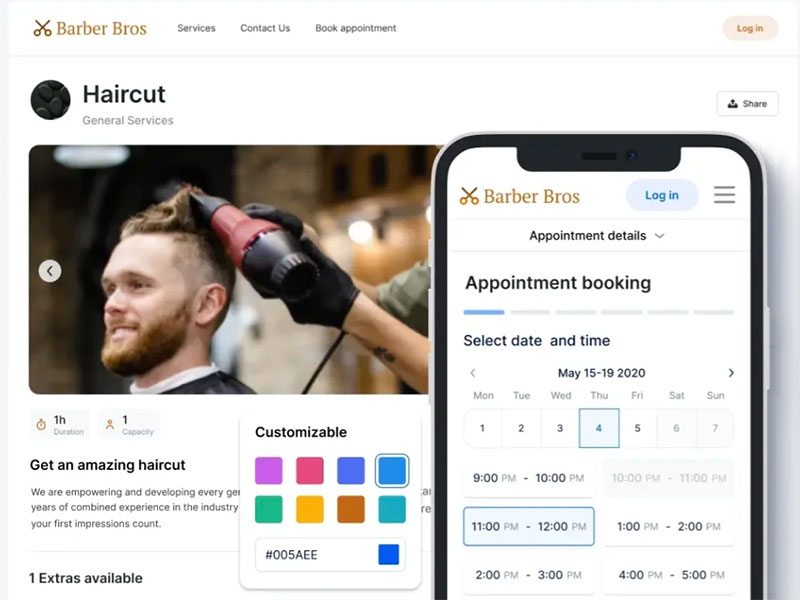
Start with one question. Do you need the platform to bring you clients, or do you already have them?
Platforms with a consumer marketplace send you strangers and charge for each one. The others charge a flat fee and leave acquisition to you.
| Platform | Pricing model | Marketplace exposure | Best fit |
|---|---|---|---|
| Trafft | Flat subscription, free plan available | No consumer marketplace | Shops that want booking and marketing automation bundled together |
| Amelia | Annual plugin license, per WordPress site | No consumer marketplace | Shops already running WordPress that want booking built into their own pages |
| Booksy | Flat monthly, plus per extra staff member | Yes, Boost is optional | Solo barbers and small teams needing discovery |
| Fresha | Low subscription, mandatory new-client commission | Yes, by default | New shops with empty chairs |
| Squire | Subscription, barbershop-specific | No consumer marketplace | Established multi-chair shops |
| Square Appointments | Subscription plus card processing | No | Shops that already run Square at the counter |
| Vagaro | Per-bookable-calendar subscription | Limited | Mixed barber and salon teams |
What the Marketplace Actually Costs
You pay commission on the first visit only. Booksy Boost takes 30% of a new client's first service, capped at $100, per Booksy's published US pricing checked in mid-2026. Fresha takes a one-time 20% on every new client its marketplace sends, minimum $6, per Fresha's own pricing page over the same period.
Do the math against your own ticket before switching it on. At a $40 cut, Fresha's cut is $8 and Booksy's Boost cut is $12. That's cheap acquisition if the client comes back seven times a year, and expensive if they never return.
Fresha retired its free-for-salons model when it introduced paid subscriptions in 2025. Anyone still choosing a platform based on that old free tier is working from stale information.
Built-In Marketing Features Worth Paying For
Most of a feature list won't change your revenue. These will:
- Automated reminders on SMS, not just email
- Review requests triggered at checkout
- Lapsed-client detection with a win-back message attached
- Deposit and card-on-file collection at booking
SQUIRE's Smart Rebooking feature, part of its Engage 2.0 toolset, watches each client's usual return cycle and automatically fires a personalized SMS or email nudge when their habit changes. That behaviour is what separates a calendar from a marketing system, and it's worth more than any comparison chart when you're picking software for a barbershop.
Migration Costs Nobody Mentions
Moving platforms is cheaper than most owners fear and more disruptive than the sales rep admits.
Client names, phone numbers and service history usually come across in a CSV import. Your review history on the old platform's marketplace doesn't, and neither does your position in its search results or any client who only ever booked through the app.
That last group is the real lock-in. Shops already on Square have the payment side settled, and the Square Appointments feature set tends to win on inertia rather than on capability.
Why Retention Beats Acquisition in a Chair-Based Business
A returning client costs nothing to reach and buys the same service at the same margin every six weeks. New clients cost money, time or commission, and roughly half of them never come back.
The data backs this up.
- Returning clients account for 44.6% of all barbershop visits (SQUIRE State of Barbershops 2026, 13.9 million appointments)
- Among salon businesses where guests were rebooked once, 72% of those appointments were later cancelled (Zenoti 2026 Beauty and Wellness Benchmark Report)
- Clients who complete a second rebooked visit cancel at just 4% (Zenoti 2026 Beauty and Wellness Benchmark Report)
The first rebook is the fragile one. The client agrees at checkout before any habit exists, and without a confirmation workflow behind it, that appointment is the easiest thing in their week to cancel.
So the goal isn't the first rebook. It's the second.
The Rebooking Ask at the Chair
Rebooking happens at the chair or it doesn't happen. Once the client has their coat on and the card reader is done, you've missed it.
Be specific and name the date. "Same time in four weeks?" gets more yeses than "want to book your next one?", because the second version makes the client do the arithmetic.
Track rebook rate per barber, not per shop. It'll vary by 30 points across a team, and the gap is usually training, not talent.
Lifetime Value and the Visit Gap
Client lifetime value in a barbershop is simple multiplication: ticket, times visits per year, times years retained.
Moving a regular from 7 visits a year to 8 adds a full extra ticket per client with zero acquisition cost. Across a book of 300 regulars that's 300 extra appointments, roughly a month of one barber's schedule.
That's why the visit gap is the metric to watch. New clients add to the base, but most of the revenue comes from how often that base shows up.
Winback Before They Lapse
Reach out at 60 to 90 days, not at 6 months.
A client who has drifted past their normal cycle has either found another barber or grown their hair out. If it's another barber, you have about three weeks to get them back.
Keep the message short and send it from the barber. Offer a slot, not a discount, since discounting a lapsed regular teaches them that waiting pays.
How to Build a Referral and Loyalty Program Clients Use
Punch cards reward frequency. Points reward spend, while referral credit buys you new clients and a membership buys you predictable income.
Pick one. Shops running several at once confuse the front desk and the client.
Punch Cards and Points
A punch card (10 cuts, the 11th free) needs no explanation and no app. The reward costs you one cut, roughly 9% off the total spend. The catch is that cards get lost, and a lost card means zero retention benefit on money the client already spent with you.
Digital points inside the booking platform get tracked automatically and redemption is measurable. You can also weight points toward add-ons rather than the base cut. But nobody sees them unless they open the app, and most clients never do.
Square Loyalty and similar in-platform programs solve the tracking problem and create a visibility problem in its place. Announce the balance at checkout or the program does nothing.
Two-Sided Referral Credit
Credit both people. $10 off for the person who refers, $10 off for the person who arrives.
One-sided rewards feel like the shop is paying a commission for gossip. When both sides get something, the referrer has an easy reason to bring it up, and that's the whole job of the program.
That puts cost per acquired client at $20 against a first ticket. It beats every paid channel available to a shop and roughly matches a marketplace commission, except the client is yours from the start.
Ask right after the client says they like the cut, while the mirror is still up. Not at the counter.
Membership and Subscription Plans
Memberships are the fastest-growing revenue line in the segment. Barbershops grew membership sales 20% in 2025, the second highest of any vertical, according to the Zenoti 2026 Beauty and Wellness Benchmark Report, and that growth arrived in the same year new client visits fell hardest.
The client pays a fixed monthly charge covering one or two cuts, billed whether they show up or not, usually with a discount on add-ons and retail.
A punch card can't do what this does. Irregular visits turn into a known monthly number. People use what they pay for, so frequency rises, and leaving becomes a decision the client has to make instead of something that just happens.
Churn is the risk. A member who forgets to cancel resents the charge and leaves as a detractor. A monthly usage summary stops that resentment before it starts.
Pricing the Plan
For a plan covering two cuts, price it slightly under the cost of two cuts. The discount has to be visible or nobody signs up. Keep it small, though, or the plan cannibalises full-price regulars who were already coming twice a month.
Run the math on your own book first. If most of your clients visit every six weeks, a two-cut monthly plan loses money on the ones who suddenly start using it.
What Should a Barbershop Post, and How Often?
Post finished cuts, shot the same way every time, two to four times a week. Everything else is optional.
Not much earns attention in this trade.
- Transformation clips that show the before, the work and the reveal in under 20 seconds
- Static shots of finished cuts from four angles, which is the backbone of the portfolio
- Close-ups of technique, like a clean line-up or a blend, for the people who care about that
- Shop culture posts (the room, the music, the regulars), which sell the experience more than the cut
Skip motivational quotes and reposted memes. Skip anything a competitor could have posted without changing a word.
Filming Cuts Without Slowing the Chair
A phone on a clamp mount at the mirror, fixed position, recording the last 90 seconds of the cut. That's the whole production setup.
To keep it going past the first month, shoot every cut and edit later, posting only the good ones. Ask permission once at the start, not mid-cut. And keep the same angle every time so the grid looks deliberate.
Editing happens in CapCut in under five minutes per clip. Barbers who try to produce each post individually stop posting by week three.
Consistency beats quality here. An inconsistent account with beautiful videos does worse than a consistent one with decent ones.
Turning Views Into Bookings
Views aren't the metric. Bookings from the profile are.
Most shops lose people somewhere between the view and the booking. There's no booking link in the bio, the captions never mention the city, and DMs get answered a day late. Wherever you promote the shop, include a link that gives the person a direct route to the booking page instead of making them search for it themselves.
Fix the profile first. Shop name, neighbourhood, booking link, and a highlight reel of cuts by barber so a new client can pick a chair before they arrive.
Location tags and local hashtags do the geographic work that the algorithm won't do for you, and the hashtag sets built for salon and barbershop posts are a faster starting point than guessing.
Should Barbers Build Personal Brands or Should the Shop Brand Lead?
Both. The shop owns the acquisition channels and the barbers own their portfolio accounts.
Client loyalty in this trade attaches to a person, not a building. Pretending otherwise doesn't change it, and suppressing barber accounts just pushes the audience-building somewhere the shop can't see it at all.
The Ownership Problem by Chair Model
| Model | Who markets | Who owns the client | Risk when a barber leaves |
|---|---|---|---|
| Booth rent | The barber | The barber | High, the book walks out |
| Commission | Shared | Contested | Moderate, depends on contract |
| Employee, salaried | The shop | The shop | Low, clients rebook with the shop |
The booking system fixes this better than the contract does. Clients who book through the shop's link and get shop-branded reminders stay reachable after a barber leaves. Clients who only ever texted the barber's personal number don't.
Cross-Promotion That Serves Both Sides
The shop account shares barber work and tags the barber. The barber tags the shop location on every post.
It costs nothing. The barber gets reach they wouldn't get alone, and the shop's location tag collects content from five people instead of one. Shops with more budget can extend the same idea through local creators or top LA influencers when the audience and location actually overlap with the people the shop wants to reach.
Newer barbers need this more than the busy ones. The same approach stylists use when they market themselves as individual professionals works for a barber in their first 90 days on a chair, and closing that utilization gap is the shop's problem as much as theirs.
Protect the Shop Without Suppressing the Barber
Before a barber starts, get a few things in writing. Client records created on the shop's system belong to the shop. The notice period should be long enough to rebook affected clients with another barber, and there should be an agreed handover message, sent from the shop, that names the replacement.
Non-competes are mostly unenforceable and universally resented in this trade. A clean handover protects more revenue than a clause nobody will litigate.
How to Increase Average Ticket and Revenue per Chair
Add-ons move the ticket faster than price or retail, because the client is already in the chair and the extra time is small.
A workable add-on menu looks like this:
- Beard trim and shape
- Hot towel shave
- Line-up between cuts
- Grey blending
- Kids cut booked alongside the parent
Price add-ons so two of them cost less than a second full visit. You want a fuller ticket now, not a replacement for the next appointment.
Raising Prices Without Losing the Book
Price increases fail on communication, not on the number.
Give six weeks of notice. Post it at the mirror and put it in the confirmation text, then mention it at checkout too. Clients who've heard it three times before the first higher bill mostly don't react.
Expect some attrition. The clients who leave over a $5 increase tend to be the ones who book Saturday peak and tip nothing, so revenue usually goes up even when headcount dips.
Most of the friction is in the timing and the wording, which is why the process for raising prices deserves more planning than the percentage itself.
Retail That Actually Moves
Stock three products, not thirty. Pomade or clay, beard oil, and whatever the barbers actually use on clients.
The sale happens in the chair, mid-cut, when the barber says what they're using and why. A shelf by the door doesn't sell much.
Gift cards are the seasonal exception. November and December carry the year's gift card revenue, and a gift card sold in December is a client visit in January at zero acquisition cost.
Revenue per Chair as the Diagnostic
Total shop revenue hides the problem. Revenue per chair per month shows it.
If two barbers on identical schedules are 40% apart on revenue, more advertising won't help. Usually it's the ticket or the rebook rate, sometimes the request rate, and each one has a different fix.
The notice that goes out to clients matters for the same reason, which is why the wording of a price increase notice is worth drafting once and reusing.
How Much Should a Barbershop Spend on Marketing?
Between 5% and 10% of revenue for an established shop, more in the first year. And yes, the software counts.
Published benchmarks disagree, and the disagreement tells you something. Gartner's 2025 CMO Spend Survey of 402 marketing leaders puts budgets at 7.7% of revenue, while The CMO Survey from Deloitte, Duke University, and the American Marketing Association reports 9.4%. Gartner's sample is dominated by companies above $1 billion in revenue, so neither figure was built for a four-chair shop, and the widely repeated 7-to-8% SBA rule is a heuristic rather than an official position.
A Starting Allocation
| Line | Share of budget | Cash or time | What it buys |
|---|---|---|---|
| Listing and reviews | 10% | Mostly time | Map visibility, new client discovery |
| Retention messaging | 25% | Cash, low | Reminders, win-backs, SMS credits |
| Content production | 25% | Mostly time | Portfolio, barber reach |
| Paid radius ads | 30% | Cash | Short-term fill, new locations |
| Print and local | 10% | Cash | Signage, cards, sponsorships |
Flip the split in year one. A new shop has no client list to send retention messages to, so paid and listing work carry the weight. For paid search, maintain a negative keyword list as well, so the budget isn't burned on searches that have little chance of producing a local booking.
Software Is Marketing Spend
The booking subscription, the SMS credits, the review request tool and the card processing on deposits all belong in the marketing line, not buried in overheads.
Owners who file these under general costs of running a service business end up believing they spend nothing on marketing while paying a few hundred dollars a month for it.
The Tracking Most Shops Skip
Ask every new client how they found you and tag the record. That one field, filled in for 90 days, is worth more than any dashboard.
Once enough responses accumulate, they also give you a clearer picture of your real buyer personas: who books, what brought them in, which services they choose, and which channels repeatedly produce the clients you want.
Without it, spend gets cut on feel. The channel that goes first is usually the one with the longest lag, which is also the one that was working.
Print and Local Marketing
Local marketing works best when the shop becomes part of the neighbourhood rather than simply advertising to it. Sponsor a youth team, work with nearby gyms and cafés, or organize charity events or fundraisers that give regulars and nearby residents a reason to interact with the shop outside a normal appointment.
The goal isn't broad awareness. It's repeated visibility among people who live or work close enough to become regular clients.
When Barbershop Marketing Fails
Marketing fails when the real constraint is capacity, quality, location or attribution. In those cases, more visibility makes things worse.
The Capacity Ceiling
A shop running near full has nothing to sell an extra client except a longer wait.
Utilization is where the datasets diverge. The Zenoti 2026 Beauty and Wellness Benchmark Report puts median barbershop staff utilization at 56%, with top performers about 19 points higher, while SQUIRE's 2026 platform data reports schedule utilization across its shops at 62%. The platforms serve different customer bases and define a bookable hour differently, so treat your own number as the only one that matters.
Above roughly 85%, stop advertising and raise prices. The queue is telling you something.
Location and Service Problems Marketing Cannot Fix
Some sites sit outside the search radius of the people you want, with no footfall to make up for it. More reviews won't shorten a 20-minute drive.
Service is the other one. Inconsistent cuts, or a 40-minute wait on a booked appointment, and advertising turns a quiet shop into a shop with bad reviews. Review damage takes months to dilute.
Fix the wait time before buying ads. A shop that can't deliver its current bookings on time isn't short of demand.
Discount Dependency
Daily deal platforms typically run a deep discount, often around half off, but the platform's commission on top of that is negotiated per deal rather than a fixed 50/50 split of the discounted price. Groupon itself now states plainly that the old "50% off, then we split what's left" story is a myth: commission rates commonly run 20% to 40% of the discounted sale price depending on category and negotiating leverage, so a merchant's actual take-home varies by deal rather than landing at a fixed fraction of list price.
That can work once, on an empty schedule, with a plan to convert. As a habit it fails, because the people it attracts are choosing on price and will move the moment a cheaper deal shows up.
It hurts twice when deal clients take peak slots that full-price clients wanted.
Barber Turnover Mid-Programme
Every retention system assumes the barber is still there. When a chair turns over, the loyalty balances and standing appointments attached to that barber become liabilities, and so do the rebooked slots.
Shops that lose two barbers in a quarter should pause acquisition spend and rebuild the book before buying traffic into an unstable floor.
Attribution Failure
The most common failure isn't a bad channel. It's not knowing which channel produced anything.
Shops without a source field cut spend based on whatever they remember last, which is usually the channel with the most visible activity rather than the most bookings.
If you can't say how many clients came from your map listing last month, you aren't measuring marketing. You're guessing.
FAQ on Barbershop Marketing Strategies
How do reviews influence booking decisions for grooming services?
They're the last check before a new client taps directions. Most people read the recent ones, look for mentions of wait times and consistency, then choose. A steady monthly flow outweighs a big count that stopped two years ago.
Are discount platforms like Groupon worth it for a barbershop?
Once, on an empty schedule, with a conversion plan attached. The commission is negotiated rather than fixed, and it can take a substantial share of the discounted sale price. Treat it as paid acquisition, not revenue, and limit redemptions to off-peak slots.
Does a barbershop need a website when it has a booking link?
The link handles the transaction. Everything else (service menu, pricing, barber bios, directions, and the content Google reads) needs a site. Small shops get by without one, though a simple site for a service business helps.
What is the right order to launch marketing for a new shop?
Google Business Profile first, then the booking link and reminder texts, then reviews from opening week, then social. Paid ads last. The early steps cost almost nothing and produce bookings before the content pipeline starts working.
How long before a barbershop marketing plan shows results?
Text campaigns to your existing client list land the same week. Map visibility takes 2 to 6 weeks, and referral programs take about a month. Organic social takes 3 to 6 months, which is why owners abandon it early.
What does a rebooking script sound like at the chair?
Short and specific, said at the mirror. "You're due in four weeks. Same Thursday slot?" Name the date instead of asking whether they want to book. Confirm it in the system before they stand up, then send the confirmation text.
What Should You Fix First in Barbershop Marketing Strategies?
Start with the Google Business Profile, then the rebooking workflow. Content comes after. The first two produce booked appointments inside 6 weeks at near-zero cash cost, and content takes a full quarter to move anything.
- Profile, hours, photos, review velocity
- SMS reminders, deposits, rebooking at the chair
- Barber portfolios and posting cadence
Working through it in that order means accepting a trade. New-client numbers stay flat for a quarter while revenue per chair and average ticket climb. That looks bad on a new-client report and good on a profit and loss.
Verified September 2026. A change to marketplace commission terms at Booksy or Fresha reorders step one for shops carrying empty chairs.
Budget, licensing, and chair economics belong in the plan that governs a barbershop's finances, which sets the ceiling every tactic here operates under.