




Group scheduling is one of those problems that seems solved until you're actually in the middle of it, wading through a seven-email thread trying to find a time that works for six people across three departments. The FindTime vs Calendly question comes up because both tools attack that same problem - they just go at it from completely different angles.
FindTime (now Microsoft Scheduling Poll) lives inside Outlook. Everyone votes on proposed times, and the winner books itself. Calendly skips the vote entirely: you share a link, someone picks an open slot, done.
Which one belongs in your workflow mostly comes down to who you're scheduling with and what calendar software you're already running.
What Is FindTime?
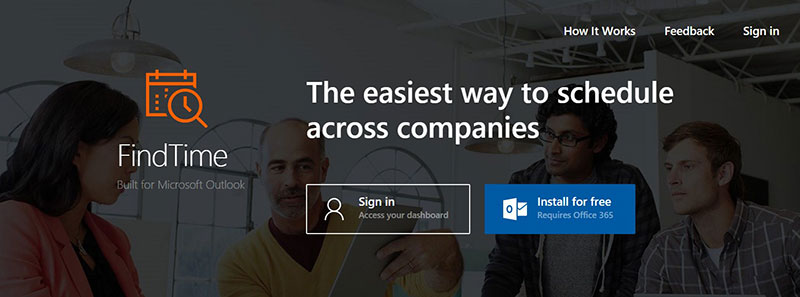
FindTime is Microsoft's consensus-based meeting poll tool, now built directly into Outlook under the name Scheduling Poll. The organizer proposes several time slots, attendees vote, and the meeting auto-books on the winning slot.
The standalone FindTime add-in was retired on December 11, 2023 (Microsoft). It didn't disappear - it got absorbed. Microsoft rebranded it as Scheduling Poll and baked it into Outlook as a native feature, available in Outlook on the Web, Outlook 2024, and Outlook for Mac 2024. Same voting mechanic, same dashboard, just no separate install required.
Only the meeting organizer needs a Microsoft 365 / Exchange Online mailbox. Invitees vote without an account. In practice, that means it's a tool for teams already living inside Outlook and Microsoft Teams - if your company runs on Microsoft 365, the feature is sitting right there in the compose ribbon.
What Is Calendly?
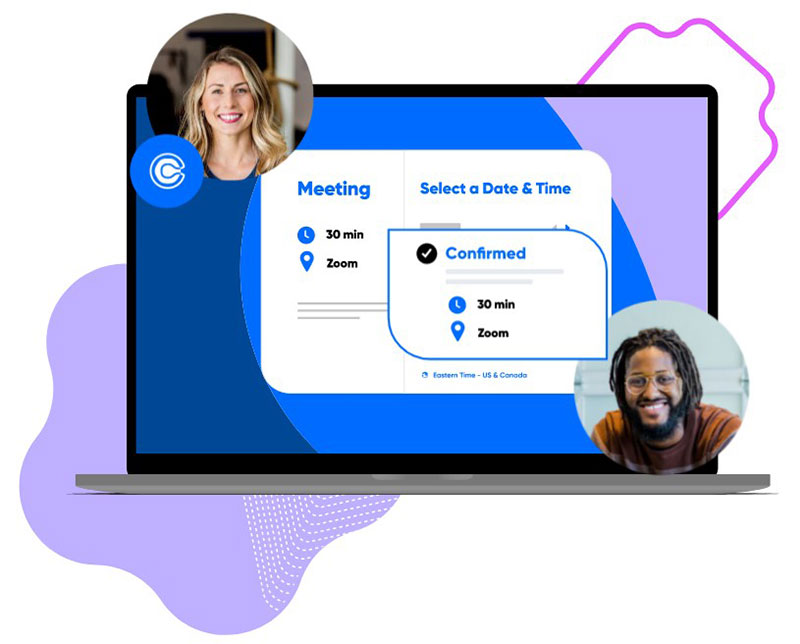
Calendly is a standalone booking-page scheduler where invitees pick from your open availability. Share a link, they see your free slots, they book, and a calendar invite lands in both inboxes. No voting, no back-and-forth.
It launched in 2013 and has grown into the category leader. Enlyft research puts Calendly's market share at roughly 57.6% in appointment scheduling and management, well ahead of vCita and Acuity Scheduling. The user base backs that up: Calendly went from 4 million users in 2019 to 10 million by 2022 (SignHouse), with 2.145 million paying customers that same year, and now reports over 20 million users worldwide.
Out of the box it connects to Google, Outlook, and Office 365 calendars. One caveat worth knowing upfront: as of August 20, 2024, Calendly no longer supports new connections to Apple's iCloud Calendar. Accounts that had it connected before that date keep the integration; everyone else is out.
Sales teams, recruiters, freelancers, and consultants make up most of its user base - anyone who regularly books with people outside their own organization. According to Contrary Research's analysis of Calendly's own data, using the platform doubled recruiters' initial screening calls in 2024.
How Do the Two Compare at a Glance?
The single biggest split: FindTime runs poll-based consensus scheduling, Calendly runs availability-based self-booking. One finds a time a group agrees on. The other lets someone grab time with you. Everything else follows from that.
| Attribute | FindTime (Scheduling Poll) | Calendly |
|---|---|---|
| Scheduling model | Group votes on proposed slots | Invitee self-books open slots |
| Pricing | Included with Microsoft 365 | Free tier, then per-seat paid |
| Ecosystem | Microsoft 365 only | Google and Microsoft calendars; iCloud for legacy connections only |
| Best use case | Internal group meetings | External one-to-one booking |
| Standalone access | No, needs Outlook | Yes, works anywhere |
The ecosystem dependency is what settles most decisions. FindTime needs Microsoft 365. Calendly runs on any stack.
The coordination problem both tools target is genuinely widespread. Roughly 30% of meetings now span multiple time zones, a figure that's risen steadily since 2021 (Microsoft Work Trend Index, via Archie), and about a third of employees say they regularly sit through meetings they think should have been an email (Reclaim.ai, citing SurveyMonkey research).
How the Scheduling Model Works in Each Tool
The mechanics diverge completely. This is the real dividing line, not any feature checklist.
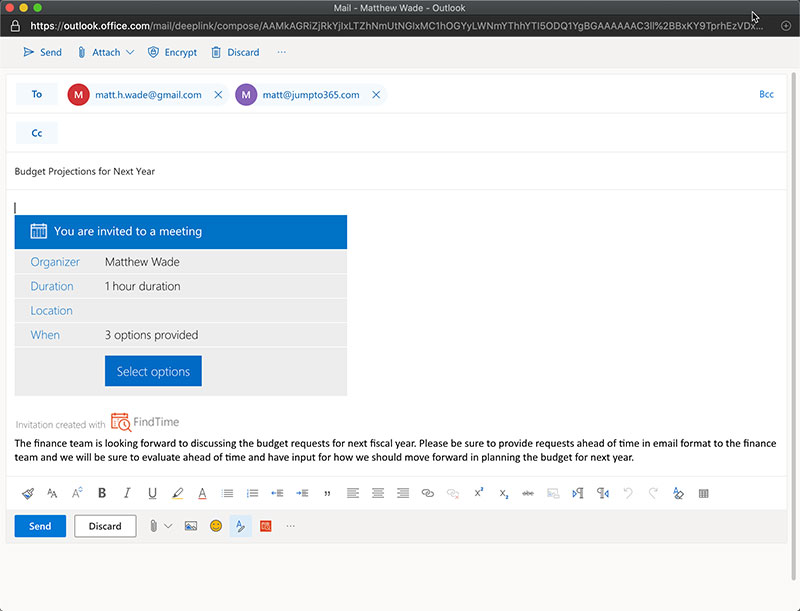
With FindTime, the organizer opens an Outlook email, picks candidate slots using free/busy data, sends the poll, recipients vote, and the winning slot books itself.
With Calendly, the host sets availability rules and buffers once, shares a link, and the invitee opens it to self-select an open slot. Learning how a self-service booking flow actually works makes the split obvious once you've watched both in action.
When Poll-Based Scheduling Wins
Internal meetings where four or more colleagues need to land on one slot and everyone's availability is murky. Picture a six-person cross-team sync where nobody's calendar lines up cleanly - a poll surfaces the least-bad option fast without another round of emails.
Microsoft's Work Trend Index found the average employee spends 57% of their time communicating in meetings, email, and chat. Consensus polling trims at least the email part of that pile.
When Booking-Page Scheduling Wins
One-to-one or one-to-many external bookings: sales calls, interviews, client intros. You're not hunting for consensus. You're offering slots and letting someone claim one. A shared link handles it cleanly, which is exactly why sales and recruiting teams gravitate toward Calendly (Contrary Research). A no-cost meeting scheduler covers this pattern for smaller teams testing the waters.
Integrations and Ecosystems
Your existing tech stack usually decides this question before anything else does.
FindTime is tied to Microsoft 365, Outlook, Exchange Online, and Teams meeting links. No Google Calendar support - at all. Calendly connects Google, Outlook, and Office 365 calendars natively, plus video through Zoom, Microsoft Teams, Google Meet, and Webex. iCloud is a special case: Calendly stopped accepting new iCloud connections as of August 20, 2024, so it only works for accounts that set it up before that cutoff.
Calendly also reaches further into the app layer - Salesforce and HubSpot for CRM sync, Stripe and PayPal for paid bookings, Zapier for everything else.
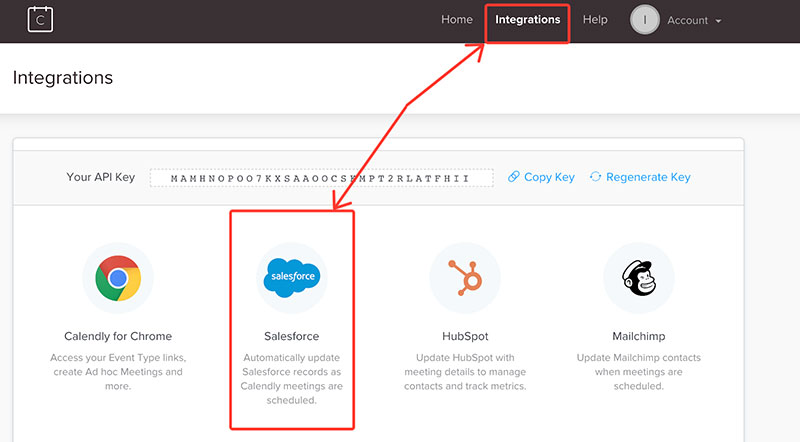
Google Workspace shops simply can't run FindTime. That single fact ends the comparison for a lot of teams before pricing even comes up. If you're wiring up video specifically, the Calendly and Google Meet connection and the workflow to add a Zoom meeting inside Outlook are the two setups people ask about most.
Pricing
FindTime costs nothing extra - it's included with eligible Microsoft 365 business plans. Calendly runs on a per-seat model with a free tier and paid plans billed monthly or annually.
Confirmed 2026 rates from Calendly's pricing page:
| Plan | Price (annual billing) | Key unlock |
|---|---|---|
| Free | $0 | 1 event type, 1 calendar |
| Standard | $10/seat/mo | Unlimited event types, integrations |
| Teams | $16/seat/mo | Round-robin, Salesforce, admin |
| Enterprise | $15,000+/yr | SSO, SCIM, dedicated support |
Monthly billing runs higher - Teams jumps to $20/seat, a 25% premium over annual (checkthat.ai).
One honest framing on FindTime: "free if you already pay for Microsoft 365" isn't really free. You're paying for the entire suite; the scheduling just comes bundled. And the two free tiers aren't equivalent. Calendly's free plan caps you at one event type and one calendar connection (Koalendar). FindTime has no standalone free concept because there's no standalone product anymore.
Group and Multi-Attendee Scheduling
FindTime wins group scheduling outright. Voting across many attendees is the entire reason it exists. Calendly handles groups too, but the stronger features sit behind paid tiers.
Multi-attendee polling in FindTime is native and free inside Microsoft 365, supporting up to 15 proposed time slots per poll. Calendly offers Meeting Polls plus round-robin and collective event types - meeting polls exist on the free plan but are capped at 40 time slots and 40 participants, while round-robin and collective scheduling are mostly gated to the Teams plan at $16/seat.
A concrete example of where they split: scheduling a six-person cross-team sync where nobody's free at the same time is exactly what FindTime's poll was built for. Booking a panel interview where three interviewers rotate across candidates is what Calendly's round-robin does - routing that FindTime simply can't replicate.
Recurring meetings make up 48% of all meetings (Flowtrace), so whichever pattern dominates your week should drive the pick.
External Guests and Time Zones
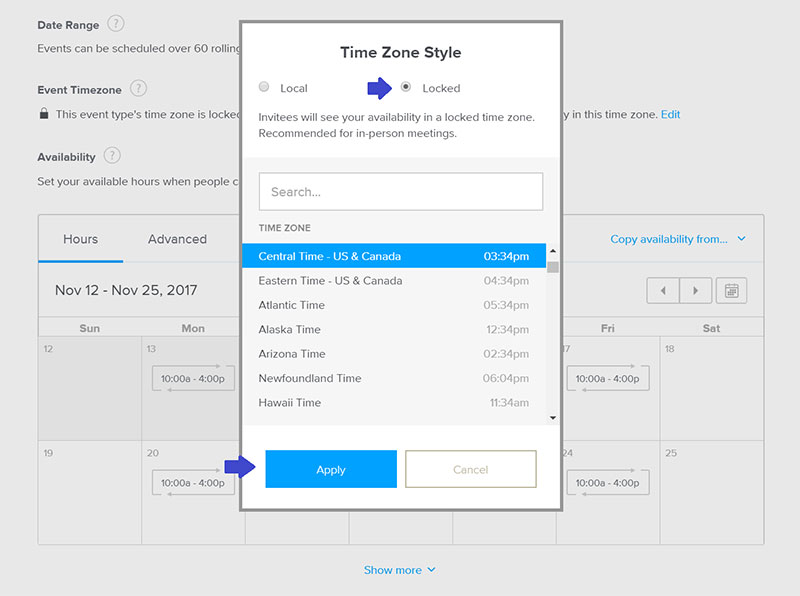
External scheduling is where friction usually concentrates. Roughly 30% of meetings already cross time zones, and 72% of workers say they lose time to tech issues around calls (Archie, 2025).
With FindTime, recipients vote through a secure web link in the email without needing a Microsoft 365 account. Only the organizer needs the license.
The catch: attendees can't forward the poll or propose a new time, and the feature isn't supported with shared mailboxes or group calendars. Fine for a straightforward set of invitees, noticeably awkward for anyone living outside Outlook.
Calendly was built from the ground up for external booking - no account needed on the invitee side, and the booking page looks the same whether you're inside or outside the organization.
Both tools auto-detect and display the invitee's time zone, which prevents the usual mental math at 6am. The gap shows up in feel rather than a single missing feature. If cross-border scheduling is your norm, the tactics for booking meetings across different time zones matter more than any individual spec.
Limitations Worth Knowing Before You Commit
Neither tool is flawless, and both carry trade-offs that only show up after you've started using them.
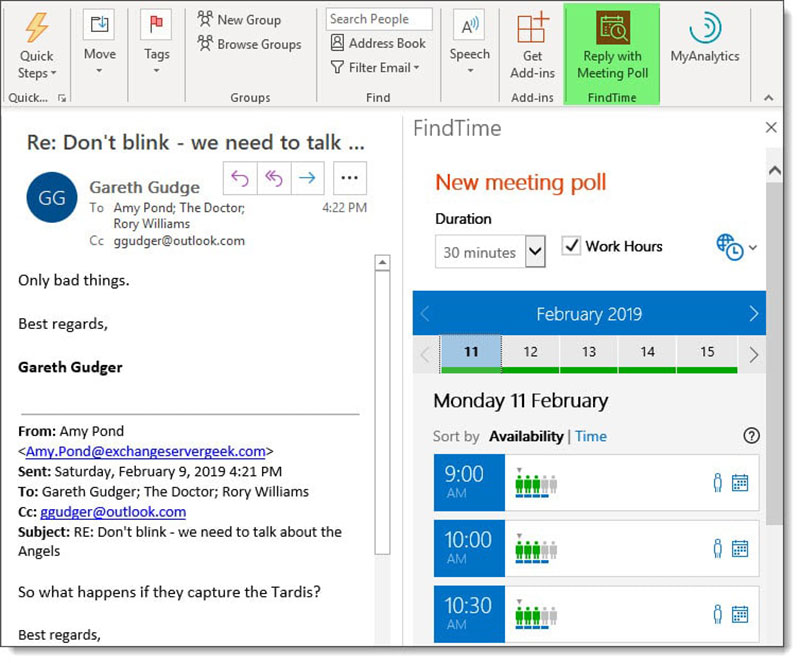
FindTime's hard limits: it's locked to Microsoft 365 with no Google Calendar support, ever. It has no self-booking link model - polls or nothing. A poll caps at 15 time options (Microsoft). Attendees can't forward a poll or propose a new time.
It's not supported with shared mailboxes or group calendars. And one that bites specifically in hiring contexts: FindTime can't run confidential one-to-one scheduling. Microsoft's own support forum steers users doing anonymous interviews toward Microsoft Bookings or Calendly instead.
Calendly's limits run in a different direction:
| Limit | What it means |
|---|---|
| Per-seat cost | A 10-person Teams plan runs $1,920/yr on annual billing |
| Feature gating | Round-robin and CRM sync locked to Teams tier |
| Thin branding | Page customization stays limited unless you pay up |
| Calendar cap | 6 calendar connections max, even on Enterprise |
| Apple users | No new iCloud Calendar connections since August 2024 |
Reviewers rarely say Calendly fails at its core job. Complaints cluster around price-to-value as seats pile up (Tomba). There's also a two-party ceiling: Calendly has no native flow to collect candidate availability and pass a filtered set to a hiring manager for sign-off, so recruiting teams tend to patch this by hand (ArrangeAI).
Put simply - FindTime has no public booking page, and Calendly has no way to drop a "vote on my proposed slots" poll to your whole team inside an email. Digging through real user feedback on Calendly surfaces those same two complaints repeatedly.
Which Tool Fits Your Workflow?
The decision mostly comes down to one question: are you scheduling inside your company or outside it? That split settles most cases. Sales and recruiting teams lean external, which is exactly where Calendly's routing and booking pages earn their keep (Koalendar).
FindTime Makes Sense When...
Your whole organization runs on Microsoft 365 and most of what you're scheduling is internal consensus-finding. Team leads booking group syncs, project managers wrangling cross-team availability, anyone already living in Outlook all day - these are the people FindTime actually serves well.
The average employee spends 57% of their time communicating in meetings, email, and chat (Microsoft Work Trend Index). Native polling trims the coordination pile without adding another bill.
Calendly Makes Sense When...
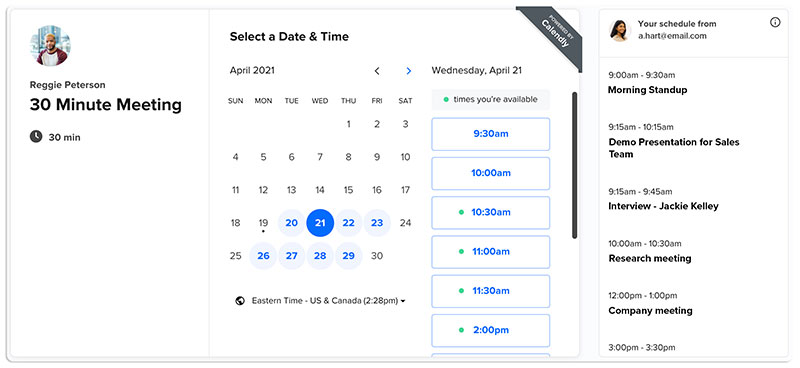
You book externally, work across Google and Microsoft, or need a shareable link that works for people who have never heard of your company. Calendly earns 4.7 out of 5 on Capterra across 4,000+ reviews, with users spinning up a first booking link in minutes (Lovable).
Sales reps routing demos into a CRM, recruiters running screening calls, freelancers and consultants booking clients - it slots in as solid scheduling software for a business that deals regularly with people outside its own walls.
Mac and iPhone users who need their personal iCloud calendar checked for conflicts will hit a wall unless they set that connection up before August 2024.
Running Both
Plenty of companies do exactly this, and there's no reason not to. Internal teams fire off FindTime polls for group syncs. Client-facing staff hand out Calendly links for external bookings. One decision line per role:
| Role | Best pick |
|---|---|
| Sales rep | Calendly (routing, CRM) |
| Recruiter | Calendly (ATS, screening) |
| Project manager | FindTime (group consensus) |
| Executive assistant | Both, split by task |
Still weighing it? The wider field of top appointment scheduling platforms is worth a look before you lock in, since a third tool sometimes beats both for a specific workflow.
FAQ on FindTime vs Calendly
Is FindTime still available in 2026?
Yes, but not as a separate add-in. Microsoft retired the FindTime add-in in December 2023 and rebuilt it as Scheduling Poll, a native feature inside Outlook. Same voting mechanic, no install needed.
What is the main difference between FindTime and Calendly?
FindTime runs group voting on proposed slots to reach consensus. Calendly gives people a booking link to self-select from your open availability. One finds a time a group agrees on; the other books time with you directly.
Is FindTime free to use?
FindTime carries no separate fee, but the organizer needs a paid Microsoft 365 Exchange Online mailbox. It's bundled into the suite, not free on its own. Invitees vote with any valid email, no account required.
Does Calendly have a free plan?
Yes, permanently. The free plan allows one event type, one calendar connection, and unlimited bookings on that event type. Meeting polls are included but capped at 40 slots and 40 participants. Reminders and team features require a paid tier.
Can FindTime work with Google Calendar?
No. FindTime is locked to the Microsoft ecosystem, reading free/busy data only from Outlook and Exchange Online. Google Workspace users cannot run it, which rules the tool out for a large share of teams immediately.
How much does Calendly cost per user?
Calendly Standard runs $10 per seat monthly billed annually, and Teams runs $16. Monthly billing costs 20 to 25% more. Enterprise starts around $15,000 per year for SSO and advanced admin controls.
Can people outside my organization vote in a FindTime poll?
Yes. External attendees vote through a secure web link in the email, no Microsoft 365 account needed. Only the poll organizer needs the license. Attendees cannot forward the poll or propose new times themselves.
Which tool is better for sales teams?
Calendly. Its booking links, round-robin routing, and CRM sync with Salesforce and HubSpot suit external demos and lead capture. FindTime targets internal consensus scheduling and lacks the routing that sales pipelines depend on.
Does Calendly handle group scheduling like FindTime?
Partly. Calendly offers meeting polls plus round-robin and collective event types, though the strongest group features sit on paid tiers. FindTime builds multi-attendee voting in natively and free inside Microsoft 365, making it the tighter fit for pure group consensus.
Can I use both FindTime and Calendly together?
Yes, and many teams do. Internal staff run FindTime polls for group syncs inside Outlook, while client-facing roles share Calendly links for external booking. Splitting by task type sidesteps each tool's weak spot.
Does Calendly still work with Apple Calendar or iCloud?
Only if the connection was already set up before August 20, 2024. Calendly stopped accepting new iCloud Calendar connections on that date, so new users on Mac or iPhone can't sync a personal iCloud calendar for conflict-checking. Google and Microsoft calendars remain fully supported.
Conclusion
The FindTime vs Calendly choice isn't about which tool is better. It's about which job you're solving.
Need internal group consensus inside Outlook? Scheduling Poll handles multi-attendee voting for free, as long as you already pay for Microsoft 365.
Booking externally across Google, Outlook, and iCloud? Calendly's self-service link and round-robin routing win, though the per-seat pricing climbs as your team grows.
The real dividing line stays the same throughout:
- Consensus scheduling lives with FindTime
- Availability-based booking lives with Calendly
- Ecosystem lock decides most ties
Match the tool to your workflow, not the hype. And if neither fits cleanly, running both (polls internal, links external) covers the gap without forcing a compromise.