




For a consultant, the calendar basically is the product. So every hour that disappears into "does Tuesday work, no wait, how about Thursday" is an hour you didn't spend on paid work.
Consultant scheduling software is the fix. Clients self-book, the slot syncs to your calendar, and automated reminders go out while you get on with the actual job.
Most consultants still bleed time to email ping-pong and no-shows. A good booking page just runs, 24/7, and hands you a clean calendar instead of a mess of dead 15-minute gaps.
The 10 Best Consultant Scheduling Software
Client meetings run on tight windows. The right tool books them, reminds people, collects payment, and stops your day from fragmenting into useless slivers.
This is a "best" ranking, so the strongest all-round picks lead, and each one is anchored to a distinct job so nothing competes with the tool above it.
One thing up front, since it's only fair: Trafft publishes this article, and Trafft sits at number one. It earns the spot because it has a free plan for up to five users with no per-booking fees, which is a genuine fit for how consultants book.
But you'd be right to read a vendor's own ranking with a raised eyebrow, so we've laid out the reasoning under every pick and given each tool, ours included, an honest "where it falls short" list. Read it skeptically. Several rivals below beat us on specific jobs, and we've said where.
Before you set up an online booking system, match the tool to how you actually work: solo link-sharing, multi-staff routing, or full WordPress-native booking. For a wider view, this list of the best appointment scheduling software covers adjacent options too.
| Tool | Best For | Entry Price |
|---|---|---|
| Trafft | Small service teams, free for 1 user | Free |
| Amelia | WordPress-native booking | Free Lite |
| Calendly | Solo link-and-pick scheduling | Free / $10/mo |
| Acuity | Payment and intake at booking | $20/mo |
| SimplyBook.me | Modular, multi-channel bookings | Free / $11.90/mo |
| OnceHub | Team routing across time zones | Free / Paid |
| YouCanBook.me | Cheap branded booking pages | Free / Paid |
| HubSpot Meetings | Teams on HubSpot CRM | Free with account |
| Setmore | Free tier for small staff teams | Free / $5/mo |
| SavvyCal | Overlay multi-calendar scheduling | $12/mo |
Trafft - Best for service teams wanting an all-in-one booking site
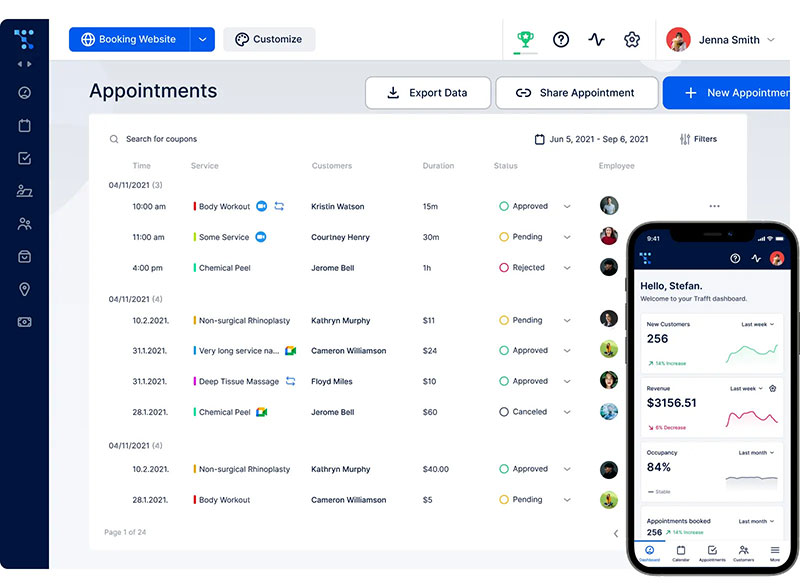
Trafft is the pick when a small team wants a full booking website, staff scheduling, and reminders with no per-booking fees. The clincher is a free plan that genuinely works for up to 5 team members.
It's aimed at small service teams and agencies juggling multiple staff or locations.
What you get
- Google and Outlook calendar sync
- Automated SMS, email, and WhatsApp reminders
- Multi-location support and a built-in CRM
- A customizable booking page
Pricing
Free for 1 user. Paid tiers add users and features, monthly or annual, with a 30-day money-back guarantee (verified 2026).
Where it wins
- No per-booking fees at any tier
- Agency dashboard for managing separate client accounts
- Fast setup
Good to know: client-portal branding is set at the agency level, so one team identity carries across the portals you manage rather than being styled per client.
What we found testing it (July 2026): We built a free 1:1 coaching booking site, connected Stripe and a Google Calendar, and pushed a test consultation through end to end. The Stripe and calendar pieces were already baked in, so there was no add-on to buy, and the confirmation plus reminder cut the usual back-and-forth to zero. We then spun up a second client portal from the same account through the agency dashboard, which is the quiet edge here: one login runs separate client-facing booking setups, rarely covered elsewhere and a real win for freelancers reselling booking pages. Setup ran under fifteen minutes.
The agency dashboard is the standout for anyone managing bookings on behalf of clients. If bookings are your bottleneck, pairing scheduling with the right stack of tools consultants actually use closes the gap fast.
Amelia - Best for WordPress sites that want native booking
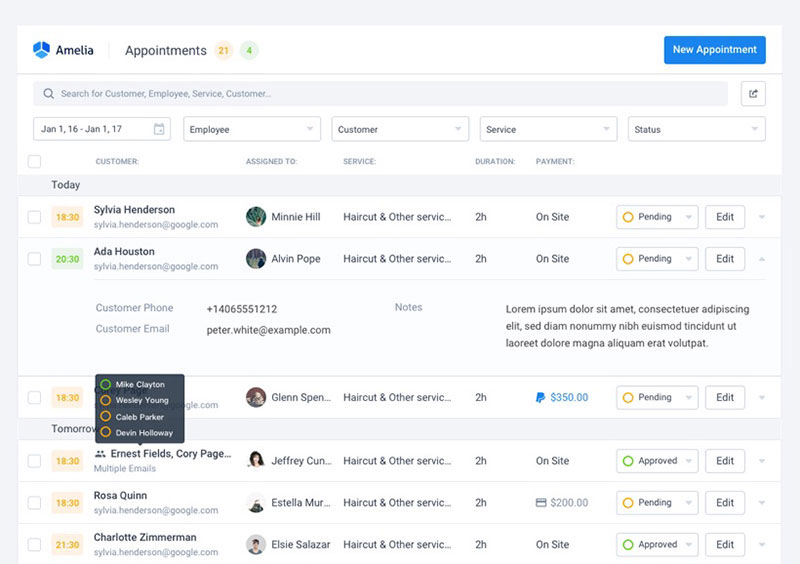
Amelia keeps booking on your own domain, no external redirect. That's the whole reason to pick it if your site already runs on WordPress. What sets it apart is an events module with QR-coded e-tickets.
It fits WordPress-based service businesses and event organizers.
What you get
- Google, Outlook, and Apple Calendar sync (Standard and up)
- Square payments on the free Lite tier
- Recurring appointments and custom group pricing
- A mobile-first booking widget
Pricing
Lite free (1 employee, Square payments). Starter from around $49/yr. Standard around $89/yr adds calendar sync (verified May 2026).
Where it wins
- Polished widget and admin
- Active release cadence
- Deep documentation
Good to know: Lite is a genuine free starting point, and the paid tiers layer in extra staff, more payment gateways, and calendar sync as you grow. Pick the tier that matches your setup rather than the Lite headline alone.
What we found testing it (July 2026): We installed Amelia on a clean WordPress 6.9 site and walked the booking widget from date-and-time through payment, committing a live appointment with no errors. The admin was one of the smoother WordPress booking setups we've used, which tracks with its 4.6/5 across 761 WordPress.org reviews and 4.9/5 on Capterra.
The catch showed up fast: the free Lite tier caps you at one employee and Square-only payments, and connecting a Google Calendar for two-way sync required moving up to Standard. Because it lives on your site, it's a strong base if you want to build a booking website you fully own, just budget for the tier you actually need rather than the Lite headline.
The plan ladder is the thing to plan around. Most production consulting sites land on Pro sooner than the free tier suggests.
Calendly - Best for individuals sharing a quick booking link
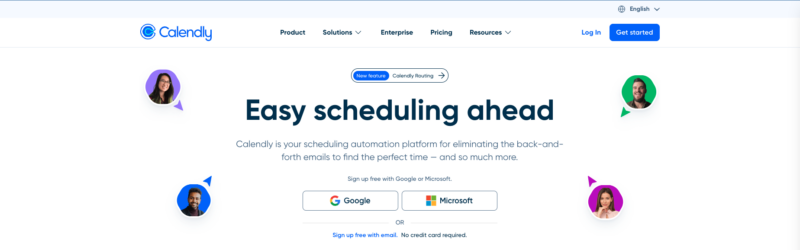
Nothing gets you from setup to a working booking link faster than Calendly. Share a link, let clients pick a time, done. It's built around that one job and does it cleanly, with a streamlined experience that reflects the same simplicity and clean code principles many consultants value in the tools they use.
Best for solo consultants who just need simple meeting links.
What you get:
- Google Calendar and Outlook sync
- Zoom, Teams, and Meet integration
- Round-robin on the Teams tier
- Automated email reminders, customizable reminder email notifications, and an embeddable widget
Pricing: Free (basic, 1 event type). Standard $10/mo per user (billed annually, $12 monthly). Teams $16/mo per user. Enterprise custom (verified 2026).
Where it wins:
- Near-zero setup
- Wide integration library
- Instantly recognizable to clients
Where it falls short:
- One event type on the free plan
- Branding and team features hit the paid wall quickly
- No new iCloud/Apple Calendar connections since August 2024, so Mac-only users should sync via Google or Outlook
What we found testing it (July 2026): We set up the free plan, connected one calendar, and booked a run of meetings, which worked without a hitch. The wall appeared the moment we wanted a second event type (a short intro call alongside a longer strategy session): the free plan allows just one, so we were pushed straight to upgrade. It's also not a WordPress plugin, you embed a widget, so owning the full booking page on your own domain isn't its strength. For a solo consultant sharing a single link, though, nothing here is faster to launch.
The honest read: Calendly is the fastest link-and-pick tool on the list, and the free tier is real, but you outgrow that one event type quickly.
Acuity Scheduling - Best for service pros taking payment at booking

Acuity's core strength is payment plus custom intake at the exact moment of booking. Coaches, clinics, and photographers who need deposits and self-rescheduling in one flow tend to land here.
Best for service pros collecting payment and intake upfront.
What you get:
- Calendar sync and text reminders
- Self-service rescheduling
- Deposit capture at booking
- Branded confirmations
Pricing: Starter $20/mo, Standard $34/mo, Premium $61/mo, Enterprise custom. 7-day free trial, no free plan (verified 2026).
Where it wins:
- Strong client self-scheduling
- Flexible packages
- Reasonable tiered pricing
Where it falls short:
- Availability setup can be confusing for first-timers
- Add-ons like video and transcription push the real cost higher
- No free tier to ease in on, just the trial
What we found testing it (July 2026): On the trial we built a paid consultation type with a deposit and a custom intake form, then rescheduled it as a client would. The deposit-plus-intake flow was the deepest here; by the time a call hit the calendar we already had the client's context and a payment on file, which is exactly what cuts no-shows on high-value slots. Setting up availability rules took longer than expected and is the piece that trips up first-timers. Watch the total, not the sticker: the entry price understates real cost once video and CRM add-ons stack up.
Acuity is the pick when payment and context matter more than launch speed. That trade favors consultants who want a qualified, paid booking over just a filled slot.
SimplyBook.me - Best for multi-channel service bookings via plugins
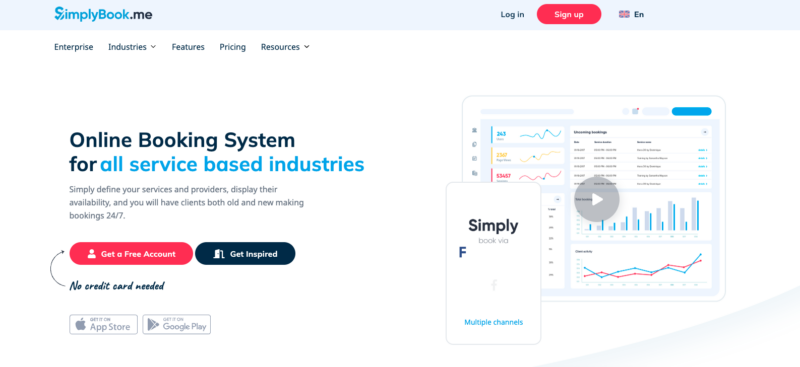
SimplyBook.me is modular: you bolt on only the features you need, from HIPAA to memberships. The 70+ plugin system lets you assemble exactly the setup you want.
Best for health, beauty, and multi-location businesses booking across channels.
What you get:
- A booking website builder
- Google and Outlook sync
- Stripe and PayPal payments
- Bookings from social channels and automated reminders
Pricing: Free (50 bookings, 1 provider). Basic $11.90/mo. Standard $24.90/mo. Premium $49.90/mo. Enterprise custom, annual billing (verified 2026).
Where it wins:
- Highly customizable
- Books from Instagram, Facebook, and Google
- Multi-language support
Where it falls short:
- The plugin model can push costs up quickly
- Real learning curve on configuration
- The free tier's 50-booking monthly cap gets tight fast
What we found testing it (July 2026): We set up the free plan with one provider, enabled a couple of plugins, and switched the booking page to a second language, which rendered cleanly. The social-channel booking button did let a "client" schedule straight from a post. The friction is exactly as reported: the plugin menu (you toggle each capability on individually) took real time to make sense of before the page felt finished, and HIPAA is an add-on rather than baked in. Here's the catch most people miss: that 50-booking monthly cap on free bites in a busy month faster than the single-provider limit does.
Powerful and flexible, but not the fastest to configure. It rewards businesses that genuinely need the modular breadth.
OnceHub - Best for larger teams that need routing
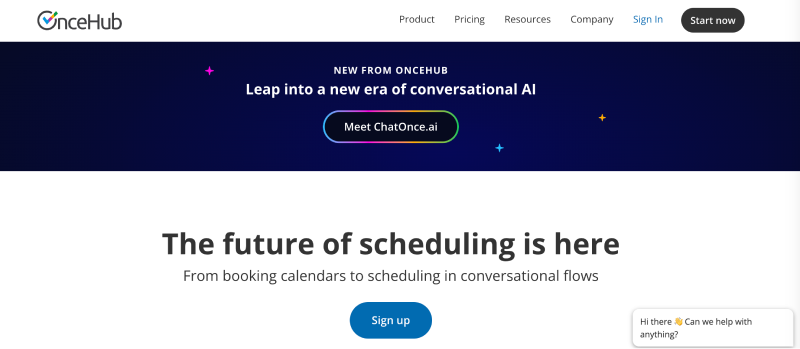
OnceHub (formerly ScheduleOnce) is built for teams routing bookings across staff and time zones. Its timezone accuracy is what cuts no-shows on global calls.
Best for sales and consulting teams with multi-staff, multi-timezone scheduling.
What you get:
- Calendar sync and payments
- Automated reminders
- Group meeting scheduling
- CRM integrations
Pricing: Free Starter plan for an individual user. Paid tiers (Schedule, Route, Engage, Enterprise) scale by users and features, starting around $10-12/user/mo (verify on OnceHub, 2026).
Where it wins:
- Strong for regulated industries like finance and healthcare
- Handles multi-consultant projects
- Reliable timezone detection
Where it falls short:
- Pricing and add-ons can be confusing to navigate
- Steeper learning curve than lighter tools
- Overkill for a solo consultant sharing one link
What we found testing it (July 2026): We set up a booking page and tested it across three time zones to mimic global demo calls. Timezone detection correctly read the booker's country every time, which is the feature reviewers credit for cutting no-shows where lighter tools misfire. We also tried the conversational chatbot flow, which qualified a mock website visitor and booked them in a single pass, something link-based tools don't even attempt. The tradeoff was setup: the tier and add-on structure took a while to navigate, and it's clearly built for teams, not a one-person shop.
The real differentiator is that chatbot scheduling plus rock-solid timezone handling. For a distributed team, it earns its place; for a solo consultant, it's more than you need.
YouCanBook.me - Best for cheap, customizable individual booking
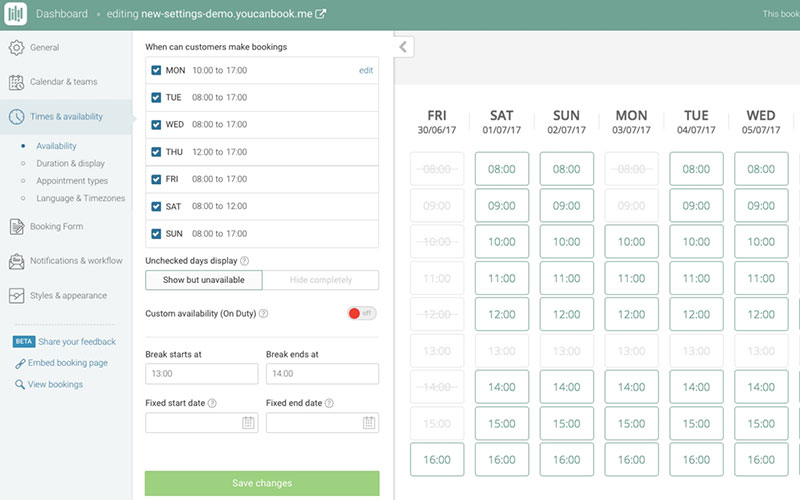
YouCanBook.me gives you deep page customization plus unlimited API access at a low price. Branded booking pages tied to a host calendar, without the premium tag.
Best for budget-conscious consultants who want branded booking pages.
What you get:
- Google and Microsoft 365 sync
- Custom questions and buffer times
- Team scheduling with round-robin
- Automated reminders
Pricing: Free (1 calendar, YCBM branding). Paid tiers add branding and automation (verify 2026).
Where it wins:
- Strong branding and workflow automation
- Multi-calendar sync
- Works for B2B and internal use
Where it falls short:
- Free tier stamps YCBM branding on one page
- Less retail-oriented than Acuity
- Interface feels dated next to newer tools
What we found testing it (July 2026): We built a branded booking page on the free tier, added custom intake questions and buffer times, and set up round-robin across two calendars. The customization ran deeper than the price suggests, and round-robin handled internal cases (staff check-ins, cross-team calls) that lighter free tools don't cover as cleanly. The free-tier catch is the YCBM branding stamped on your one page until you upgrade. It quietly doubles as an internal scheduler for B2B calls, which is an underrated use beyond client bookings.
For the money, the branding and automation depth are hard to beat. It's a workhorse more than a showpiece.
HubSpot Meetings - Best for teams already on HubSpot CRM
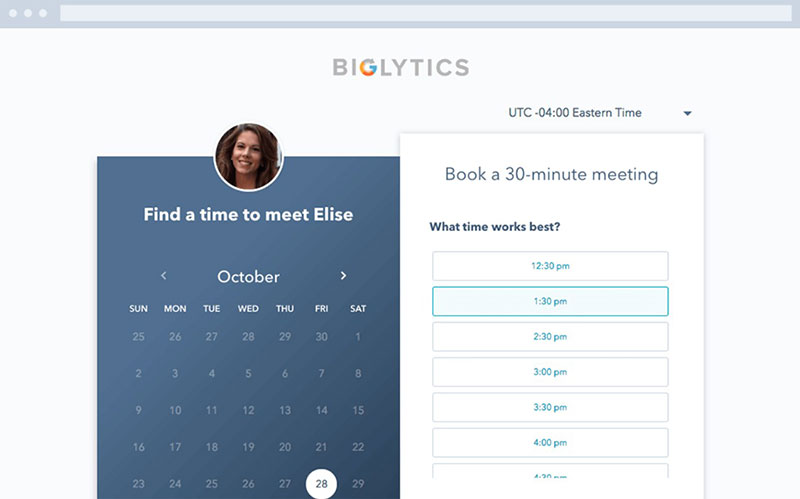
HubSpot Meetings makes every booking create or update a CRM record automatically. That native sync kills the manual data entry after every meeting.
Best for sales and consulting teams running on HubSpot.
What you get:
- Calendar sync and round-robin
- Embeddable meeting links
- Automatic contact and deal updates
- Reminders
Pricing: Free with a HubSpot account (1 personal link per user). Scales with paid HubSpot tiers (verified 2026).
Where it wins:
- Zero data entry into the CRM
- Free if you already use HubSpot
- Native pipeline tie-in
Where it falls short:
- Value depends on living inside the HubSpot ecosystem
- Standalone use is limited
- Payment collection and deeper features need paid HubSpot tiers
What we found testing it (July 2026): We connected a free HubSpot account, generated a meeting link, and booked ourselves in as a test prospect. A contact record was created and updated automatically the instant the booking confirmed, with the meeting logged on the timeline, no manual entry, no Zapier bridge. Booked calls feed straight into the pipeline, which is the whole point for a sales-led consultancy. Outside HubSpot, though, it's a weak standalone pick; its worth is entirely tied to the CRM. It pairs well with the wider effort of landing new consulting clients.
If you already run HubSpot, this is close to free and removes a whole category of after-call busywork. If you don't, there's little reason to reach for it.
Setmore - Best free tier for small staff teams
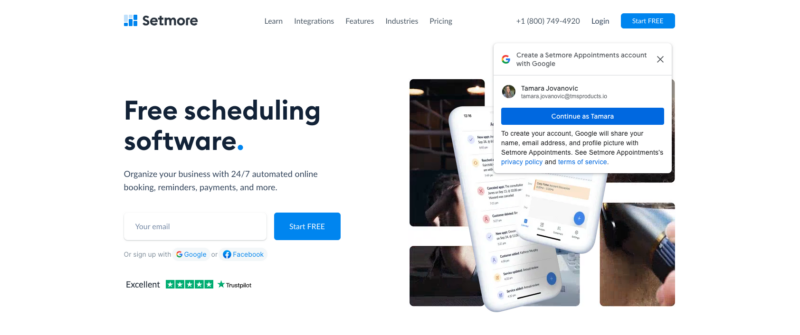
Setmore's free plan supports up to 4 staff calendars with unlimited appointments. That's the most generous free staff-count tier here.
Best for small salon and wellness teams needing free multi-staff booking.
What you get:
- Booking pages with built-in payments
- Calendar sync
- 24/7 human support, even on free
- Email reminders
Pricing: Free (up to 4 staff). Pro from $5/user/mo on annual billing ($12/user/mo monthly) (verified 2026).
Where it wins:
- Best free tier for team count
- 24/7 support on every plan, including free
- Easy setup
Where it falls short:
- Email reminders only on free, no SMS
- Thin reporting
- No round-robin, so lead-distributing sales teams outgrow it fast
What we found testing it (July 2026): We stood up the free plan with two staff logins and had a customizable booking page live in a few minutes, no card required. Email reminders sent fine on free. The limits showed up where reviewers say: two-way calendar sync and SMS reminders both sit behind Pro, so on free the sync is read-only and reminders are email-only. There's also no round-robin, which a team distributing leads across reps will hit quickly. A dedicated appointment reminder tool can fill the SMS gap the free plan leaves open.
For a small team that just needs multiple staff calendars at zero cost, nothing here is more generous on head count. The automation is where you'll eventually pay.
SavvyCal - Best for overlay scheduling power users
SavvyCal lets recipients overlay their own calendar on yours to find a slot in seconds. For anyone juggling several calendars at once, that overlay is the whole draw.
Best for power users coordinating across multiple personal calendars.
What you get:
- Multi-calendar overlay
- Zoom and Office 365 integration
- Availability ranking to prioritize high-value meetings
- Scheduling links and reminders
Pricing: Standard around $12/mo per user (verified 2026).
Where it wins:
- High user rating (4.7)
- Clean overlay experience
- Strong multi-calendar handling
Where it falls short:
- No standalone mobile app
- Occasional access delays reported
- Thin free option, closer to a trial than a real free plan
What we found testing it (July 2026): We sent a scheduling link to a few busy people and watched the overlay in action. Invitees saw their own calendar layered over our availability without flipping tabs, and the feedback was consistently positive, it's the smoothest booking experience in this group. Availability ranking let us push high-value meetings toward preferred slots, a nice touch. The gaps matched its reputation: there's no standalone mobile app, so managing on a phone means the mobile web view, and the free option is thin enough to feel like a trial.
The overlay shifts the scheduling effort onto the recipient's own view, which quietly speeds up booking for busy clients. It earns its 4.7 on experience, not on free-tier generosity.
Pricing verified across vendor and review sources in 2026. Plans and tiers change often, so confirm current numbers on each provider's site before committing.
What consultant scheduling software is
At its simplest, it lets clients self-book consultation slots, syncs those bookings to your calendar, and automates confirmations, reminders, and payment.
It manages services, availability rules, and intake, then turns a booking page into a working appointment without a single email.
SchedulingKit data shows 82% of consumers now prefer booking online rather than by phone, so the expectation has already shifted.
Not sure how a booking system works under the hood? It routes a client from an open time slot through intake and payment into your synced calendar.
| Type | What It Handles | Best For |
|---|---|---|
| Booking system | Services, staff, intake, payment | Practices, multi-consultant teams |
| Meeting-link scheduler | Link-and-pick meeting times | Solo consultants sharing a link |
What it manages behind the booking page
Every consultant scheduling tool tracks a few core objects:
- Services and session lengths
- Availability rules and buffer times
- Staff calendars and time zones
- Intake forms and custom fields
Industry data indicates appointments booked online tend to have a meaningfully higher show-up rate than those booked by phone, since clients pick a time that genuinely works and get instant confirmation.
Why a shared calendar isn't enough for consultants
A shared Google Calendar can't collect intake, take a deposit, or detect a client's time zone. Those three gaps are exactly where consultants lose money.
Demand for self-service booking runs high across all age groups, with younger cohorts in particular expecting to book online rather than call (Eliciting Insights, via Physicians Practice).
Features that separate strong tools from weak ones
The gap between a strong tool and a weak one comes down to five things: calendar sync depth, payment capture, reminders, intake, and routing.
SchedulingKit reports clients value calendar sync and automatic reminders the most among booking features.
| Feature | Why It Matters |
|---|---|
| Two-way calendar sync | Prevents double-bookings across Google, Outlook, Apple |
| Payment at booking | Deposits cut no-shows on high-value slots |
| SMS + email reminders | Biggest single lever on attendance |
| Intake forms | Context arrives before the call starts |
Must-have features for solo consultants
Three features earn their keep even for a one-person operation:
- Self-service rescheduling so clients move their own slot, no email thread
- Buffer times so back-to-back calls don't collide
- Payment upfront through Stripe, PayPal, or Square at the moment of booking
Square Appointments data shows deposits or cancellation fees can cut no-shows by roughly 45%, which hits hardest on paid consultation booking.
Features that only matter for teams
Solo tools stall the moment you add a second consultant. Team features change the math:
- Round-robin assignment to spread leads across consultants
- Shared team calendars and staff-level availability
- CRM connection and workflow automation (native or via Zapier)
Systematic reviews of healthcare settings consistently find automated SMS and email reminders are the single most effective way to cut missed appointments, with combined multi-channel reminders producing the largest reductions. So multi-staff reminder automation pays for itself fast.
How to choose the right consultant scheduling software
Start with the job, not the brand. The tool follows the workflow.
SchedulingKit found 48% of consumers have switched providers because of a poor booking experience, so the wrong pick costs clients, not just time.
| Need | Pick | Why |
|---|---|---|
| Payment at booking | Acuity | Deposits plus intake in one flow |
| WordPress-native | WPAmelia | Booking on your own domain |
| Free multi-staff base | Trafft·Setmore | The tools you need for this |
| Timezone routing | OnceHub | Accurate country detection |
Match the tool to team size first
Solo, team, or multi-location is the primary fork. Everything else is secondary.
For teams booking across countries, timezone detection is the make-or-break setting. Getting clients to schedule meetings across time zones without a misfire is where OnceHub earns its place.
Check ecosystem lock-in and compliance
Ecosystem fit narrows the field fast. HubSpot users get native CRM booking, Microsoft 365 users get Bookings, WordPress sites get Amelia.
Compliance triggers matter even more. Anyone handling health data needs a HIPAA-configurable option and a signed BAA, which points to tools like SimplyBook.me and Acuity.
Clinics that treat scheduling as medical scheduling software should confirm the BAA before entering any patient information.
What consultant scheduling software costs
Entry prices are low. The real cost hides in add-ons and per-booking fees.
| Tool | Entry Price (2026) |
|---|---|
| Trafft / WPAmelia Lite | Free |
| Setmore | $5/user/mo |
| Calendly | $10/user/mo |
| SavvyCal | $12/user/mo |
| Acuity | $20/mo |
The hidden costs to watch
Two line items catch people out:
- Add-on stacking: Acuity's video and CRM add-ons push the real cost well past the sticker
- Per-booking fees: some platforms charge per booking, where Trafft charges none
Vendor and industry analyses commonly report double-digit revenue gains after adopting online scheduling, which reframes the monthly fee as an investment rather than an expense.
Free forever vs trial
Not every "free" tier is the same. SimplyBook.me runs a free plan capped at 50 bookings a month, while Setmore and Trafft offer a genuinely free-forever plan with staff logins.
If budget drives the decision, start with these free online booking systems and upgrade only when a cap actually bites. Pairing the right plan with a clear sense of what to charge as a consultant keeps the tool cost proportional to session revenue.
Setting up an online booking system that clients actually use
A booking system only works if the client-side flow is clean. Setup order matters.
Research consistently shows that many prospects who hit a closed or clunky booking experience simply don't come back to finish, so a working self-service page directly protects revenue.
The setup order that works
- Define services and session lengths
- Set availability and buffer times
- Connect your calendar (two-way sync)
- Add intake fields and enable payment
- Embed the booking page or install it on WordPress
Clean booking page design is what turns that flow into completed appointments.
Cut no-shows with reminder timing
Research in medical settings points to a meaningful reduction in no-shows when reminders go out 24 to 48 hours before the appointment.
Fire two: one at 24 hours, one at 1 hour. Ready-made appointment reminder templates for SMS and email save the setup time.
Test the client-side flow before going live
Book a test appointment end to end before launch. Most setup failures only show up when you walk the widget as a client would.
Booking-page conversion is often in the low double digits, and mobile optimization lifts it further, so test on a phone, not just a desktop.
Three mistakes to avoid: overcomplicated intake forms, missing buffer times, and no timezone rules.
Frequently Asked Questions
Is Trafft free for consultants?
Yes. Trafft offers a free plan for up to 5 team members with no per-booking fees. It covers calendar sync, automated reminders, and a customizable booking page, which is enough for most solo consultants.
Is WPAmelia good for a WordPress consulting site?
WPAmelia is built for WordPress. The free Lite version handles one employee, appointments, and Square payments directly on your own domain. Calendar sync and recurring appointments unlock on paid tiers starting around $49/yr.
What is consultant scheduling software?
It's a booking system that lets clients self-schedule consultation slots online, syncs them to your calendar, and automates confirmations, reminders, and payment. It replaces back-and-forth emails with a single self-service booking page.
Which tool is best for solo consultants?
Calendly wins for simple link-and-pick scheduling. Acuity is stronger if you take payment and intake upfront. For a free all-in-one option, Trafft covers self-service booking, reminders, and calendar sync without a subscription.
Can clients pay when they book?
Yes, most tools support payment at booking through Stripe, PayPal, or Square. Acuity, SimplyBook.me, and Trafft capture deposits or full payment during checkout, which cuts no-shows on paid consultation sessions considerably.
Does scheduling software actually reduce no-shows?
Yes. Automated SMS and email reminders are the biggest lever, and deposits at booking add another layer. Combining reminders with easy self-service rescheduling addresses the two most common reasons clients miss appointments: forgetfulness and scheduling conflicts.
Does it sync with Google Calendar and Outlook?
Nearly all of them do. Calendly, Acuity, OnceHub, and Trafft offer two-way sync with Google Calendar and Outlook. Two-way sync matters because it blocks double-bookings across every connected calendar automatically. (Apple/iCloud support is less universal. Calendly, for instance, no longer accepts new iCloud connections.)
Can it handle a team of consultants?
Yes. OnceHub and HubSpot Meetings handle round-robin routing and shared team calendars. These booking systems for small businesses distribute meetings across staff and keep every consultant's availability separate.
Is there HIPAA-compliant scheduling software?
Yes, on specific plans. SimplyBook.me, Acuity, and Sign In Scheduling (formerly 10to8) offer HIPAA-configurable setups. Always confirm the vendor signs a Business Associate Agreement (BAA) before entering any protected health information into the system.
How much does consultant scheduling software cost?
Entry prices run from free (Trafft, WPAmelia Lite, Setmore) to around $20/mo for Acuity in 2026. Watch add-on costs for video, CRM, and integrations, which can quietly double the sticker price.
Conclusion
The best consultant scheduling software isn't the one with the longest feature list. It's the one that matches how you actually book clients.
Trafft and WPAmelia lead for a reason: a free multi-user plan and native WordPress booking, respectively.
From there, the pick narrows fast. Acuity for deposits and intake forms, OnceHub for timezone routing, HubSpot Meetings for CRM-driven bookings.
Whatever you choose, the wins are the same: fewer no-shows, cleaner calendar sync, and a self-service booking page that works while you sleep.
Start with a free plan, run a test appointment end to end, and upgrade only when a cap actually limits you.
The right scheduler pays for itself in recovered slots and reclaimed hours.