





Businesses lose an average of $126,000 a year simply because no one picks up the phone.
That's the gap your answering service business fills. Small businesses, medical offices, law firms, and home service contractors all need live call answering around the clock, but most can't afford a full-time receptionist to do it.
Knowing how to start an answering service business means understanding the technology, pricing models, compliance requirements, and client acquisition strategies that make it work long-term.
This guide covers everything: legal setup, VoIP infrastructure, hiring and training agents, and how to land your first paying clients in a market worth over $8.4 billion globally.
What is an Answering Service Business
An answering service business is a company that handles inbound calls on behalf of other businesses, typically around the clock. Agents answer under the client's business name, take messages, route calls, and follow customized protocols, all without the caller knowing they're speaking to a third party.
This is not the same as a call center. The distinction matters when you're deciding what kind of business to build.
| Service Type | Primary Function | Avg. Call Duration | Best Fit |
|---|---|---|---|
| Answering Service | Message-taking, call routing, basic scheduling | 1–2 minutes | Small businesses, medical, legal |
| Call Center | Customer support, sales, multi-channel handling | 10–15 minutes | Enterprises, high-volume support |
| Virtual Receptionist | Full admin support, CRM access, deeper client knowledge | 2–5 minutes | Professional services firms |
Answering services build a close relationship with each client account. Agents learn the protocols, adopt the brand voice, and handle overflow or after-hours calls without disrupting the client's customer experience.
How the Business Model Works
You sign clients to monthly plans or per-minute agreements. Your agents answer their phones. You bill for handle time, number of calls, or a flat monthly fee.
Most operators start with live answering, then layer in add-ons like appointment scheduling, bilingual support, or HIPAA-compliant medical answering as they grow. To scale more efficiently and manage overflow traffic during peak hours, many modern providers are also integrating AI voice agents to handle routine inquiries, basic call routing, and immediate message taking.
Common billing models:
- Per-minute (most common for small operators): $0.85-$1.25 per minute of handle time
- Per-call flat rate: charged per answered call regardless of duration
- Monthly retainer: flat fee for a set number of minutes per month
Industries That Use Answering Services Most
Healthcare is the single largest segment, with HIPAA-compliant call handling being a non-negotiable requirement.
Beyond medical, these are the industries with the highest demand:
- Legal services (law firms, solo practitioners)
- Real estate agents and property management companies
- HVAC, plumbing, and home services contractors
- Financial advisors and accounting firms
- Veterinary clinics and dental offices
Each of these sectors deals with time-sensitive calls. A missed call from someone needing emergency HVAC repair, or a potential new client at a law firm, means lost revenue. That's the core problem your business solves.
Market Demand and Business Viability
The global phone answering service market was valued at $5.64 billion in 2024 and is expected to reach $12 billion by 2035, growing at a 7.1% CAGR (Wise Guy Reports, 2024). The broader answering services industry, including adjacent segments, sits closer to $8.4 billion globally (Kentley Insights, 2025).
That growth isn't slowing down. Demand from small businesses is the main driver.
The Missed Call Problem Fueling Demand
According to a 411 Locals study, businesses answered only 37.8% of incoming calls, meaning over two-thirds of potential customers never reached a live person.
The financial hit from that is real. Research shows the average small business loses around $126,000 annually due to unanswered calls (Local Splash, 2024). Home services companies miss roughly 27% of inbound calls, with each missed call costing approximately $1,200 in lost revenue (Invoca, 2024).
And once someone calls and gets no answer? 85% of those callers won't try again. They go straight to a competitor.
This is your market. These businesses need a solution. You can be it.
Who Are Your Paying Clients
Target businesses where every inbound call is a revenue opportunity, not just a support ticket.
High-value target segments:
- Medical offices: Require 24/7 after-hours coverage and HIPAA-compliant message handling
- Home services contractors: Miss the most calls per industry (62%, per Invoca data)
- Law firms: A single missed new-client inquiry can mean tens of thousands in lost case revenue
- Real estate brokers: Need rapid response on property inquiries, especially on weekends
The contact center outsourcing market was valued at $97.31 billion in 2024 and is projected to grow at 9.8% annually through 2030 (Grand View Research, 2025). Small businesses are a growing slice of that. They want the professionalism of a full reception team, including virtual receptionists available even after business hours, without the full-time payroll cost.
AnswerConnect, one of the larger U.S.-based answering service providers, built its entire client base around this exact segment: small businesses and independent professionals who can't staff a 24/7 phone line on their own.
Legal Structure and Business Registration
Sort the legal setup before you take your first client call. Getting this wrong early creates real headaches later, especially when medical clients ask for a signed BAA (Business Associate Agreement).
Choosing Your Business Entity
LLC is the standard choice for a new answering service. It separates your personal assets from business liability and gives you pass-through taxation to avoid double taxation. Filing fees run $50 to $500 depending on the state (NCH, 2025), with most entrepreneurs spending $500 to $1,000 total for proper formation.
S-Corp becomes worth considering once your net income consistently exceeds $50,000 per year. The self-employment tax savings can add up, but the added compliance overhead isn't worth it early on.
A few things to handle once your LLC is formed:
- Obtain an EIN (Employer Identification Number) from the IRS, free, takes minutes online
- Open a dedicated bank account for your business
- File a BOI (Beneficial Ownership Information) report with FinCEN, required for most LLCs as of 2024
- Register a DBA ("doing business as") name if your service brand differs from the LLC name
Licenses and Compliance Requirements
General business licensing requirements vary by state and city. Most answering service companies don't require a specialized industry license, but there are two compliance areas that matter a lot depending on your client mix.
HIPAA compliance is non-negotiable if you plan to serve medical clients. You'll need to sign a BAA with each healthcare client, use HIPAA-compliant secure messaging tools, and train agents on PHI (Protected Health Information) handling. Skipping this exposes both you and your client to serious fines.
Errors and Omissions (E&O) insurance protects you if a missed or mishandled call causes a client financial harm. Expect to pay $1,000 to $2,500 annually for a $1 million policy. General liability insurance typically adds another $500 to $1,200 per year.
Your success story starts with a scheduling app to streamline your calendar
Staying organized has never been easier.
You can now manage your business and grow your brand with a single, powerful software that keeps all of your appointments in line, your clients organized and your business booming.
Trafft is perfect for business owners who need to streamline their booking experience both for their staff and their clients.
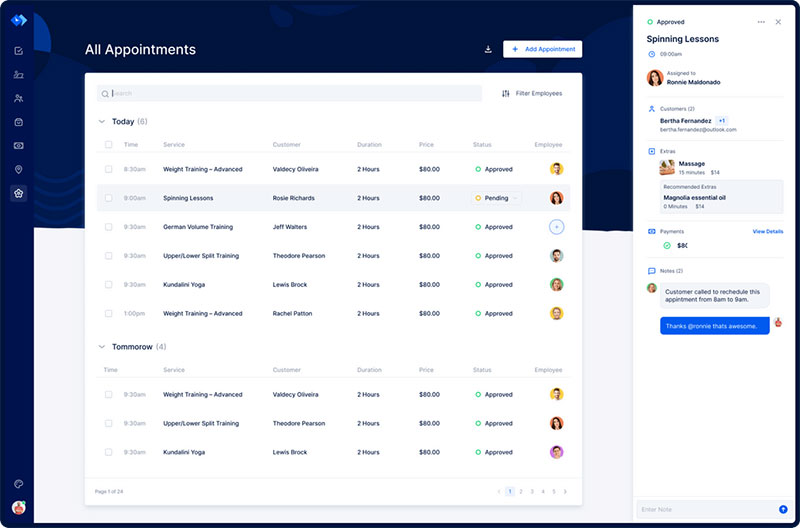
Trafft handles everything for you, even sending automated email or SMS reminders to your clients. No-shows? Not anymore!
The Trafft booking software adapts to different industries for a blissful online booking experience and employee management.
Want to know more? Check out Trafft's awesome features to see what you are missing.
Startup Costs and Funding
You can launch a lean answering service operation for under $10,000 if you start as a solo operator with cloud-based tools. A mid-range setup with hired agents and proper infrastructure runs closer to $15,000 to $30,000.
Cost Breakdown by Category
| Cost Category | Solo/Lean Launch | Mid-Range Launch |
|---|---|---|
| LLC formation + legal | $500 – $1,000 | $1,000 – $2,500 |
| VoIP platform (monthly) | $20 – $50/month | $100 – $400/month |
| Call center software | $0 – $100/month | $200 – $800/month |
| Business insurance (annual) | $1,500 – $2,400 | $2,000 – $4,000 |
| Website + branding | $500 – $1,500 | $2,000 – $5,000 |
| Agent payroll (first 3 months) | $0 (solo) | $6,000 – $15,000 |
The IRS allows you to deduct up to $5,000 in startup costs in your first year of active business, with remaining costs amortized over 180 months. Keep receipts for everything.
Funding Options
Most answering service startups bootstrap in the early stages. Monthly recurring revenue from even three or four clients can cover operating costs while you grow.
If you need outside capital:
- SBA 7(a) loans: $50,000 to $150,000 at Prime plus 2-3%, requires a solid business plan and good personal credit
- Equipment financing: If you're setting up a physical office with hardware, the equipment itself can serve as collateral
- Business credit cards: Fine for smaller purchases like software subscriptions, not for payroll
Realistically, if you can land five clients paying $400/month each within the first 90 days, you're covering most of your recurring costs. That's the target to build toward.
Technology Stack and Software
Your tech stack is your operation. A bad VoIP setup causes dropped calls and call quality complaints. The wrong business phone tool makes it hard to handle multiple clients cleanly, manage virtual phone numbers across accounts, or keep incoming calls properly routed. Get this right before you launch.
VoIP Platform
Global VoIP services were valued at $134.86 billion in 2023, growing at 12.1% annually (Research and Markets, 2025). Basically every answering service today runs on VoIP. Traditional landlines are gone.
The key providers worth considering for a new operation:
- RingCentral: All-in-one voice, video, and messaging. Starts at $20/user/month. Good scalability.
- Squaretalk: Cloud contact center with IVR, routing, and AI call transcription. From $15/user/month annual, 3-user minimum. Local numbers in 150+ countries.
- Grasshopper: Lightweight, $14-$55/month per account, no desk phone support, good for solo operators
- 8x8: Strong for multi-location setups, built-in analytics
- Vonage: Flexible API integrations, better if you plan to build custom workflows
For dedicated call center functionality, platforms like Five9, Aircall, and CloudTalk add queue management, call recording, and agent performance dashboards that basic VoIP plans don't include.
On-Premise vs. Cloud-Based Setup
For most new operators: cloud-based, full stop.
On-premise systems require physical hardware, IT maintenance, and upfront investment that doesn't make sense until you have a large, stable client base. Cloud tools let you spin up, scale agent seats, and add client lines without touching a server room.
The only real case for on-premise is if you're serving clients with strict data residency requirements, which is rare at the startup stage.
CRM and Supporting Tools
You'll need a way to track client accounts, log call notes, and manage escalation protocols. HubSpot (free tier works to start) or Zendesk handle this well. For medical clients specifically, look at HIPAA-compliant messaging tools like TigerConnect or Spok for secure message delivery.
For appointment scheduling integration, most operators connect their platform to the client's existing calendar system. Appointment setting is a real upsell for medical and legal clients. Google Calendar works for most small business clients. Medical offices often use platforms like Athenahealth or Kareo, and your agents will need read/write access.
Hiring and Training Agents
Your agents are the product. A client doesn't see your software or your office setup. They hear your agents on the phone, and their customers do too.
Staffing Models
Call center turnover is brutal. Industry data shows it can hit 44% annually (AnswerConnect, 2024). Factor that into your hiring plan from day one, not as an afterthought.
Full-time employees give you more control over quality and scheduling, but add payroll tax, benefits, and HR overhead.
Part-time contractors are more flexible for after-hours coverage, where you might need two agents on call at midnight but don't want to pay full-time salaries for that shift.
Most small answering service operations use a hybrid: one or two full-time leads who manage quality and cover core hours, supplemented by part-time agents for overnight and weekend shifts.
Where to Find Agents
Indeed and LinkedIn work fine for full-time postings. For remote part-time agents, Upwork is worth testing, especially for bilingual agents. Look for candidates with customer service or hospitality backgrounds. They adapt faster to phone protocol than candidates from unrelated fields.
Bilingual answering service coverage is a real upsell opportunity. Spanish-English bilingual agents are in demand for home services, healthcare, and legal clients in most U.S. markets.
Training Requirements
Every new agent should complete:
- General call script and greeting protocol for each active client account
- Escalation procedures (what gets dispatched vs. what gets a message taken)
- HIPAA basics if they'll handle any medical accounts (even light training is better than none)
- At least 3-5 monitored live calls before handling accounts independently
PatLive, one of the established U.S.-based answering services, puts new hires through a structured onboarding process that includes account-specific knowledge tests before allowing agents on live client calls. That level of rigor is worth replicating even at a small scale. Clients notice the difference.
Pricing Your Answering Service
Pricing wrong early on kills more answering service startups than anything else. Most operators underprice per-minute plans because they don't track actual agent handle time per client.
The market rates give you a real ceiling to work within.
| Pricing Model | Typical Rate | Best For |
|---|---|---|
| Per-minute (live) | $0.75 – $1.50/min | Variable call volumes |
| Per-call flat rate | $0.80 – $5.00/call | Short, frequent calls |
| Monthly retainer | $135 – $925+/month | Predictable, mid-volume clients |
Per-minute is the most common model in the industry. Most small business clients pay $100 to $400 per month for standard live coverage, with 24/7 plans pushing closer to $200 to $600 (Cira, 2025).
How to Structure Your Rates
Start with your cost floor. Calculate your actual cost per minute: agent wage divided by billable minutes per hour, plus a share of platform fees. If your cost floor is $0.55/min, you need to bill at $0.85 to $1.10/min minimum to be viable.
Watch out for overage fees. Providers charge $1.50 to $3.50 per minute once clients exceed their plan, which is 2-3x the base rate (NextPhone, 2025). Build similar overage logic into your contracts from day one.
Upsell Opportunities That Add Real Margin
Medical answering service pricing typically runs $0.70 to $1.20 per minute, with HIPAA compliance justifying the premium (Continental Message Solution, 2024).
Higher-margin add-ons worth building into your offer:
- Bilingual (Spanish-English) coverage: 20-30% premium over standard rates
- Appointment scheduling with CRM access
- After-hours and holiday coverage
- Warm call transfers vs. message-only service
After-hours coverage is where most operators leave money on the table. Many providers charge 1.5x to 2x on evenings and weekends (NextPhone, 2025). If you staff remote agents for those shifts, the margin is real.
Getting Your First Clients
The first five clients are the hardest. After that, referrals and case studies do a lot of the work for you.
Pick a niche. Trying to serve everyone at launch usually means serving no one well. Choose one or two industries, learn their workflows cold, and build your first client base there.
Direct Outreach That Actually Works
44% of businesses say client acquisition is a key operational focus, compared to just 16% that prioritize retention (Nextdoor Business, 2024). That stat holds for service-to-service selling too. The businesses you're targeting are actively thinking about their own growth, which means they're receptive to solutions.
Highest-conversion targets for direct outreach:
- Solo and small-firm attorneys (especially personal injury, family law)
- HVAC and plumbing contractors in the $500K-$2M revenue range
- Medical practices with 2-5 providers
- Property management companies with 50+ units
Walk-in outreach still works for home services contractors. Show up at their shop, hand them a one-pager with the math on what missed calls cost them. It's blunt, but it converts.
Listings and Partnerships
Get listed on Clutch and UpCity early. Both directories drive inbound leads from businesses actively searching for answering service vendors. A completed profile with two or three reviews outperforms most cold outreach at that stage.
Partnerships move fast when they're the right fit:
- Virtual assistant agencies who don't offer phone answering
- Business coaches with SMB client bases
- Marketing agencies running lead gen for local service businesses
Ruby Receptionists built a strong referral network through attorney bar associations in its early years, showing up where lawyers actually gather rather than waiting for inbound search traffic.
Reducing Friction at Sign-Up
A free 7-day or 14-day trial removes the biggest objection. Clients who experience the service for two weeks rarely cancel.
Money-back guarantees work too, but trials are better. They create real usage data, which makes cancellation feel like giving something up rather than just walking away from a contract.
Operations, Quality Control, and Scaling
The industry benchmark for call answering is the 80/20 standard: 80% of calls answered within 20 seconds (Invoca, 2024). Healthcare and legal clients often expect tighter targets, like 90% within 15 seconds.
Build your SLA commitments around what you can actually staff. Promising 80/20 and delivering 60/20 loses clients fast.
Client Onboarding and Call Scripts
Every new client needs a dedicated onboarding document before you take their first call. This is not optional.
Onboarding doc must cover:
- Greeting script (exact words, not a rough guide)
- Call routing logic (who gets transferred, who gets a message)
- Escalation triggers (what constitutes an emergency)
- Hours of coverage and after-hours protocol
- Client-specific FAQs agents can answer without escalating
Agents should never go live on a client account without reviewing and signing off on that document. Skipping this step is the single fastest way to generate client complaints in week one.
Shift Scheduling for 24/7 Coverage
Three-shift coverage (day, evening, overnight) sounds straightforward until you're actually staffing it. The overnight shift is where most small operators struggle.
Common solution: use on-call contractors for overnight and weekend shifts, with a minimum guaranteed hourly rate plus a per-call bonus. It keeps fixed costs down while maintaining coverage commitments.
CloudTalk data shows top-performing contact centers use AI-driven analytics to monitor SLAs in real time and adjust staffing before wait times breach thresholds (CloudTalk, 2025). You don't need a full call center quality assurance platform or quality management system at launch, but a simple real-time dashboard showing queue depth and agent availability is worth setting up from day one.
Scaling Without Degrading Service Quality
Adding clients without adding agents proportionally is how quality drops. Track your handle-time-per-agent-per-hour metric weekly.
Rule of thumb: one full-time equivalent agent can comfortably handle 20-30 active client accounts at moderate volume. At 35+, call quality and response time start to slip.
When you're ready to hire a supervisor, promote from within first. The best ops managers in this business came off the phones. They know the protocols, they've handled the edge cases, and agents respect them more for it.
Common Mistakes That Kill Answering Service Startups
Most of these aren't dramatic failures. They're slow bleeds, billing errors, and SLA violations that compound over months until a client leaves and then tells others why.
Underpricing Per-Minute Plans
This is the most common financial mistake. A new operator signs a client at $0.85/min, doesn't track actual handle time, and realizes three months in that the client's agents average 4 minutes per call with post-call note entry included. The true cost was $0.92/min.
Fix it before you sign anyone: run a 50-call test with your own agents, track every second of handle time including wrap-up, and calculate your real cost floor. Then price above it with room for volume growth.
Taking HIPAA Clients Without Compliance Infrastructure
Skipping HIPAA compliance and hoping a medical client doesn't ask is not a strategy. The moment a client asks for a signed BAA and you don't have one ready, you've lost the account and possibly a referral network.
Minimum setup before touching medical accounts: a BAA template reviewed by a healthcare attorney, HIPAA-compliant secure messaging tool, and documented agent training records. None of this is optional.
Overpromising 24/7 Coverage Before Staffing Supports It
Selling 24/7 phone coverage on a two-person team causes real problems at 2 AM on a Saturday.
Don't promise round-the-clock 24/7 answering service coverage until you have at minimum three reliable overnight agents plus a backup. One sick call shouldn't take down your entire after-hours operation.
Ignoring Client Retention From Day One
Existing clients are up to 65% more likely to keep buying than new clients are to convert, and they spend an average of 67% more over time (Nextdoor Business, 2024). Retention costs almost nothing compared to acquisition. Yet most new operators spend all their energy on landing new accounts and none on keeping existing ones happy.
Monthly check-in calls with each client. Review their call volume trends, flag any protocol changes, and ask before they have a reason to complain. That's client retention for an answering service. It really is that simple.
No Documented Escalation Process
Agents improvising escalation decisions in real time is a liability. Without clear written protocols, one bad call where an agent mishandles a medical emergency or fails to reach an on-call attorney becomes a client termination and potentially a legal issue.
Document every escalation scenario per client before going live. Review and update those docs quarterly as client needs change.
FAQ on How To Start An Answering Service Business
How much does it cost to start an answering service business?
A lean solo operation starts under $10,000. A mid-range setup with hired agents runs $15,000 to $30,000. Main costs include LLC formation, VoIP platform, call center software, business insurance, and your first few months of agent payroll.
Do I need a license to run an answering service?
Most states don't require a specialized license. You'll need a standard business license and an LLC or similar entity. If you serve medical clients, HIPAA compliance and a signed Business Associate Agreement with each healthcare client are non-negotiable.
How do answering services make money?
Revenue comes from per-minute billing, per-call flat rates, or monthly retainer plans. Most small business clients pay $100 to $400 per month. Add-ons like bilingual coverage, appointment scheduling, and after-hours support increase margin per account.
What equipment do I need to start an answering service?
You need a cloud-based VoIP system like RingCentral or 8x8, call center software such as Five9 or Aircall, a CRM like HubSpot or Zendesk, and HIPAA-compliant messaging tools if you plan to handle medical accounts.
How do I get my first answering service clients?
Target one niche first. Direct outreach to law firms, HVAC contractors, and medical offices works well. Get listed on Clutch and UpCity. Offer a free trial to remove sign-up friction. Referral partnerships with virtual assistant agencies also convert fast.
Is an answering service business profitable?
Yes, with the right pricing. The phone answering service market was valued at $5.64 billion in 2024 and is growing at 7.1% annually. Landing five clients at $400/month covers most recurring costs. Margins improve as you add agents and scale account volume.
What is the difference between an answering service and a call center?
An answering service handles inbound calls briefly, takes messages, and routes calls, typically under two minutes per interaction. A call center manages high-volume, complex customer interactions across multiple channels and often runs 10 to 15 minutes per call.
How many agents do I need to launch?
One to three agents is enough to start, depending on the hours you're covering. A single full-time agent can handle 20 to 30 client accounts at moderate volume. Add agents before quality slips, not after clients start complaining about call answer times.
Do I need HIPAA compliance to serve medical clients?
Yes, absolutely. Medical answering service work requires a signed BAA with every healthcare client, secure messaging tools, and documented agent training on PHI handling. Skipping this exposes you and your client to serious fines. Set it up before signing any medical accounts.
What VoIP platform is best for a new answering service?
RingCentral and 8x8 are solid all-around options. Grasshopper works for solo operators starting lean. For dedicated call routing and queue management, Aircall or CloudTalk offer better infrastructure as you grow beyond a handful of client accounts.
Conclusion
This conclusion is for an article presenting a complete path to building a profitable telephone answering service from the ground up.
The market is real, the demand is steady, and small businesses are actively looking for reliable virtual receptionist services to handle their inbound call management.
You now have the framework: legal setup, technology stack, agent training, client acquisition, and pricing strategy.
Pick a niche. Start lean. Build your SLA standards before you sign your first client, not after.
HIPAA compliance, solid call scripts, and a documented escalation process are what separate operators who retain clients from those who lose them inside 90 days.
The 24/7 phone coverage market is only growing. Get in now.