




Raising your rates is the easy part. Telling your clients is where most salon owners get it wrong.
A poorly worded salon price increase notice can cost you loyal clients who would have stayed if the communication had been handled better. The wording, the timing, the channel, and the tone all affect whether clients accept the change or walk.
This guide covers ready-to-use examples for every situation, including notices by channel, by tone, and by specific service. You will also find scripts for handling client pushback and a breakdown of the mistakes that quietly damage client relationships during a price change.
What is a Salon Price Increase Notice
A salon price increase notice is a formal communication sent to clients before service prices go up. Its job is simple: make sure clients aren't surprised when they check out.
But there's more to it than that. A well-written price increase announcement is also a trust signal. It shows clients you respect their time and their budget. Salons that skip this step or do it badly tend to lose clients who would have otherwise stayed.
The notice itself is not an apology. It's a professional update, the same way a dentist or accountant would inform you of new rates. Framing it that way, both to yourself and your clients, changes how you write it.
What it must include at minimum
The effective date is non-negotiable. Vague language like "prices will go up soon" creates confusion. Clients need a specific date to plan around.
Beyond the date, a basic price change announcement needs:
- Which services are affected (all, or specific ones)
- The new price points, or at least the percentage increase
- A brief, honest reason for the change
- A thank-you or appreciation line that doesn't read as over-apologetic
A notice that covers these four things is doing its job. Anything else is optional.
Notice vs. casual mention
Telling a client "oh, prices are going up next month" at the end of their appointment is not a notice. It's a heads-up, and clients forget it by the time they rebook.
A proper notice is documented and sent through a channel the client will actually check, whether that's email, SMS, or an in-salon sign. It gives them time to process and ask questions if needed. Relying on verbal communication alone, especially in a busy salon environment, almost always leads to "I had no idea prices changed" conversations at checkout.
The distinction matters because surprise charges are one of the fastest ways to damage a client relationship, regardless of how reasonable the increase actually is.
When to Send a Salon Price Increase Notice
Timing affects how clients receive a price change. Too little notice feels disrespectful. Too much and clients forget it entirely by the time it actually hits.
According to Jobber's 2024 guide for service businesses, 65% of home service professionals raised prices in the previous year, with most giving 30 to 60 days' notice as standard practice. Salons follow similar rules.
How much lead time to give
The right window depends on how often clients visit.
| Visit Frequency | Recommended Notice | Why It Works |
|---|---|---|
| Weekly (blowouts, nails) | 2–3 weeks | Client sees you before the change takes effect |
| Every 4–6 weeks (cuts, color) | 30–45 days | At least one full cycle of advance warning |
| Every 2–3 months (treatments) | 60 days | Clients can budget before their next visit |
| Loyalty clients (long-term) | 60–90 days | Relationship warrants extra courtesy |
vcita's 2024 small business guide recommends sending a price increase notice at minimum 30 days out, and preferably 60 to 90 days when clients are on longer service cycles.
Best times of year to raise prices
January is the most widely used window. Clients expect change at the start of the year, it aligns with your own business planning, and it rarely conflicts with peak booking periods.
Other solid windows:
- Post-summer (September), after the busy season settles
- Your salon anniversary, which gives the notice a positive framing
- After completing new training or adding a new service menu
Avoid raising prices right before a holiday rush. Clients are already spending more, and adding a price shock on top of that increases the chance they'll reconsider their loyalty.
Send the notice more than once
One message is not enough. Clients miss emails. They scroll past Instagram posts. A single notification, sent once, will reliably reach only a portion of your client base.
A realistic send schedule looks like this: first notice 30-60 days out, a reminder 1-2 weeks before the effective date, and a final note on or just before the change goes live. Three touchpoints is not overkill. It's just good communication.
Thank you for subscribing. Check your mail for details
What to Include in a Salon Price Increase Notice
The content of the notice matters as much as the timing. Clients who understand the "why" are significantly more likely to accept a rate change than those who receive a flat announcement with no context.
A 2023 Bank of America report found nearly 9 in 10 entrepreneurs said inflation was affecting their business, with 60% increasing prices in response. Framing your increase within that broader context is both honest and relatable.
The core elements
Effective date: State the exact date. "Starting March 1, 2025" is better than "early next month."
Services affected: List specific services if only some are changing. A blanket "all prices increasing" is fine if it's accurate, but vague service descriptions frustrate clients who want to know exactly what they'll pay.
New price or percentage: Some salons show old vs. new pricing side by side. Others just state the new price. Both work. Avoid being vague about the actual number.
Reason for the increase: Keep it brief and honest. Rising product costs, supply chain costs, training investment, or general inflation are all valid and relatable. You don't need to share your P&L. A single sentence is enough.
Appreciation line: Thank clients for their loyalty without going overboard. One sentence. Not three.
Contact info or booking link: Make it easy for clients to reach out or rebook before the price change. Some clients will want to lock in a session at the old rate, and giving them that option is a retention tactic, not a concession.
Get more bookings with the right tool for the job
Staying organized has never been easier.
You can now manage your business and grow your brand with a single, powerful software that keeps all of your appointments in line, your clients organized and your business booming.
Trafft is the perfect salon software for business owners who need to streamline their booking experience both for their staff and their clients.
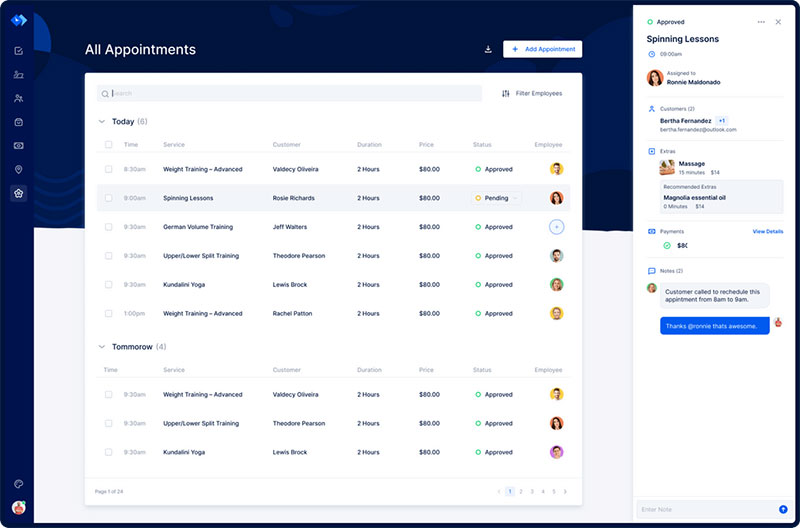
Trafft handles everything for you, even sending automated email or SMS reminders to your clients. No-shows? Not anymore!
The Trafft booking software adapts to different industries for a blissful online booking experience and employee management.
Want to know more? Check out Trafft's awesome features to see what you are missing.
What not to include
Over-apologizing is the most common mistake. Phrases like "we're so sorry to have to do this" or "we wish we didn't have to raise prices" undermine confidence in your business and make the increase feel worse than it is.
Also avoid:
- Vague timelines ("soon," "in the coming weeks")
- Excessive financial detail that feels like oversharing
- Threatening language about cost pressures that may alarm clients
- Promises about future pricing that you can't guarantee
The tone should be confident, warm, and brief. You're running a business. Rate adjustments are normal. Write it that way.
Salon Price Increase Notice Examples by Channel
The channel shapes the format. An email gives you room to explain. A text message needs to be five lines or fewer. An in-salon sign gets read in about eight seconds.
Boulevard's 2023 Salon Industry Client Retention Report found that clients who book online return for a second appointment 78% of the time, compared to just 39% for walk-ins. That tells you your most loyal clients are likely in your email list and booking platform. Start there.
Email price increase notice example
Email gives you the most space and the most flexibility. Keep it under 200 words. Clients won't read a wall of text about pricing.
Subject line: Important update about our service pricing
Hi [Client Name],
We wanted to give you advance notice that our service prices will be updated effective [Date].
Due to rising product and supply costs, we're making a small adjustment to our service menu pricing. Here's what's changing:
[Service] - New price: $[XX] [Service] - New price: $[XX]
We've held these prices as long as we could, and we're committed to continuing to provide the same quality you expect from us.
Thank you for being such a valued part of our community. If you have any questions, reply to this email or call us at [Phone]. We'd love to see you before [Date] if you'd like to book at your current rate.
Warm regards, [Salon Name]
Text message price increase notice example
SMS gets opened. Average open rates for text messages sit above 90%, which makes it one of the most reliable channels for time-sensitive client communication.
Keep it short. No more than 3-4 sentences.
Hi [Name], just a heads-up that our service prices will be updating on [Date]. We wanted to make sure you heard it from us first. Book before [Date] to lock in your current rate: [Link]. Thank you for your continued support.
That's it. Don't add more. Clients who want details will call or email.
In-salon signage example
Print this and place it at reception, at the styling station, and near the checkout area. Three locations minimum. Clients in your chair have a few minutes to read it.
A note for our valued clients:
> Effective [Date], we will be updating our service pricing to reflect the increased costs of professional products and supplies. We appreciate your understanding and your continued loyalty. Our team remains committed to delivering the quality you know and expect. > Questions? Ask any of our team members.
Social media announcement example
Instagram and Facebook work well for price increase announcements, especially when your audience skews younger. Keep the tone human, not corporate.
A quick, honest update from us: starting [Date], we're adjusting our service pricing. Like most small businesses right now, we've felt the impact of rising supply costs, and this update helps us keep doing what we love. We truly appreciate every one of you. Got questions? Slide into our DMs or give us a call. [Link in bio to book before the change.]
Adding a "link in bio to book" gives clients an immediate action to take, which helps convert the announcement into appointments.
Price Increase Notice Examples by Tone
The same price increase reads very differently depending on how it's written. A high-end salon in a city neighborhood and a friendly community hair salon serve different clients with different expectations. The tone needs to match.
Kline PRO data shows salon pricing overall increased 9.8% in 2023, with blowout services rising by an average of 12.2%. Clients who follow the industry have seen this happening everywhere. A confident, matter-of-fact tone is completely appropriate.
Professional/formal tone
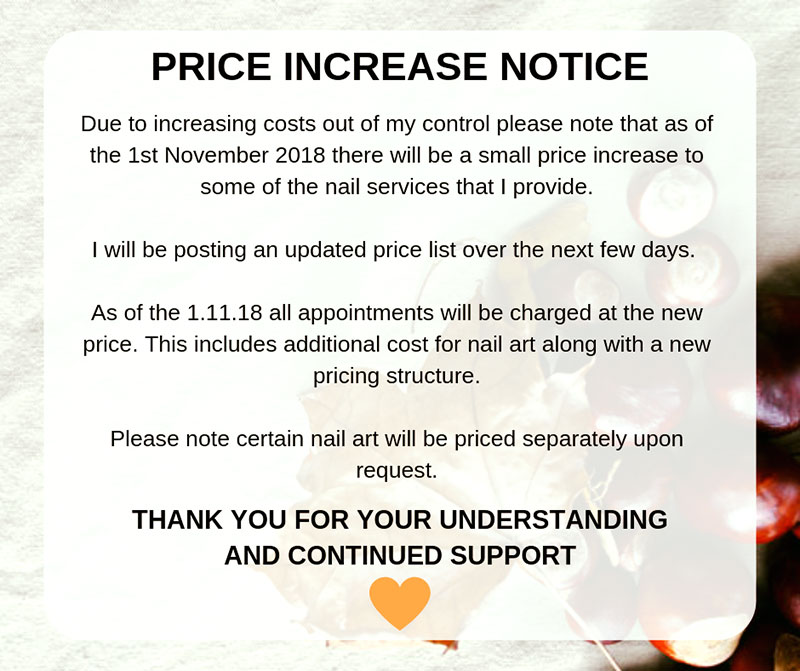
Best for upscale hair salons, luxury beauty salons, or any salon where clients expect polished communication. Reads clean and direct. No casual language.
Dear [Client Name],
> Please be advised that effective [Date], [Salon Name] will implement updated service pricing across our menu. This adjustment reflects increased professional product costs and ongoing investment in our team's training and certification. > We appreciate your continued confidence in our work. Should you have any questions, please contact us directly at [Contact Info]. > Sincerely, [Salon Name]
Warm and personal tone
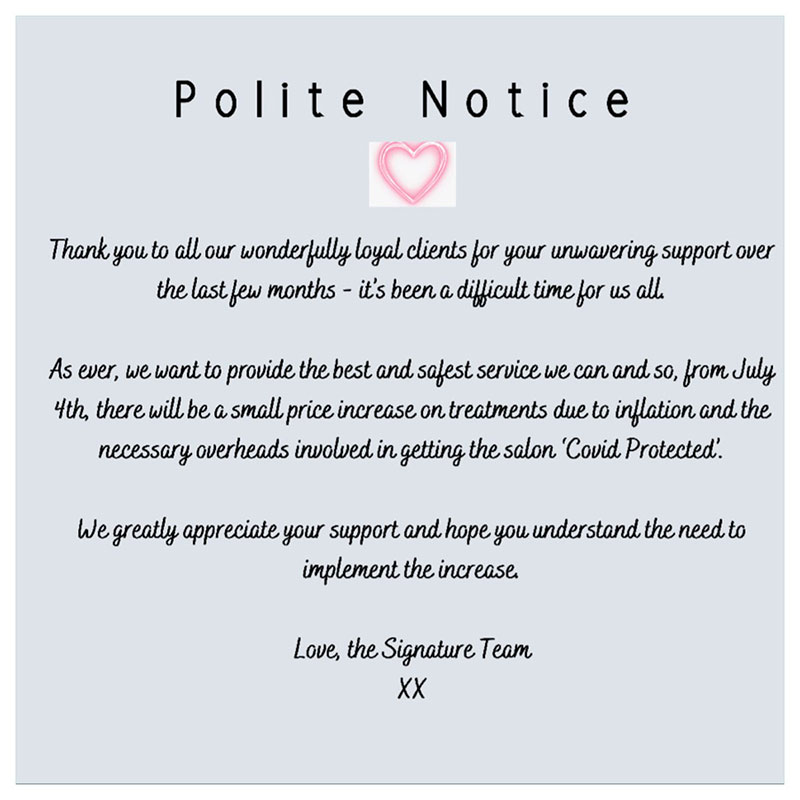
Works for neighborhood salons with a loyal, relationship-driven client base. Feels human, not transactional. I've seen this tone retain clients who might have balked at a colder version of the same message.
Hey [Client Name],
> We wanted to let you know directly: starting [Date], we're updating our prices. Between product costs going up and wanting to make sure our team is fairly compensated, it was time to make this change. > We genuinely value having you as a client, and we hope you understand. As always, we're here if you have any questions. Looking forward to seeing you soon. > [Salon Name]
Minimal/matter-of-fact tone
Some salons prefer to keep it short and skip the emotional framing entirely. This can actually work well for clients who dislike over-communication. No fluff, just facts.
Hi [Name],
Starting [Date], our service prices will be updated. You can view the new pricing at [Link] or ask us at your next visit. Thank you for your continued business. > [Salon Name]
The minimal tone works when your relationship with clients is already strong. If clients trust you, they don't need a long explanation. They just need to know.
| Tone | Best For | Watch Out For |
|---|---|---|
| Professional / formal | High-end, luxury salons | Can feel cold if misapplied |
| Warm and personal | Community, relationship-based salons | Avoid becoming over-apologetic |
| Minimal / matter-of-fact | Established salons with loyal regulars | May feel abrupt with new clients |
Price Increase Notice Examples for Specific Services
A blanket salon price increase notice is straightforward. But plenty of salons only raise prices on certain services, and that requires a different approach. The notice needs to be specific about what's changing, because a client who gets a hair color service increase notice but books for a haircut will want to know if their service is affected too.
Hair coloring services make up 22% of all salon services performed but account for 40% of revenues, according to Kline PRO. Color clients are often the most valuable in the building. Getting the communication right for them matters more than almost any other segment.
Hair color service increase notice example
Color services are time-intensive and product-heavy. The cost justification is easy to make without oversharing.
Hi [Client Name],
> Starting [Date], we're updating pricing on our color services. Professional color products have increased significantly in cost over the past year, and this adjustment helps us continue using the high-quality lines we've always relied on. > New pricing for color services will be available at [Link] or at reception. Your haircut pricing remains unchanged. > Thank you for trusting us with your color. See you at your next appointment. > [Salon Name]
Haircut-only increase example
Clients expect haircut pricing to be fairly stable. A cut-only increase needs a clear reason, and ideally references the skill and time involved rather than just materials.
Hi [Client Name],
> We wanted to give you plenty of notice: starting [Date], our haircut prices will be increasing by $[Amount]. This reflects the time our stylists invest in each appointment and the rising costs of running the salon. We haven't adjusted these prices in [X] years, and we appreciate your understanding. > Book before [Date] to get your current rate. We look forward to seeing you. > [Salon Name]
Partial increase notice (only some services going up)
This one trips up a lot of salon owners. The risk is that a vague notice creates uncertainty across your whole service menu, even for services that aren't changing. Be precise.
What to include in a partial increase notice:
- An explicit list of which services are affected
- An explicit statement that other services are not changing (if true)
- The effective date and the new price for each affected service
Hi [Client Name],
> A heads-up: starting [Date], we're updating pricing on balayage and color correction services only. All other services, including cuts, blowouts, and treatments, remain at their current rates. > Balayage: [New Price] | Color Correction: [New Price] > These services require the most product and chair time, and this update reflects those real costs. Questions? Call us or reply here. > [Salon Name]
Nail salon price increase notice example
Nail clients tend to visit frequently, sometimes weekly. That frequency makes the timing of the notice especially important. Surprise pricing on a routine visit lands harder when it's a service clients get every two weeks.
Hi [Client Name],
> Starting [Date], our nail service prices will be updated. You can find the full updated menu at [Link] or ask us at your next visit. > We've kept our prices steady for as long as we could, and we're grateful for your continued support. Nothing changes about the service you receive. > [Salon Name]
Short, direct, and gives the client somewhere to go for more detail. That's all a nail salon price increase notice needs to do.
How to Handle Client Reactions to a Price Increase
Some clients will push back. That's normal. A price adjustment notice doesn't guarantee a smooth conversation at checkout, and being unprepared for objections is where a lot of salon owners lose clients they didn't need to lose.
Recurly's 2023 research found 71% of customers cited price increases as the top reason for canceling a service. The good news: most of those cancellations happen when the increase feels unexpected or unjustified, not simply because the price went up.
Common client objections and how to respond
"I didn't know prices were going up."
This one usually means they missed the notice, not that you didn't send it. Don't argue. Apologize briefly for the confusion and offer to resend the communication. Keep a record of when notices went out so you can reference it calmly.
"That's more than I expected."
Acknowledge it directly. Something like: "I understand, and I appreciate you saying that. The increase reflects [brief reason]. I want to make sure you still feel this is worth it for you." Then stop talking. Let them respond.
"Can I still get the old price?"
You can offer a one-time grace period for loyal clients who book before the effective date. That's a retention decision, not a negotiation. But don't make it a habit. Offering exceptions repeatedly signals that your pricing isn't firm.
Scripts for in-person conversations
Suplery's 2024 guide recommends preparing talking points before the effective date so stylists aren't caught off guard at the chair.
A short script that works:
"Yes, our prices have updated as of [Date]. We wanted to make sure all our clients knew in advance. The change reflects [one-sentence reason]. We're really glad you're still here."
That's 30 seconds. Confident, warm, done. The mistake most stylists make is over-explaining once a client pushes back. More explanation doesn't reduce the discomfort. It usually increases it.
When to offer a grace period or loyalty exception
Not every client warrants one. But long-term clients, those who visit frequently and refer others, are worth a short accommodation. A loyalty exception might look like: letting them book one more appointment at the old rate before the change takes full effect.
Set a clear end date. "I can honor your current rate for bookings made before [Date]" is better than an open-ended offer that creates expectation going forward.
Zenoti's 2024 consumer survey found 42% of loyal salon clients drive 80% of revenue. Losing even a few of those clients to a poorly handled conversation costs significantly more than a temporary pricing grace period.
What not to say
| Avoid Saying | Why It Backfires | Say Instead |
|---|---|---|
| “We’re so sorry to do this” | Signals lack of confidence in your pricing | “We updated our rates as of [Date]” |
| “Everything has gotten so expensive” | Sounds like complaining, not explaining | “This reflects the current cost of the products we use” |
| “I know it’s a lot” | Plants doubt about whether your service is worth it | “We stand behind the quality you receive” |
| “I hate having to raise prices” | Undermines the decision; creates client discomfort | “Rate adjustments are a normal part of how we operate” |
The Beautiful Co. Hair & Lashes in Greenville, South Carolina achieved a 95% client retention rate in part by training their team to communicate service value consistently, not just at the point of a price change.
Price Increase Notice Mistakes to Avoid
Most client losses after a rate change aren't caused by the increase itself. They're caused by how it was communicated, or not communicated at all.
A 5% increase in client retention can boost profits by 25% to 95%, according to Qualtrics 2024 data. Getting the communication right protects that number.
Giving too little notice
The industry standard is 30 to 60 days. Less than two weeks is almost always a mistake.
Clients who feel blindsided don't just leave. They often leave and tell others. And in a relationship-driven business like a hair salon or nail salon, word-of-mouth cuts both ways.
- Two weeks or less: high risk of checkout friction and cancellations
- 30 days: acceptable minimum for most service frequencies
- 60-plus days: best practice for color clients and long-term loyals
Sending the notice only once
One email, one post, one sign. That's not enough. Open rates for marketing emails average around 20-30%, meaning the majority of your list may not see a single send.
A three-touch approach works better: first notice at 30-60 days out, a reminder 1-2 weeks before, and a final note on or just before the effective date.
SMS outperforms email for time-sensitive messages. Platforms like Vagaro and Mindbody allow automated text reminders specifically for announcements like price changes.
Being vague about which services or dates are affected
Vague notices create anxiety across your entire service menu, even for services that aren't changing. Clients will assume the worst.
Always specify:
- The exact effective date ("Starting March 1, 2025")
- Which services are affected by name
- Whether any services are staying the same (if true, say so)
Apologizing excessively in the notice copy
Over-apologizing is the single most common writing mistake in salon price increase notices. It's also the one that does the most damage.
When you over-apologize, you signal to clients that the increase is questionable. You invite them to question it too. Confidence in your pricing is part of the message.
One brief acknowledgment is fine. "We know no one loves a price change, and we appreciate your understanding" works. Three paragraphs of justification and apology does not.
Raising prices without any communication at all
Some salon owners skip the notice entirely and hope clients won't notice at checkout. They always notice.
Discovering a price increase at the point of payment is one of the most damaging experiences in service retail. According to Zendesk's 2023 Customer Experience report, 73% of consumers will switch to a competitor after multiple bad experiences, and surprise billing is consistently one of the top complaints.
A proper client notification letter, however short, prevents that moment entirely. The cost of sending it is zero. The cost of skipping it can be a loyal client who booked with you for years.
Changing dates or prices mid-notice
If you send a price change announcement with one effective date and then push it back, you create confusion and erode trust in your communications.
Pick the date. Commit to it. Update all your channels (email, SMS, in-salon signage, booking platform) at the same time so messaging stays consistent.
StyleSeat and Square Appointments both allow you to update service pricing directly in the platform with a specific go-live date, which removes the risk of human error at checkout when the change takes effect.
FAQ on Salon Price Increase Notices
How much notice should a salon give clients before raising prices?
Give clients 30 to 60 days minimum. For color clients or long-term loyals who visit every 6-8 weeks, 60 days is the better choice. Less than two weeks almost always creates friction at checkout.
What should a salon price increase notice include?
Include the effective date, which services are affected, the new pricing, and a brief reason for the change. Add a thank-you line and a contact option. Keep the whole notice under 200 words.
How do you write a polite price increase notice for a hair salon?
Be direct and warm, not apologetic. State the date, explain the reason briefly, and thank clients for their loyalty. Avoid phrases like "we hate to do this." Confidence in your pricing is part of the message.
Should you explain why prices are going up?
Yes, but briefly. One sentence is enough. Rising product costs, supply chain costs, or ongoing stylist training are all honest and relatable reasons. Clients don't need a full financial breakdown, just a human explanation.
How do you announce a salon price increase on social media?
Keep it casual and honest. State the effective date, give a one-line reason, express appreciation, and include a booking link. Avoid corporate language. A conversational tone performs better on Instagram and Facebook than a formal announcement.
What is the best channel to send a salon price increase notice?
Email reaches the most clients at once. SMS has higher open rates for time-sensitive updates. In-salon signage catches walk-ins and existing clients at the chair. Use at least two channels, ideally three, to make sure the message lands.
How often should a salon raise prices?
Most salon owners adjust pricing once a year, typically in January or after completing new training. Small, regular increases are easier for clients to accept than large, infrequent ones. A 5-10% annual adjustment is generally considered reasonable.
Can you raise prices on just some services, not all?
Yes. A partial increase notice works well when product-heavy services like balayage or color correction are affected but cuts are not. Be specific about which services are changing. Clearly state which ones are staying the same.
How do you handle a client who refuses to pay the new price?
Stay calm and reference the notice you sent. You can offer a one-time grace period for a loyal client, but don't make it a standing exception. Inconsistent pricing creates confusion and signals that your service pricing isn't firm.
Is it okay to use a text message for a salon price increase notice?
Yes. SMS works well for short, direct updates. Keep it to 3-4 sentences: state the change, give the date, include a booking link. Platforms like Vagaro and Mindbody support automated text announcements for exactly this purpose.
Conclusion
This conclusion is for an article presenting salon price increase notice examples because how you communicate a rate adjustment matters as much as the adjustment itself.
The right client notification letter, sent with enough lead time and the right tone, protects your rebooking rate and your client relationships.
Whether you run a hair salon, a nail salon, or a full-service beauty salon, the same rules apply: be specific about the effective date, keep the price change announcement brief, and skip the over-apologizing.
Your loyal clients understand that service costs rise. What they don't forgive is finding out at checkout.
Use the examples and templates in this guide as a starting point, then adjust the tone to match your salon's voice and your client base.