










¿Te apasiona ayudar a otros a encontrar el camino profesional adecuado? Si es así, ¡puedes convertir esa pasión en una carrera convirtiéndote en un orientador profesional!
Al guiar a los estudiantes y graduados hacia sus metas profesionales, puedes ayudarles a alcanzar el éxito y la realización.
Como preparador laboral, deberás tener un buen entendimiento de las certificaciones y habilidades necesarias para diferentes trayectorias profesionales. Sin embargo, con la formación adecuada, convertirte en un preparador laboral exitoso está a tu alcance.
Entonces, ¿por qué esperar? Permítenos guiarte en el proceso de convertirte en un orientador profesional y ayudarte a alcanzar tus metas profesionales.
Índice
Alternar¿Quién es un orientador profesional?
Un orientador profesional es un profesional capacitado que ayuda a las personas a navegar por sus trayectorias profesionales. Ofrecen orientación y apoyo para ayudar a sus clientes a tomar decisiones relacionadas con su carrera, establecer y alcanzar objetivos profesionales, y superar cualquier obstáculo que puedan enfrentar en sus vidas profesionales.
Los entrenadores de carrera proporcionan asesoramiento práctico para ayudar a sus clientes a alcanzar su máximo potencial, encontrar satisfacción laboral y avanzar en las carreras que han elegido. Pueden ofrecer servicios como la redacción de currículums, preparación para entrevistas, evaluaciones de habilidades, estrategias de búsqueda de empleo, orientación sobre networking y apoyo para la transición profesional. Estos profesionales a menudo tienen experiencia en áreas como recursos humanos, asesoramiento, psicología o industrias específicas.
Básicamente, un orientador profesional es como tu amigo en el trabajo, quien te ayudará a decidir en qué campo entrar asesorándote y discutiendo las perspectivas del campo sobre el que tienes dudas.
¿Qué hace un entrenador de carrera?
¡Ya conoces la respuesta directa a esta pregunta! Sin embargo, hay un pero...
Por lo general, un orientador profesional ofrece orientación y apoyo personalizados para capacitar a los clientes para que tomen decisiones informadas, superen desafíos y alcancen sus objetivos profesionales. Sin embargo, el deber de un orientador no termina aquí. Hay más de lo que se ve a simple vista:
- Reunión y establecimiento de objetivos: Un asesor de carrera se reúne con su cliente y conoce su situación profesional actual y sus perspectivas. A continuación, comprende los planes a corto y largo plazo del cliente.
- Evaluación de habilidades: A continuación, un entrenador intenta conocer las habilidades que el cliente ha perfeccionado. Tras comprenderlas con éxito, intenta relacionarlas con opciones profesionales que se alineen con sus preferencias.
- Sugerencias de mejora: El objetivo de un orientador profesional no es solo ayudar a determinar una opción de carrera, sino también sugerir formas de mejorar. Puede tratarse de algunas habilidades que el cliente necesite repasar o de aprender algo nuevo para destacar en la carrera que desea elegir.
- Preparando documentos: Al ser un principiante, es posible que el cliente no pueda hacer buenos currículums, cartas de presentación o preparar documentos de postulación según las reglas de la industria. Un orientador profesional también ayuda a redactar estos documentos necesarios.
- Entrevistas simuladas: Otra tarea importante que realiza un orientador profesional son las simulaciones de entrevistas. Antes de enfrentarte a situaciones reales, debes practicar, y como un amigo profesional, el orientador te guía.
- Desarrollo de la personalidad: Un orientador profesional ayuda con tus defectos y te permite ganar más claridad en tus habilidades de comunicación. También ayudan a aumentar la confianza y a prepararte para el mundo empresarial.
¿Qué habilidades debe tener un orientador profesional?
Hablamos mucho sobre cómo un orientador profesional ayuda a mejorar las habilidades de su cliente, ¡pero echemos un vistazo a qué habilidades necesita tener una persona cuando quiere convertirse en un orientador profesional!
1. Habilidades de comunicación
Un entrenador debe estar siempre bien versado y ser capaz de comunicarse eficazmente con los clientes estudiantes. Por lo tanto, es fundamental tener buenas habilidades de comunicación para ayudarle a comunicarse y guiar a su cliente. Debe mostrar positividad y esperanza para tratar con personas de diversos antecedentes. También puede haber clientes con experiencia, por lo que necesita tener experiencia en comunicación para satisfacer sus necesidades.
2. Empatía
La empatía es una habilidad muy crucial que necesitas tener si planeas convertirte en un orientador profesional. Si no puedes empatizar con las preocupaciones de tu cliente y comprender su miedo o relacionarte con sus problemas, no puedes alinearlos con el objetivo profesional perfecto que desean elegir. La empatía te ayuda a construir una buena relación con los clientes y genera confianza. Una vez que tu cliente estudiante confía en ti, se vuelve más fácil manejar sus problemas y decidir sobre las opciones profesionales.
3. Habilidades de formación
Para convertirte en un entrenador exitoso, debes tener las habilidades adecuadas para entrenar a las personas. Debes ser capaz de hacer un plan de acción, alentar a tus alumnos, establecer objetivos y mucho más. Debes actuar como un maestro para ellos y ayudarles a aumentar su confianza, a tener esperanza y fe en su trabajo duro y a generar un cambio productivo en ellos.
4. Sólido conocimiento de la industria
A menos que tengas un profundo conocimiento de la industria, no puedes convertirte en un asesor de carrera eficaz. Tienes que conocer los cambios tecnológicos que están ocurriendo, cómo se está adaptando el mercado a las nuevas regulaciones, qué es tendencia y por qué lo es, y cualquier cambio o transformación que esté ocurriendo. Al ser asesor, debes estar al tanto de todo para poder guiar a tu cliente de manera efectiva.
5. Habilidades interpersonales
Ser un orientador profesional es fácil si tienes sólidas habilidades interpersonales, como:
- Habilidades de escucha
- Habilidades para hacer preguntas
- Habilidades de resolución de problemas
Un gran entrenador escucha primero y luego habla; es fundamental escuchar a tus clientes atentamente y comprender lo que quieren, cómo quieren lograr sus objetivos y qué apoyo necesitan de ti.
Después de escuchar correctamente, debes hacerles preguntas para comprender si tu entendimiento y sus pensamientos están alineados. Estarás construyendo la carrera de alguien, por lo que debes ser muy minucioso en comprender todo.
Una vez que todo esté listo, debes guiar a tu cliente, y es ahí cuando requieres habilidades para resolver problemas. Esta es la razón principal por la cual tu cliente ha acudido a ti, y debes abordar su problema y resolverlo para que sus barreras mentales se rompan y puedan tener la confianza adecuada.
Cómo convertirse en un orientador profesional
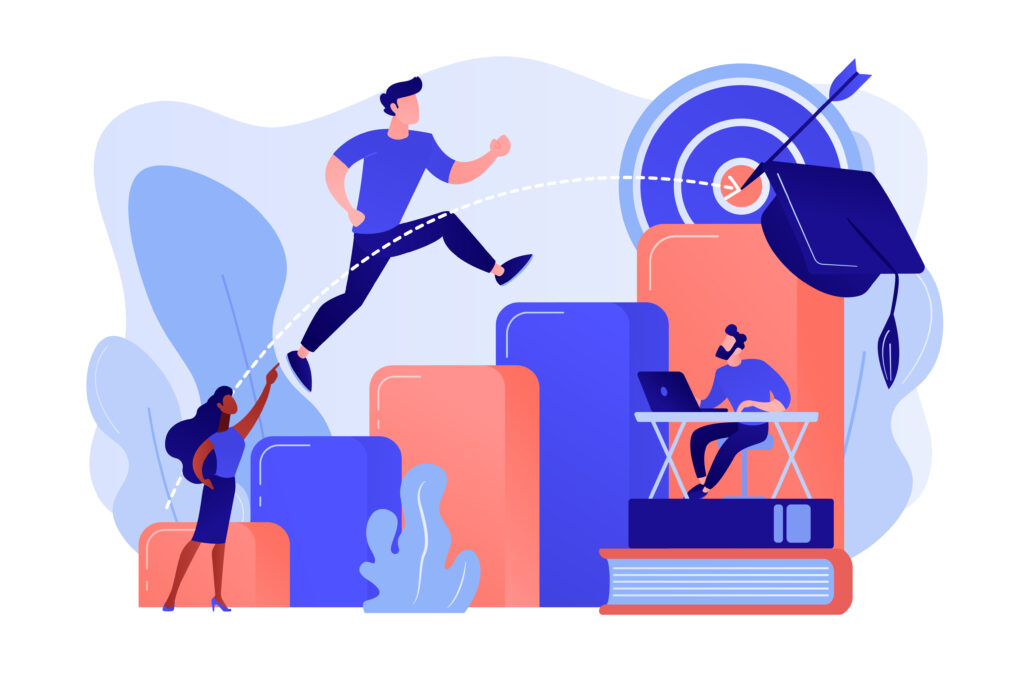
Imagen de vectorjuice en Freepik
Ahora llega la parte más importante de convertirse en un orientador profesional: ¿cómo se puede ser uno? Bueno, hay algunas condiciones que debes cumplir o los pasos que debes seguir para convertirte en uno.
Gain a career coach certification or degree
You can come from any field of education and become a career coach, but you need an additional career coaching certification. Wondering why? Well, that makes you more acceptable to your clients and also helps you develop more focused skills and required knowledge to train students.
By becoming a certified career coach, you learn how to assist clients in making their resumes or searching for jobs. You can do it online or offline, whichever way is convenient for you, as several institutions are offering the certification.
Additionally, getting a career coaching certification provides you with a professional network of fellow coaches and industry experts. They can give you helpful tips, share resources, and let you know when opportunities come up. Plus, you can keep learning and getting support from them as you grow in your career.
Furthermore, certified career coaching programs often offer specialized training in niche areas such as executive coaching, career transition coaching, or industry-specific coaching. This means you can focus on developing skills that cater to the specific needs of different client demographics and career paths. It's a fantastic way to become an expert and stand out in the field.
Certified career coach programs often include practical activities like case studies, role-playing exercises, and real-world client interactions. These hands-on experiences help reinforce theoretical knowledge and build confidence and proficiency in applying coaching techniques effectively.
Choose a niche
If you come from a humanities background, you need to learn more about the IT field to train clients who wish to enter this world. Gaining expertise depends on which field you are coming from and which group of audience you want to guide. If you have a background in English, it becomes easier for you to coach an individual on excelling in their communication skills. It would help if you gained expertise in the particular niche you want to coach - it can be communication, law, IT, digital marketing, or aviation - whichever suits your interests the most.
Moreover, when selecting a niche, consider not only your background but also your passion and interests. Choosing a niche that aligns with your expertise and enthusiasm allows you to provide more authentic and impactful coaching to your clients.
Picking a niche can help you stand out from the competition in the coaching market and attract clients who are looking for specific expertise. You can choose to focus on industries like healthcare, finance, or technology, or on career stages like executive leadership or entrepreneurship. When you find your niche, you can establish yourself as an authority in your chosen area of expertise. After that, you can choose coaching platforms that best align with your niche and reach your target audience effectively.
Choosing a niche can really help you level up your knowledge and stay on top of what's happening in your industry. Focusing on one area lets you become an expert, which can make you more trustworthy as a coach. Plus, you'll be able to give advice that's relevant and up-to-date to your clients, which is always a good thing.
Choosing a niche can really help you level up your knowledge and stay on top of what’s happening in your industry. Focusing on one area lets you become an expert, which can make you more trustworthy as a coach. For example, if you specialize in career coaching for students or recent graduates, having an understanding of the financial implications of education choices can be a major asset. Using a student loan calculator to help clients estimate their loan payments and develop a plan to manage their debt can be a valuable service that sets you apart from other coaches. Plus, you’ll be able to give advice that’s relevant and up-to-date to your clients, which is always a good thing.
Build a network
You have to establish proper connections in the professional world to help your clients get connected to organizations or people who are influential. You can do this by attending conferences, scheduling one-on-one meetings with industry professionals, and initiating conversations with other career coaches. Once you have a strong network, it also helps you get a strong clientele.
Building a network isn't just about expanding your client base; it's also about fostering collaborative relationships and staying updated on industry trends and opportunities. Engaging with fellow professionals, industry leaders, and subject matter experts not only provides valuable insights but also opens doors to potential partnerships, referrals, and mentorship opportunities.
Using digital platforms like LinkedIn and professional networks can really boost your networking game. By joining online groups, sharing cool stuff, and talking with industry leaders, you can get noticed in your field and beyond.
You could share your knowledge, resources, and connections with your network to add value. For instance, you could write some useful blog posts or host webinars with valuable insights. You could also offer free coaching sessions to help aspiring professionals or introduce clients to people who could be helpful to them. By adding value to your network, you can build stronger relationships and goodwill.
Streamline Your Coaching Business with Trafft: The Ultimate Appointment Management Solution
Ready to take your coaching practice to the next level? Say goodbye to scheduling headaches and administrative hassles with Trafft!
Here's why you should consider using Trafft to manage your appointments, calendar, clients, and payments all in one place:
- Effortless Appointment Scheduling: Say goodbye to back-and-forth emails and phone calls. With Trafft, clients can easily book appointments online, 24/7, based on your real-time availability.
- Seamless Calendar Integration: Keep your schedule organized and never miss a coaching session. Trafft syncs seamlessly with your calendar, ensuring that you're always up-to-date and never double-booked.
- Client Management Made Easy: From initial consultation to follow-up sessions, Trafft helps you stay on top of your client interactions. Access client profiles, appointment history, and notes all in one centralized platform.
- Secure Payment Processing: Simplify your billing process and get paid faster with Trafft's secure payment processing feature. Accept payments online, track invoices, and manage your finances with ease.
Ready to streamline your coaching practice and focus on growing your coaching business?
Sign up for Trafft today and take the first step towards a more efficient and profitable coaching business!
Build your online presence
Having an online presence can significantly boost your credibility and visibility as you're trying to become a career coach.
Building an online presence isn't just about having a static website or social media profiles; it's about actively engaging with your audience and providing valuable content and insights. Consider regularly updating your website with blog posts, articles, or case studies that demonstrate your expertise and offer practical advice to your audience.
Moreover, harness the power of social media marketing tools to connect with potential clients and industry professionals. Share relevant content, engage in conversations, and participate in industry-related groups and discussions to establish yourself as a thought leader and expand your network.
Don't forget how important it is to have a visual brand and tell stories when building your online presence. You gotta spend some cash on professional branding items like logos, graphics, and photos that represent your coaching style and values. Use storytelling to share your journey, show off client success stories, and prove the impact of your coaching services. This will help you create a kick-ass online presence that will attract potential clients.
You can make your online presence more interesting by adding videos, webinars, or podcasts to your content. These interactive formats can help you connect with different audiences, gain more credibility, and address their specific needs and concerns. By incorporating multimedia content in your online strategy, you can make your clients' experiences more engaging and meaningful.
One way to enhance your online strategy is by using the best QR code generator to create interactive experiences for your clients.
Study the market
It would help if you did a thorough market study of the employment trends so that you can offer up-to-date information. You should thoroughly monitor the market trends every month to clearly know what companies are looking for and coach your students accordingly.
Doing a deep dive into the market analysis can help you spot new opportunities, challenges specific to your industry, and changing skill requirements. Stay in the loop on the latest technology developments, regulatory changes, and consumer preferences that may have an impact on the job market and your career path.
Also, make use of data-driven insights and analytics tools to keep an eye on how well your coaching is doing. Keep a tab on important performance indicators (KPIs) such as job placement rates, how happy your clients are with your service, and their career progression outcomes. By doing this, you can figure out the areas that need improvement. Then, you can tweak your coaching strategies to better cater to your clients' needs.
Stay up-to-date with the latest developments and best practices in career coaching. Join industry associations, professional networks, and online forums to stay connected. You can exchange ideas, share resources, and collaborate with fellow professionals in your field by participating in discussions, webinars, and workshops. This will help you improve your knowledge and skills and keep you on top of the game in your career.
Conclusión
As you become a career coach and start your coaching business, many responsibilities fall on you.
You need to work hard, meet commitments, and learn continuously to develop professionally and make your client’s dream career come true. You need to understand your client well so that you can help them in achieving their goals.
As you slowly develop the skills yourself and follow the steps, you can become an effective career coach and make a positive impact.
Bon voyage!
¿Te has quedado con ganas de más?
We have just what you need! Dive into additional resources about coaching and gain more knowledge:
- How to Start a Coaching Business: A Step-By-Step Guide
- The Best Coaching Questions You Could Ask Your Clients
- Guide to Coaching Business Models with Examples
- How to Create an Efficient Coaching Schedule
- The Best Coaching Apps to Take Your Business to The Next Level
- Coaching Scheduling Software: Top 7 Picks & In-Depth Reviews